


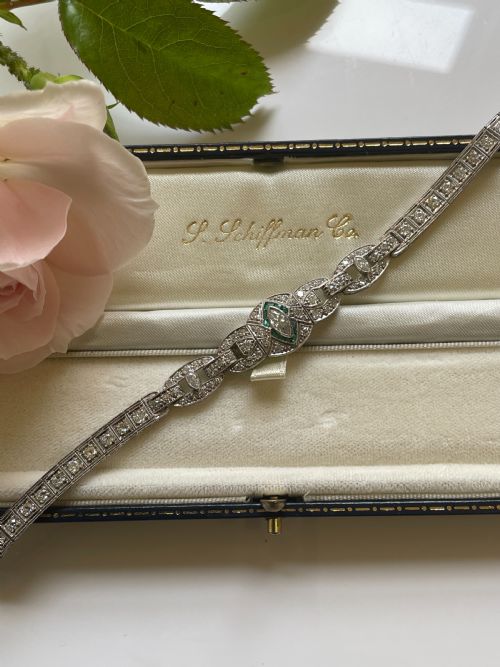


Geometric Diamond Line Bracelet
A geometric diamond line bracelet delivers articulated sparkle across the wrist, combining clean architectural lines with the unmatched fire of period-cut diamonds.
Geometric Diamond Line Bracelet
A geometric diamond line bracelet is an articulated wrist ornament defined by repeating linear motifs and diamond settings. When you search this phrase, you encounter pieces spanning from the early twentieth century through to the mid-twentieth century.
The most common examples on this page hail from the Art Deco period, featuring crisp geometric layouts and platinum mountings. These bracelets rely on continuous linking to drape fluidly around the wrist while maintaining rigid architectural patterns.
How they were made
Craftsmen utilised platinum and various carats of white and yellow gold to construct the flexible frameworks of these bracelets. Platinum provided the structural strength required to hold intricate geometric stone arrangements securely with minimal metal visibility.
Stones such as old-cut diamonds, emeralds and sapphires were meticulously set into the metal channels and millegrain edges. The articulation relies on hidden hinges or links that allow the rigid geometric sections to bend fluidly without compromising the security of the gems.
Secret hinges allow some platinum links to twist just enough that they wink at you under a dinner candle.
What varies in quality
The distinction between standard and exceptional pieces rests upon the precision of the metalwork and the uniformity of the stones. Superior examples display seamless articulation where the links flex without catching, alongside finely executed millegrain detailing that frames each diamond.
Stone selection dictates the upper echelon of these bracelets, particularly where larger carat weights of matched old-cut diamonds are integrated with fine natural emeralds or sapphires. The weight of the metal and the complexity of the geometric openwork further separate everyday pieces from masterworks.
The Geometric Diamond Line Bracelet Glossary
- Art Deco
- A design style spanning the 1910s to the 1930s characterised by symmetry, geometric abstraction and stylised motifs. This aesthetic heavily influences the line bracelets found in early twentieth-century jewellery.
- Platinum
- A dense, ductile and malleable precious metal prized for its strength and bright white lustre. It allows jewellers to create delicate yet secure settings for diamonds without adding unwanted colour.
- Old-cut diamond
- A vintage diamond cutting style featuring smaller tables, higher crowns and deep pavilions designed under candlelight. These cuts produce broad flashes of light rather than the pinpoint brilliance of modern stones.
- Millegrain
- A decorative jewellery technique consisting of a row of tiny raised metal beads along the edges of a setting. This textured border softens the transition between the metal and the diamond.
Geometric Diamond Line Bracelet: Frequently Asked Questions
How do I wear a geometric diamond line bracelet?
These flexible bracelets sit closely against the wrist, making them suitable for both evening wear and daily accessorising. Their low profile allows them to slide comfortably beneath clothing cuffs.
Pair a platinum Art Deco piece with minimal evening attire to let the geometric stone patterns command attention. The secure clasp mechanisms ensure the bracelet stays firmly in place during movement.
What periods do these bracelets come from?
The listings encompass items primarily originating from the early decades of the twentieth century, with a strong concentration of Art Deco designs. Mid-century examples also appear, showing a slight shift in weight and gold purity.
Understanding the manufacturing era helps date the specific cut of the diamonds and the composition of the metal alloys used in the mountings.
How do I tell Art Deco from mid-century bracelets?
Art Deco bracelets heavily feature platinum mountings, millegrain detailing and rigid geometric patterns often accented with calibrated emeralds or sapphires. The diamonds are predominantly old cuts with distinctive facet patterns.
Mid-century pieces typically utilise white or yellow gold of varying carats, exhibiting bolder sculptural forms with less reliance on intricate millegrain work. The overall construction reflects post-war design shifts towards simpler, robust links.
Are coloured stones common in these bracelets?
Many geometric line bracelets incorporate calibre-cut emeralds or sapphires alongside the primary diamond layouts. These coloured gems create sharp contrast within the overall linear design.
Coloured stones are usually shaped to fit tightly into specific geometric channels, enhancing the architectural quality typical of early twentieth-century jewellery.