



Geometric Desk Lamp
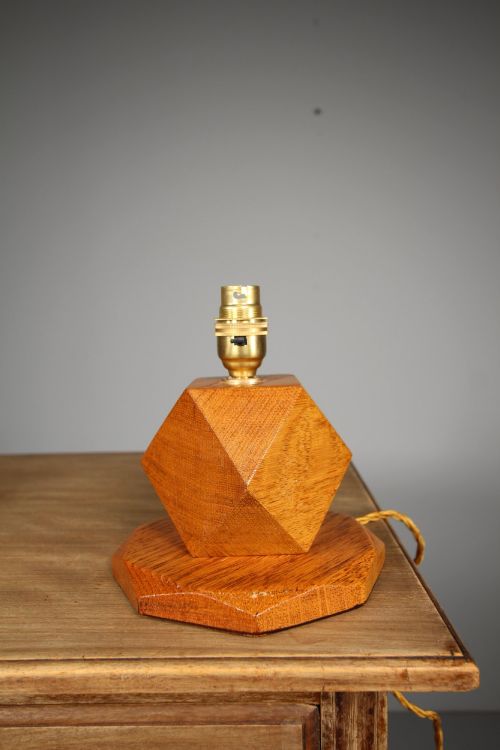
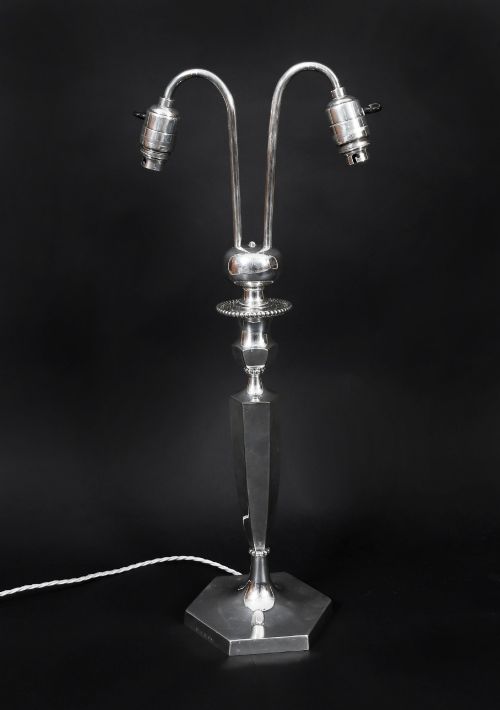
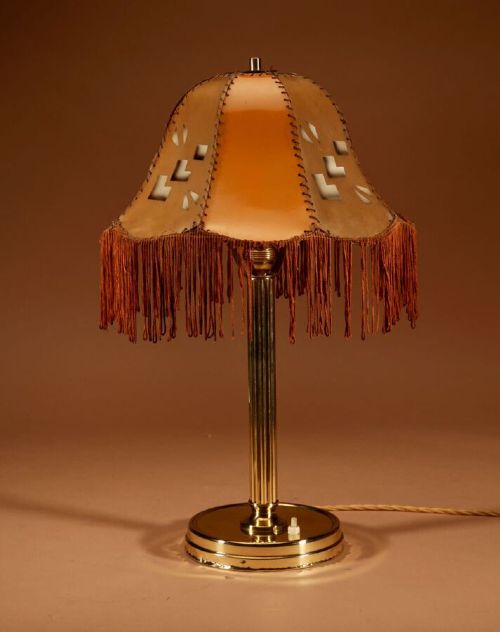
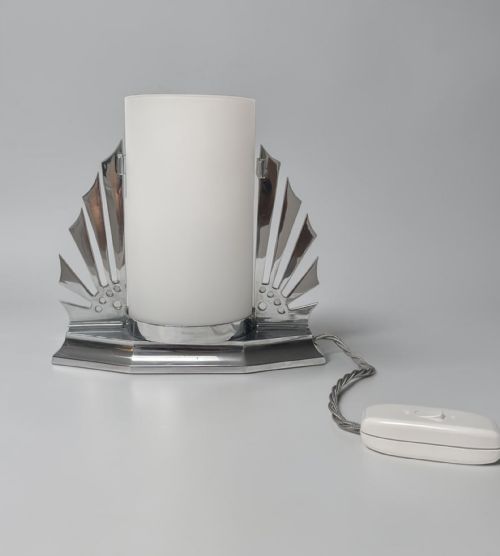
These geometric desk lamp examples bring sharp angles and clean lines to a desk, uniting period materials with functional forms.
Geometric Desk Lamp
A geometric desk lamp brings together angular forms and functional illumination, drawing on styles such as Art Deco, Arts and Crafts, Secessionist, and Mid-Century Modern. When searching for a geometric desk lamp, you encounter table lamps and desk lamps originating across the early twentieth century.
The pieces appearing on this page span the decades from 1900 to 1940, with a strong representation from the 1920s and 1930s. Forms range from twin arm designs and figural subjects to nautical motifs like the sail yacht lamp.
Makers and designers represented include Elkington, Eileen Grey, Muller Bros, Karl Palda, and Walther and Sohne. Materials shift across these decades from patinated brass and silver plate to chrome, bakelite, celluloid, and moulded glass.
Materials and construction
Metalwork forms the structural backbone of these pieces, utilising brass, silver plate, nickel, and chrome to create sharp contours and polished surfaces. Makers shaped these metals into cubic, zig-zag, and figural structures that define the period aesthetic.
Glass provides the primary diffusing element, appearing as frosted glass, peach glass, and moulded forms. Workshops such as Walther and Sohne and Muller Bros produced specialised glass shades that lock into the metal frames.
Alternative materials like bakelite, celluloid, fabric, and mahogany introduce contrast and texture. These substances were moulded or turned to complement the metallic geometry of the lamp bodies.
Geometric Desk Lamp Retail Price Guide 2026
Typical asking prices for geometric desk lamp among the pieces listed under this phrase on Sellingantiques today, from the lower quarter to the upper quarter. They describe what is for sale here now, not the wider market.
Among the geometric forms and sleek chrome rests a playful two-tone liquorice allsorts lamp, proving that early twentieth-century lighting did not take itself too seriously.
Assessing quality in design and execution
Quality rests upon the integrity of the design and the harmony between the metal frame and the glass or shade. Pieces associated with recognised designers or established firms demonstrate superior handling of proportions and materials.
The finish of the metalwork and the complexity of the glass components separate standard items from exceptional examples. Original patinated brass, crisp chrome plating, and specialised coloured glass indicate a higher standard of manufacture.
Elkington·Eileen Grey·Muller Bros·Karl Palda·Walther and Sohne
The Geometric Desk Lamp Glossary
- Art Deco
- A design style characterised by sleek lines, geometric shapes, and modern industrial materials. It dominates the 1920s and 1930s pieces found in this category.
- Bakelite
- An early form of synthetic plastic prized for its durability and rich dark lustre. It frequently forms the bases and bodies of modernist desk lighting.
- Secessionist
- An artistic movement focused on geometric abstraction and rejection of traditional historicism. It appears in early twentieth-century brass lighting.
- Frosted Glass
- Glass treated to diffuse light evenly across a room or workspace. It softens the stark angularity of metal frames.
Geometric Desk Lamp: Frequently Asked Questions
What periods do these lamps cover?
The pieces span the early decades of the twentieth century, specifically covering the years from 1900 through to 1940.
Art Deco and Secessionist examples from the 1920s and 1930s form the majority of the available lighting.
Which materials appear most often?
Metal and glass dominate the construction, utilising brass, chrome, silver plate, and nickel alongside frosted and coloured glass.
Alternative substances such as bakelite, celluloid, fabric, and mahogany also support the primary structures.
How do I style a geometric lamp?
These lamps function effectively on wooden desks, sideboards, or tables where their angular profiles provide a strong visual focal point.
Pairing them with minimalist or period interiors allows the metallic finishes and glass shades to stand out.
Who designed these pieces?
Selected pieces originate from notable designers and workshops including Eileen Grey, Karl Palda, and the Muller Brothers.
Other items bear marks from established metalworking firms like Elkington.