





Geometric Cufflinks
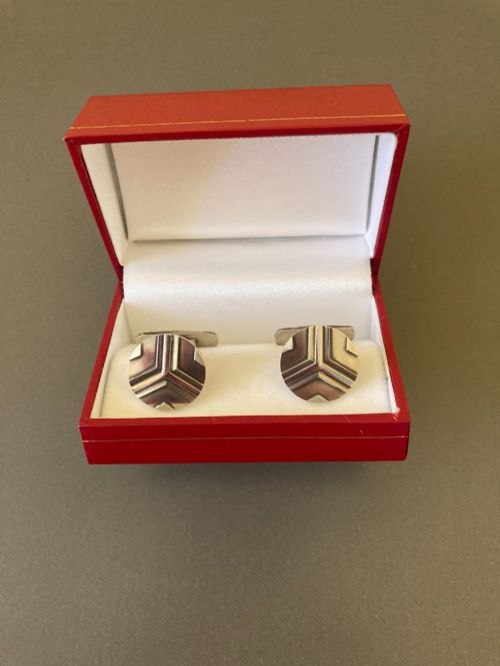
Geometric cufflinks are sharp accessories defined by clean lines and bold patterns, offering a distinct nod to mid-century and modernist design.
Geometric Cufflinks
Geometric cufflinks bring together structured shapes and striking symmetry, serving as practical fastenings that double as miniature works of art for the cuff. When searching for geometric cufflinks, a buyer encounters pieces primarily from the nineteen-thirties, alongside later examples stretching through the nineteen-forties, fifties, and sixties.
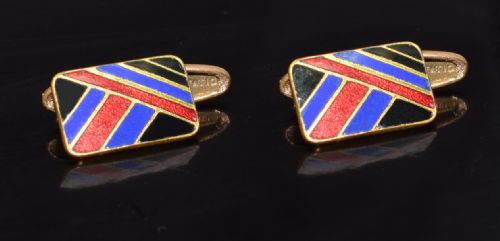
The most common incarnation on this page is the nineteen-thirties Art Deco enamel gents cufflink, often displaying modernist tendencies in green, black, or multi-coloured enamel. These pairs frequently feature matching designs intended to sit neatly on crisp shirt cuffs, reflecting the orderly aesthetic of the period.
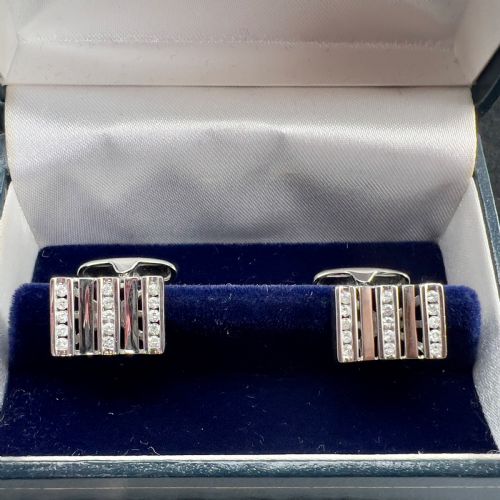
Beyond the predominant enamel and silver pairs from the interwar years, the selection extends to Scandinavian modern styles and contemporary interpretations. Rarer variations incorporate precious metals and gemstones, including gold set with diamonds or sapphires.
How they were made
The construction of these accessories relies heavily on metals such as silver, sterling silver, silver-tone metal, silver plate, brass, and occasionally higher-karat golds like nine-carat white gold or eighteen-carat gold. Metalworkers shaped these bases through casting, stamping, or fabrication to achieve precise angles and flat planes.
Vitreous enamel and standard enamel provide the vibrant colour fields characteristic of the Art Deco pieces, fused to the metal substrate through high-temperature firing. Gemstones such as diamonds and sapphires are flush-set or bezel-set into the precious metal frameworks to add focal points.
Geometric Cufflinks Retail Price Guide 2026
Typical asking prices for geometric cufflinks among the pieces listed under this phrase on Sellingantiques today, from the lower quarter to the upper quarter. They describe what is for sale here now, not the wider market.
Materials range widely from humble brass and silver-tone metal to sterling silver, nine-carat white gold, and eighteen-carat gold.
What varies in quality
Quality rests primarily on the crispness of the geometric execution and the preservation of the enamel work. Finer pieces display clean, sharp transitions between metal and colour without pooling or chipping in the vitreous layers.
The integrity of the mechanical findings and the choice of base metal also set examples apart. Sterling silver and solid gold constructions paired with robust, well-engineered toggles represent a higher standard than plated brass or silver-tone alternatives.
Georg Jensen·Cartier
The Geometric Cufflinks Glossary
- Art Deco
- A design style spanning the nineteen-twenties and nineteen-thirties characterised by sleek geometric shapes, stylised motifs, and modern industrial materials. It dominates the visual language of these cufflinks.
- Vitreous Enamel
- A material made by fusing powdered glass to a metallic substrate through firing at high temperatures. This technique creates a glossy, durable coloured surface.
- Modernist
- An aesthetic movement prioritising functional forms and abstract geometric patterns over traditional ornamentation. It heavily influences the layout of the enamel work on these pieces.
- Sterling Silver
- An alloy of silver containing ninety-two point five percent silver and seven point five percent other metals, usually copper. It provides a durable and bright foundation for wearable items.
Geometric Cufflinks: Frequently Asked Questions
How do I date geometric cufflinks?
Dating relies on stylistic clues and material choices, particularly the presence of nineteen-thirties Art Deco enamel work versus later modernist Scandinavian designs from the fifties.
Examining the back mechanisms and hallmarks can also provide specific clues regarding the manufacturing era and metal purity.
Are these cufflinks suitable for everyday wear?
Solid silver and gold pairs with robust toggles handle regular use well, provided the enamel is treated with reasonable care to avoid sharp impacts.
Enamelled pieces require slightly more caution to protect the glass surfaces from scratching against hard office desks.
What is the difference between enamel and vitreous enamel?
Vitreous enamel is strictly composed of fused glass powder on metal, offering superior colour stability and longevity compared to some resin-based synthetic enamels.
Traditional vitreous versions feel heavier and display a distinct depth beneath their glossy surface.
How should I clean vintage silver cufflinks?
A gentle polish with a soft microfibre cloth removes light tarnish without harming any surrounding enamel or delicate plated surfaces.
Harsh chemical dips should be avoided entirely, as they can strip the colour from vintage enamel work or damage softer base metals.