


Garden Park Bench
A garden park bench transforms an open lawn into a place to sit, drawing from nineteenth-century ironwork and weathered timber.
Garden Park Bench
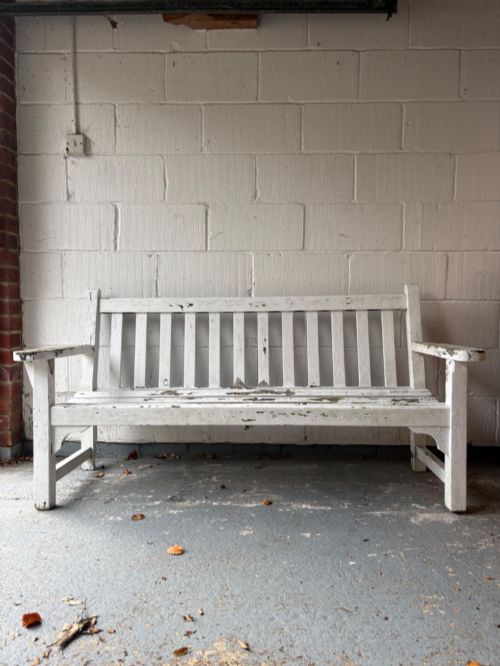
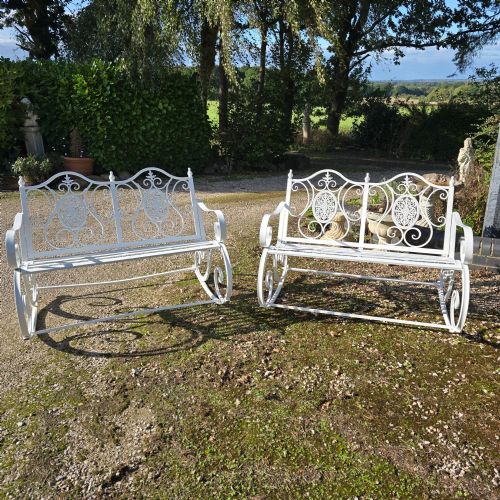
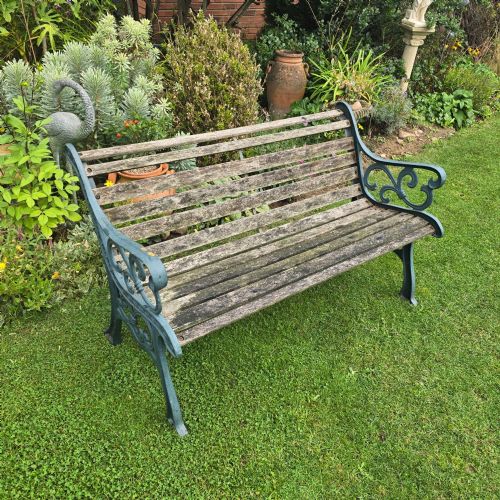
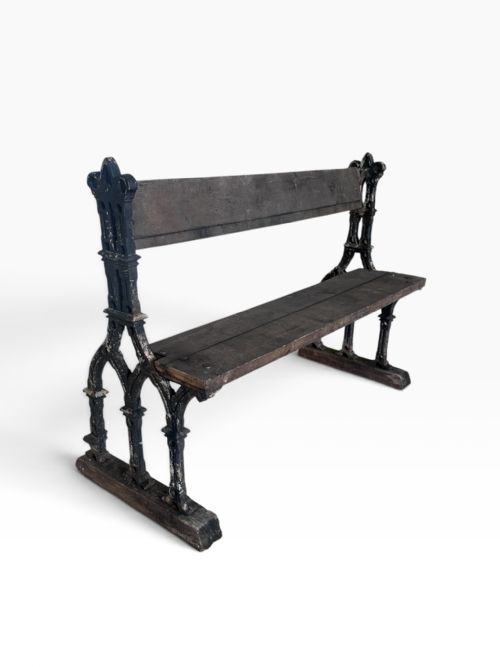
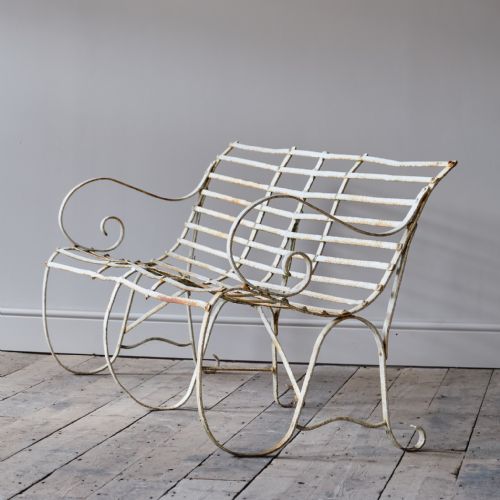
Most examples combine metalwork with wooden slats, though entirely cast iron or timber forms appear regularly. Buyers encounter classic strapwork designs, rustic branches, and gothic tracery.
The selection ranges from two-seater seats to larger four-seater configurations and matching sets. French country variants and English country pieces both feature strongly in the current inventory.
Evaluating quality and character
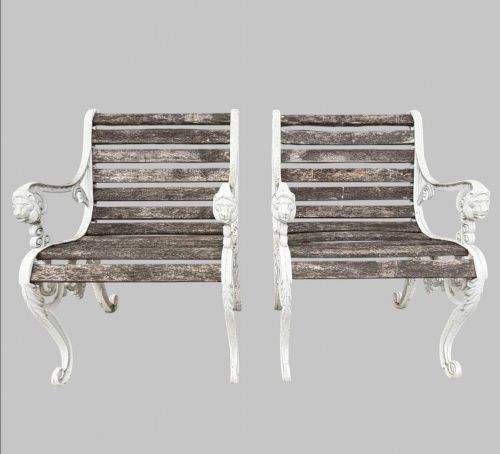
The finesse of the iron casting defines the upper tier of these seats, where crisp details in foliage, lion masks, or gothic tracery remain sharp. Heavier metal gauge and intricate structural design separate standard park seating from exceptional foundry work.
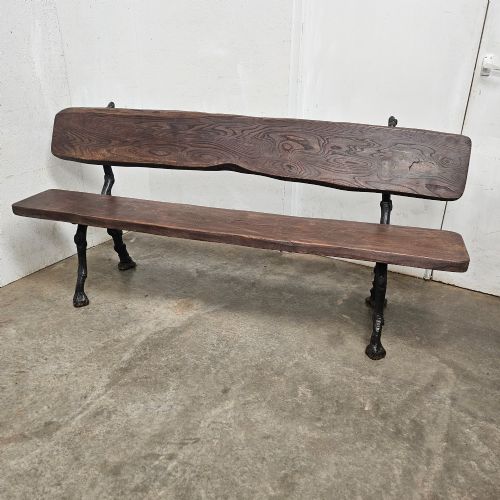
Timber condition also dictates value, with well-weathered teak and sound elm showing stable grain without deep rot. Original paint layers or honest patination on both metal and wood demonstrate genuine age over later restoration.
Garden Park Bench Retail Price Guide 2026
Typical asking prices for garden park bench among the pieces listed under this phrase on Sellingantiques today, from the lower quarter to the upper quarter. They describe what is for sale here now, not the wider market.
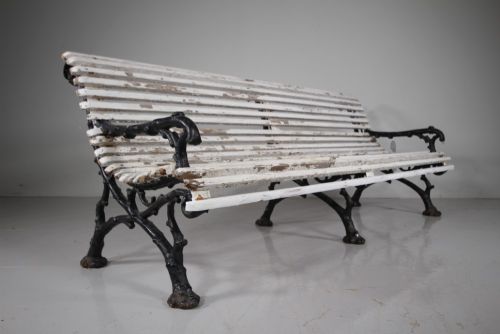
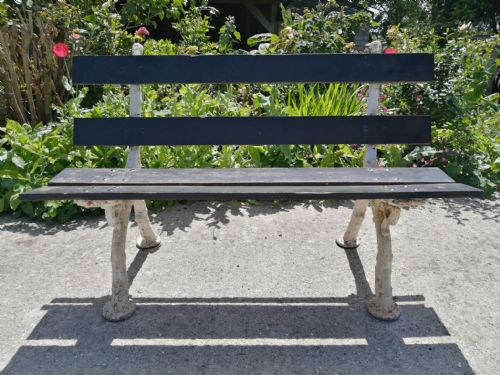
Several iron benches disguise themselves as knotted tree branches, fooling the eye with metal pretending to be timber.
Coalbrookdale·Val D'osne·Arras
The Garden Park Bench Glossary
- Strapwork
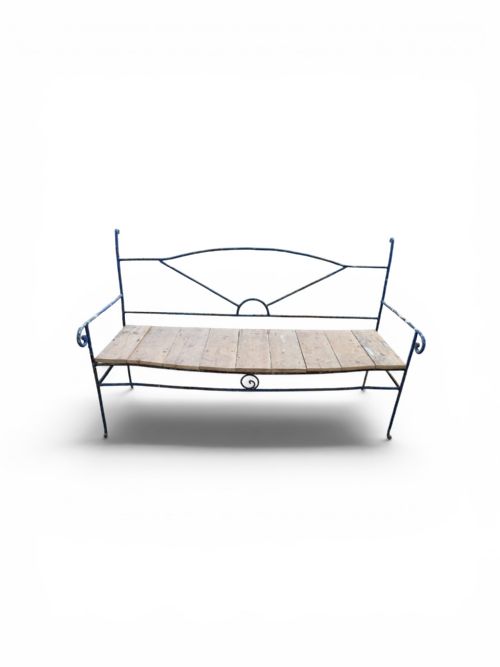
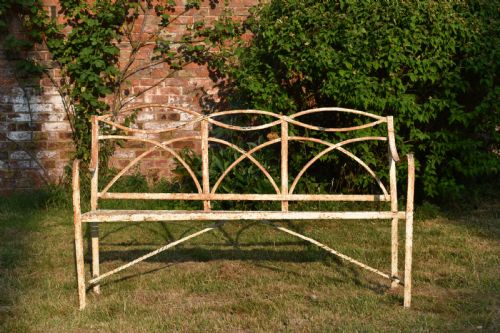
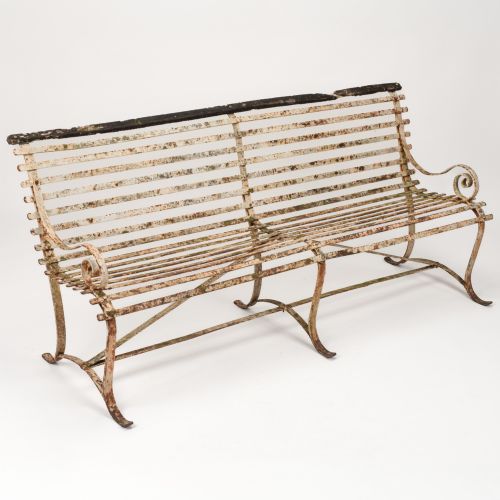
- Flat bands of iron crossed and riveted in geometric patterns. This technique creates a light yet rigid frame common on Regency and Victorian seats.
- Faux bois
- Imitation wood grain formed in cast iron or carved in French elm. It translates organic tree branches into permanent metal or timber structures.
- Gothic tracery
- Architectural window patterns adapted for iron bench backs. Pointed arches and quatrefoils define this Victorian style.
- Bench ends
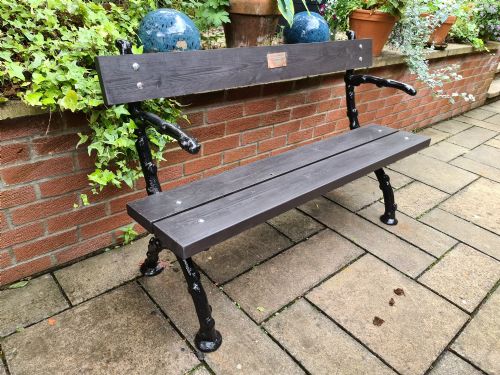
- The cast iron side supports that hold the wooden slats of a seat. They often carry registry marks or foundry designs.
Garden Park Bench: Frequently Asked Questions
How do I care for a historic metal and wood bench?
Keep wooden slats treated with appropriate oils to prevent moisture damage, and monitor iron frames for early signs of oxidation.
Store seats under cover during harsh winter months if you wish to preserve fragile paint layers and original timber.
Were these benches meant for public parks or private gardens?
Foundry designs served both municipal parks and private estate lawns, with heavier four-seater versions suited to open public grounds.
Smaller two-seater armchairs and intimate benches typically furnished domestic patios and quiet garden corners.
How can I tell a Victorian piece from a Regency one?
Regency designs frequently employ clean iron strapwork and restrained classical lines. Victorian examples tend towards heavier ornamentation, including gothic arches and rustic faux bois branches.
Casting techniques and registry marks also help pinpoint the manufacturing decade.
Can I leave teak garden benches outside all year?
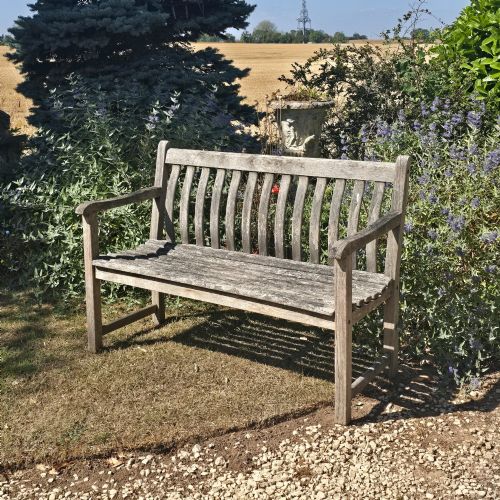
Teak naturally weathers to a silvery grey patina when exposed to rain and sun without losing its structural integrity.
Many owners allow the wood to age naturally outdoors while maintaining the underlying iron supports.