




Full Diamond Ring
A full diamond ring brings a continuous circuit of stones to the hand, carrying the weight of past decades right into daily wear.
Full Diamond Ring
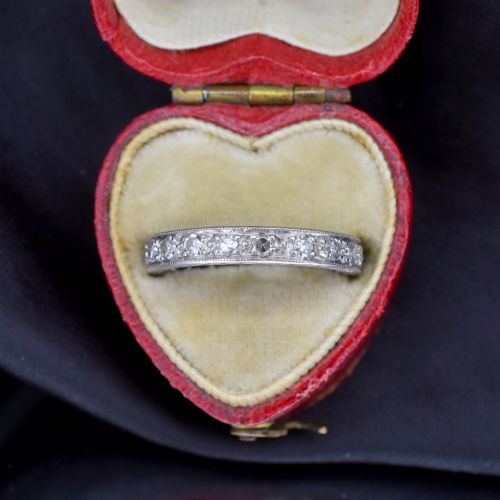
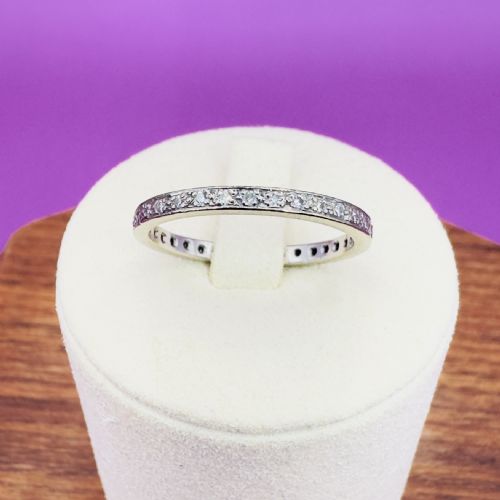
A full diamond ring is a band completely encircled by stones, representing an unbroken line of gems. The pieces found here span the Victorian, Georgian, Regency, and Art Deco eras, extending through mid-century modern designs.
The materials recorded in these listings rely heavily on platinum, 18ct white gold, and palladium to hold the stones securely. Each period brings its own characteristic weight and setting style to the hand.
How they were made
The construction of a full diamond ring requires precision in mounting stones entirely around the band without interruption. Platinum and 18ct white gold provide the necessary structural strength for these continuous channel or claw settings.
Makers utilised durable white metals during the Art Deco and mid-century periods to maximise the brilliance of the stones. Older Victorian pieces often integrated yellow gold and specific hallmarking practices to certify origin.
Full Diamond Ring Retail Price Guide 2026
Typical asking prices for full diamond ring among the pieces listed under this phrase on Sellingantiques today, from the lower quarter to the upper quarter. They describe what is for sale here now, not the wider market.
Current listings feature pieces spanning the Victorian, Regency, Art Deco, and mid-century periods in platinum and white gold.
What varies in quality
The distinction between tiers rests upon the uniformity and scale of the stones utilised across the band. Heavier carat weights, such as multi-carat arrangements, demand superior stone matching compared to lighter bands.
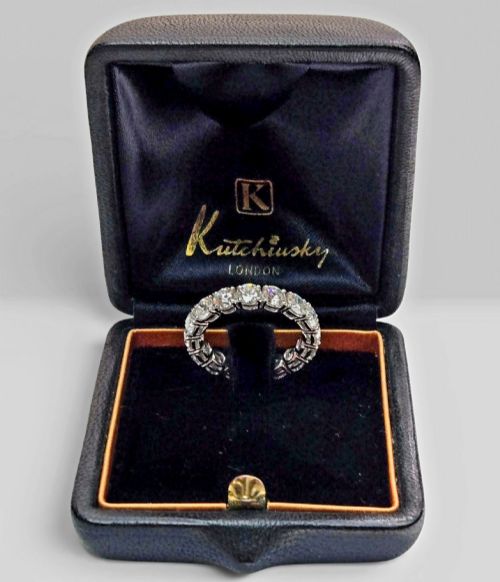
Signatures from notable makers elevate a piece beyond standard production, marking finer craftsmanship in the metalwork and stone selection. The integrity of the continuous setting further separates standard rings from exceptional examples.
Kutchinsky
The Full Diamond Ring Glossary
- Eternity ring
- A ring set continuously with gemstones symbolising endless love. This form requires careful sizing as the band cannot be easily altered.
- Platinum
- A dense, durable white metal prized for secure stone settings. It holds delicate claw work without losing strength over decades of wear.
- Palladium
- A lustrous silver-white metal belonging to the platinum group. It offers lightweight durability for mid-century ring mounts.
- Hallmark
- An official stamp indicating metal purity and origin. Victorian pieces often display these marks to verify the exact year of assay.
Full Diamond Ring: Frequently Asked Questions
Can a full diamond ring be resized?
Resizing a full band proves exceptionally difficult because the stones encircle the entire finger. Altering the metal circumference usually requires removing or adding stones.
Buyers should confirm exact ring sizes before purchase to avoid the complications of structural modification.
How do I care for my ring?
Daily wear exposes the continuous stones to knocks against hard surfaces. Regular checks by a jeweller ensure the claws remain tight and secure.
Gentle cleaning in warm soapy water restores brilliance without damaging older white gold or platinum settings.
What periods are represented here?
The selection spans from Victorian and Regency eras through Art Deco and mid-century modern decades. Each period introduces distinct design sensibilities and metal choices.
Art Deco bands favour geometric precision in platinum, while Victorian examples often mix opals with gold.
Why choose platinum over white gold?
Platinum offers superior density and natural white lustre that does not require plating. It secures small stones tightly within continuous settings.
White gold provides a lighter alternative while maintaining the bright silvery tone favoured in twentieth-century jewellery.