



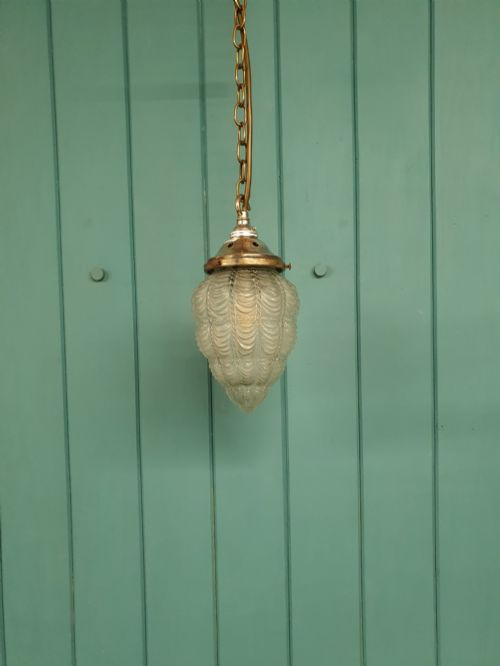


Frosted Pendant Lamp
A frosted pendant lamp brings a soft, diffused glow to a room, drawing the eye upward with period character and polished metalwork.
Frosted Pendant Lamp
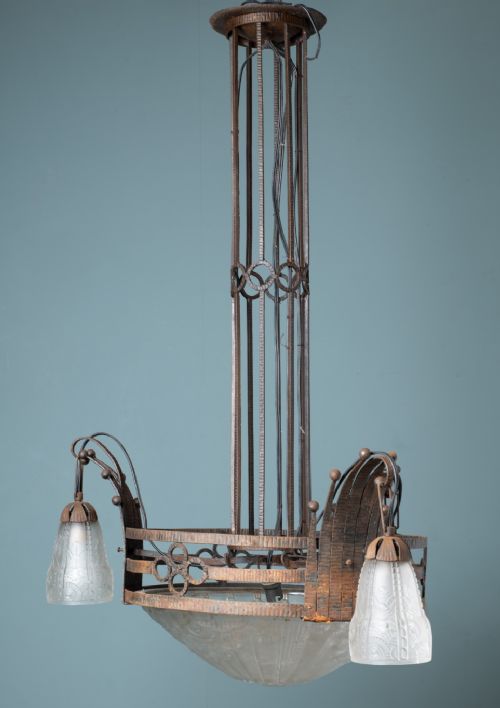
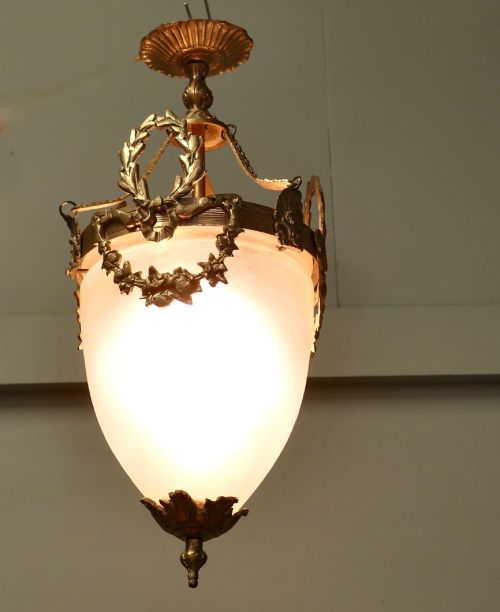
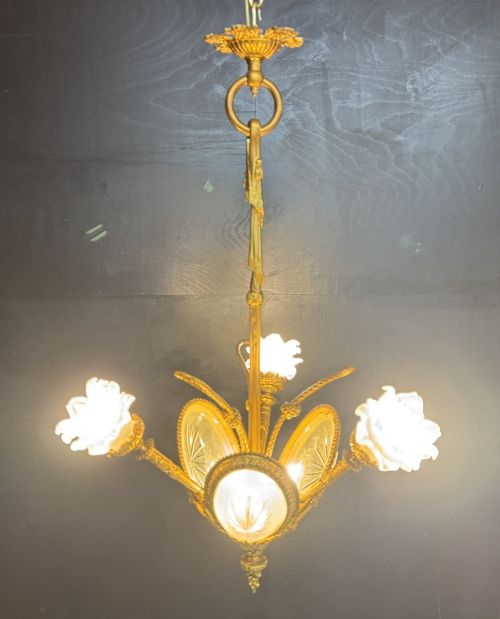
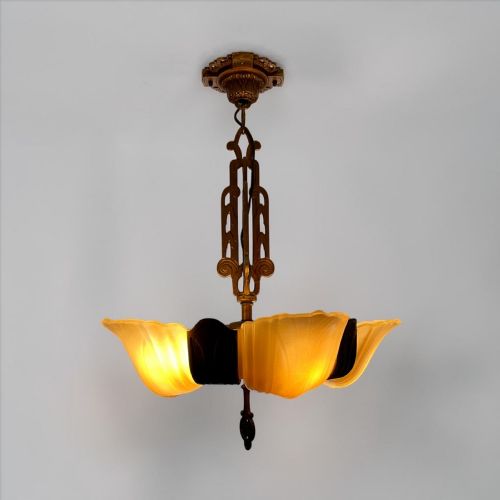
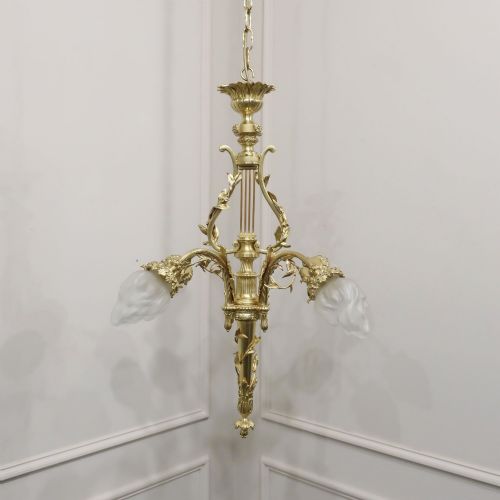
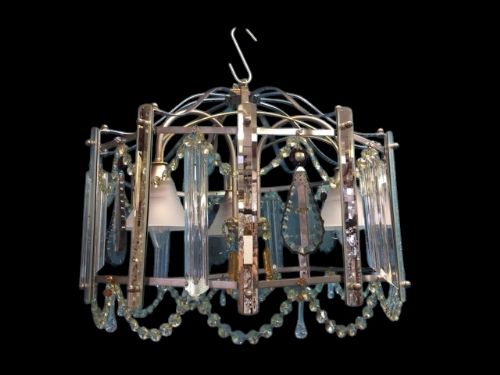
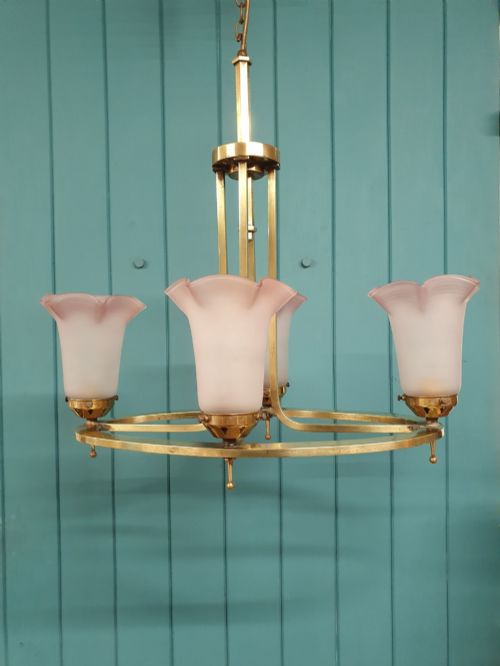
When you search for a frosted pendant lamp, you encounter hanging light fixtures spanning the Victorian, Edwardian, and Art Deco periods, alongside earlier 19th-century designs. These pieces range from simple single-bulb shades to multi-arm brass and bronze chandeliers fitted with textured, etched, or opaque glass.
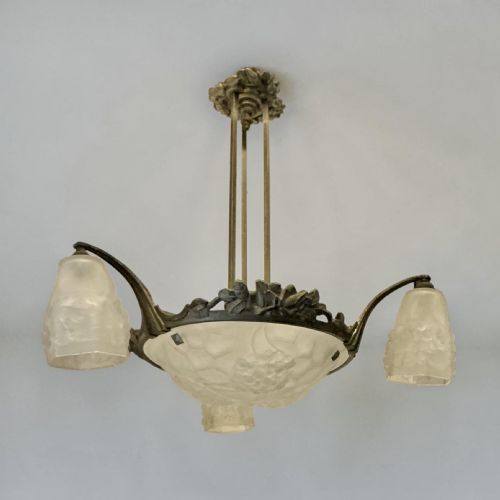
The most common examples on this page date from the 1920s and 1930s, reflecting the geometric lines and pressed glass techniques of the Art Deco era. Alongside these, you find Edwardian brass hall lanterns and earlier Victorian opalescent bowls that distribute light evenly through opaque or frosted surfaces.
How they were made
The metal components rely on traditional foundry and workshop methods, utilising cast brass, beaten copper, chrome, or gilt bronze to form the frames and suspension hardware. Artisans shaped these metals by hand or cast them in detailed moulds, incorporating decorative motifs like cherub arms, rams heads, or streamlined geometric borders.
The glass shades utilise moulding, pressing, or acid-etching to achieve their characteristic opaque or frosted finish. Makers such as Degué, Jean Gauthier, and Verrerie Des Vosges produced thick press-moulded bowls and slip shades designed to soften the glare of early electric filaments.
Frosted Pendant Lamp Retail Price Guide 2026
Typical asking prices for frosted pendant lamp among the pieces listed under this phrase on Sellingantiques today, from the lower quarter to the upper quarter. They describe what is for sale here now, not the wider market.
What varies in quality
Quality reveals itself in the weight and substance of the metal frame, whether heavy cast bronze, solid brass, or substantial copper, contrasted against lighter plated alternatives. Finer pieces display crisp detailing in cast ornaments and mounts, alongside thick, uniform glass with well-defined moulded decoration rather than thin pressings.
The sophistication of the design and the reputation of the maker distinguish standard production fixtures from exceptional pieces. Signed Art Deco slip shades and marked French lighting carry greater design ambition and heavier material construction than unmarked domestic pendants.
Degué·Émile-Jacques Ruhlmann·F and C Osler·Verrerie Des Vosges·Jean Gauthier
The Frosted Pendant Lamp Glossary
- Plafonnier
- A ceiling-mounted light fixture with a bowl-shaped shade that sits flush or close to the ceiling. These fixtures became particularly popular during the Art Deco period.
- Slip shade
- A type of pressed glass shade designed to slot into a metal frame or basket. They form the modular elements of many 1930s chandeliers.
- Ormolu
- Gilt bronze, where a layer of gold is applied to a bronze base using mercury amalgamation or electrochemical methods. This technique creates a rich, lasting golden surface on 19th-century frames.
- Opalescent glass
- Glass that exhibits a milky, iridescent appearance, diffusing light with a soft pearlescent glow. It appears frequently in Victorian and Edwardian pendants.
- Colza hanging light
- A heavy suspension lamp originally designed to burn colza oil before conversion to electricity. These pieces usually feature substantial bronze or brass structures.
Frosted Pendant Lamp: Frequently Asked Questions
How do I hang a heavy antique pendant?
Heavy chandeliers and lanterns require secure fixing to ceiling joists using a metal mounting bracket suited to the weight of the bronze or brass frame.
Professional electrical installation ensures the internal wiring safely supports the multi-bulb configuration.
Can I use modern LED bulbs in these fixtures?
Modern LED bulbs fit standard lamp holders while producing less heat than older incandescent filaments, protecting vintage sockets and wiring.
Choosing warm white bulbs maintains the soft, atmospheric glow intended for frosted glass shades.
How do I clean frosted and etched glass?
Wash the glass shades gently in warm soapy water using a soft cloth to remove dust and grease without scratching the textured surface.
Avoid harsh chemical cleaners that can damage the exterior finish or remove delicate acid-etched details.
What is the difference between Art Deco and Edwardian lights?
Edwardian lighting tends to feature polished brass, delicate arms, and classical motifs suited to formal entrance halls and drawing rooms.
Art Deco fixtures embrace geometric symmetry, stepped forms, and frosted press-moulded glass shades typical of the 1920s and 1930s.