




Frosted Glass Bottles
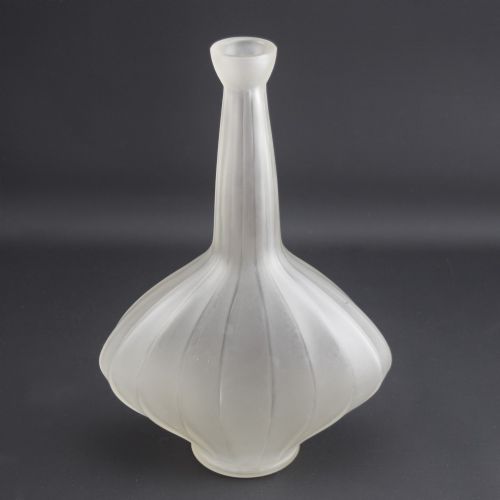
Frosted glass bottles are tactile vanity objects and barware, prized for their muted translucent finishes and sculptural forms.
Frosted Glass Bottles
When you search for frosted glass bottles, you encounter an array of vanity wares and drinking vessels spanning the nineteenth century through the Art Deco and Art Nouveau periods. The most frequent examples on this page take the form of perfume bottles, scent bottles, and dressing table jars produced in France and Bohemia.
Makers such as Rene Lalique and Sabino dominate the offerings, translating frosted and opalescent glass into intricate sculptural motifs. Alongside these vanity items, the selection includes decanter sets and atomisers reflecting Edwardian and 1930s design aesthetics.
How they were made
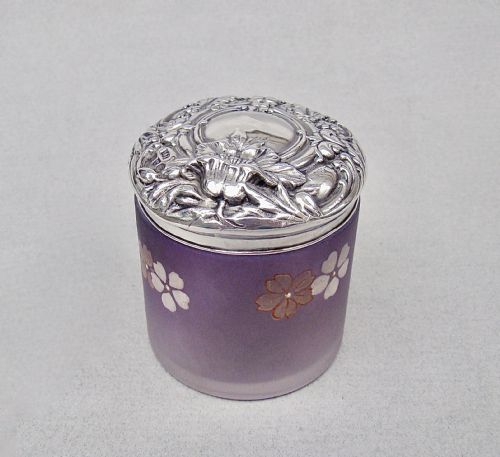
The pieces rely on moulded and satin glass techniques to achieve their signature diffused appearance, often enhanced with enamel, patinated finishes, or coloured staining. Artisans combined these glass bodies with sterling silver lids, orormolu mounts, and fitted stoppers.
Moulding allowed for deep relief details such as butterflies, birds, and geometric patterns to emerge from the matte surface. The addition of metallic elements like silver or enamel completed the fabrication of these functional vessels.
Frosted Glass Bottles Retail Price Guide 2026
Typical asking prices for frosted glass bottles among the pieces listed under this phrase on Sellingantiques today, from the lower quarter to the upper quarter. They describe what is for sale here now, not the wider market.
What varies in quality
Quality rests in the crispness of the moulded relief and the harmony between the glass body and its mounts, whether sterling silver or orormolu. Pieces featuring applied patination, red staining, or opalescent depth demonstrate superior technical execution by houses like Lalique and Sabino.
The sophistication of the design, from fluid Art Nouveau curves to structured Art Deco geometry, dictates the standing of each piece. Intact matching sets and original stoppers further elevate the execution.
Rene Lalique·Sabino·Rudolf Hlousek·Karl Palda
The Frosted Glass Bottles Glossary
- Satin glass
- A type of glass with a velvety, frosted surface texture achieved by acid-etching or sandblasting. This finish diffuses light and softens the visual profile of the vessel.
- Opalescent glass
- Glass that displays milky, pearlescent highlights shifting in tone according to the light. It appears frequently in French Art Deco scent bottles.
- Ormolu
- Gilded bronze mounts and hardware applied to nineteenth-century glass bodies. This decorative metalwork frames the frosted glass.
- Atomiser
- A spray mechanism fitted to a perfume bottle for misting fragrance. These feature in twentieth-century vanity sets alongside standard dabber stoppers.
- Chatelaine
- A decorative belt hook worn with suspended chatelaine scent bottles. These nineteenth-century pieces allowed portable fragrance access.
Frosted Glass Bottles: Frequently Asked Questions
How do I clean frosted glass bottles?
Use lukewarm water and a soft cloth to clean the exterior, avoiding harsh abrasives that can damage the delicate satin texture. Take care around silver lids and enamel details.
Dry the glass thoroughly with a lint-free cloth to preserve the matte finish without leaving water spots.
Are original stoppers important?
Original stoppers maintain the intended silhouette and integrity of perfume and scent bottles, especially for moulded designer pieces. A matched or replacement stopper alters the original proportion.
Check whether the stopper fits snugly into the neck, as these were often ground to fit individual bottles during manufacture.
How do I identify Art Deco pieces?
Art Deco examples typically display geometric lines, stylised motifs, and symmetry characteristic of the 1930s. Makers like Karl Palda and Rudolf Hlousek embraced these angular forms in their glassware.
Contrast this with the flowing, organic plant motifs found on earlier Edwardian and Art Nouveau silver lidded jars.
What is the difference between opalescent and frosted glass?
Frosted glass has a matte, etched surface that diffuses light uniformly across the object. Opalescent glass contains ingredients that create milky, light-catching colour shifts within the material itself.
Many twentieth-century French perfume bottles combine both qualities in their moulded relief designs.