


Fringed Shade Desk Lamp
A fringed shade desk lamp brings layered textile texture and warm metal structure to a workspace.
Fringed Shade Desk Lamp
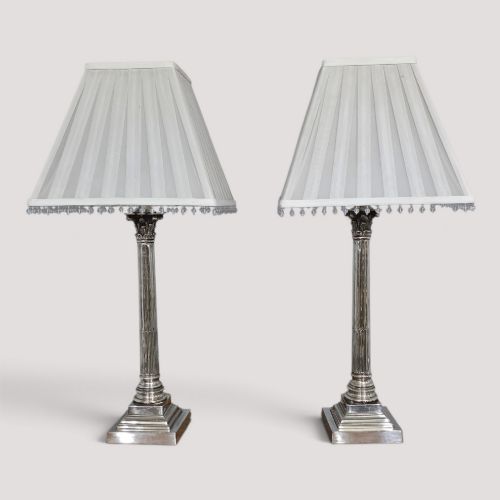
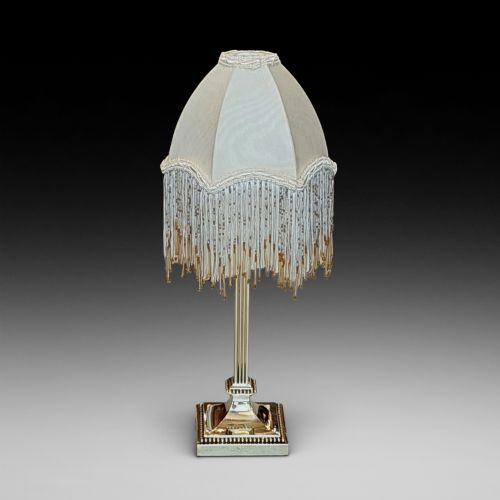
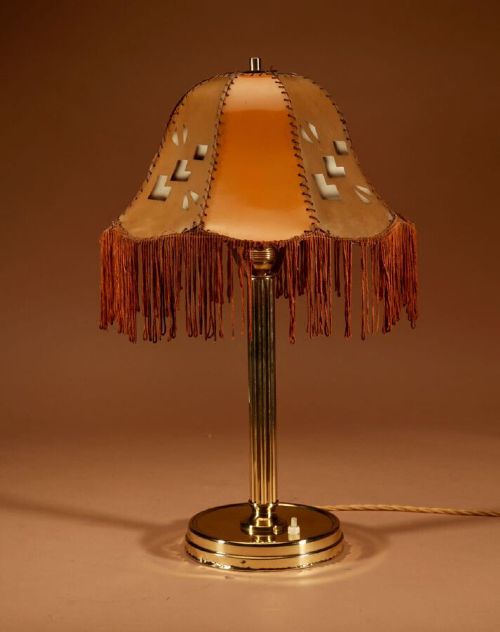
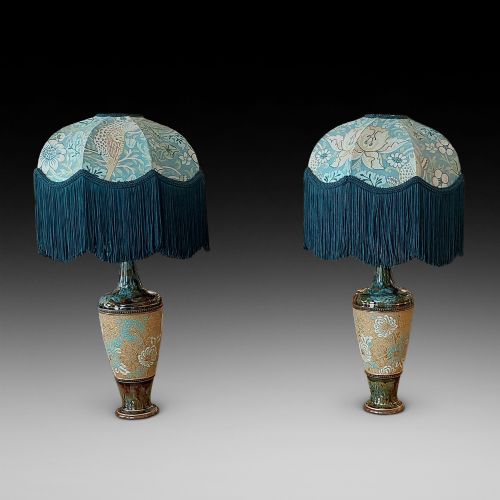
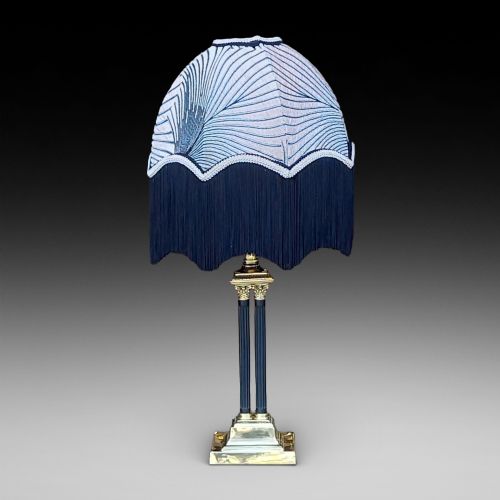
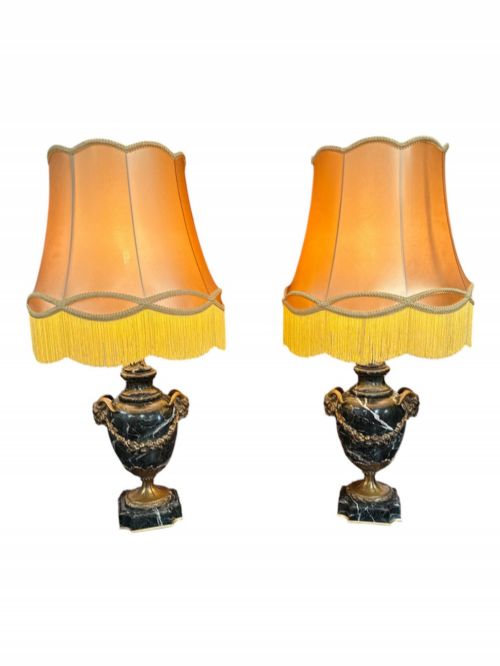
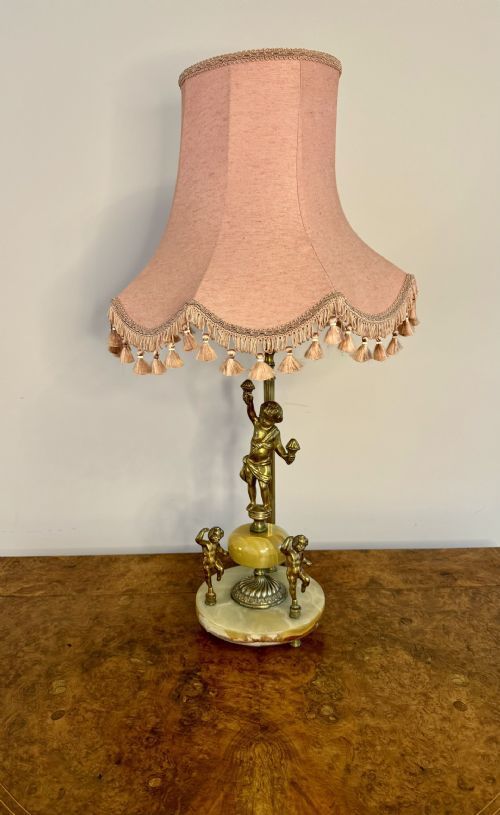
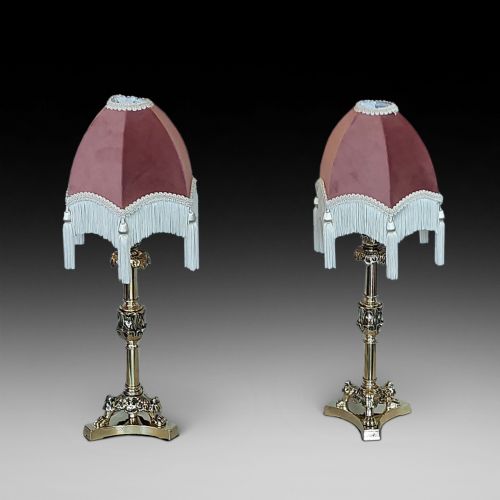
A fringed shade desk lamp combines period metal bases, such as brass columns or bronze figures, with fabric or silk shades edged in fringe. These items span periods from the Victorian era through the 1920s, incorporating styles like Edwardian, Art Nouveau and Neoclassical Revival. Collectors encounter converted candlesticks, oil lamps and figural statuettes adapted into task and reading illumination.
The objects recorded in this category frequently utilise classical motifs, including Corinthian and Doric columns, alongside urn and vase forms. Brass and gilt bronze dominate the structural elements, often paired with marble, onyx or alabaster bases. The addition of fabric shades with decorative trim completes the typical profile found in these listings.
Standards of craftsmanship
Quality rests upon the crispness of the metal casting, the weight of the supporting base and the proportion of the overall silhouette. Fine examples display sharp detailing in classical column capitals, figural statuary and chased bronze mounts, whereas simpler pieces rely on pressed brass or standard turned elements.
The integrity of the original components also determines distinction, particularly where oil reservoirs, burners or candlesticks have undergone conversion. Superior pieces maintain their original surface patination, substantial marble or onyx plinths and harmonious proportions between base and shade.
Eagle and serpent motifs occasionally battle for dominance on Edwardian lamp columns.
The Fringed Shade Desk Lamp Glossary
- Corinthian column
- A classical architectural column design featuring ornate acanthus leaves on the capital. This form appears frequently on brass and silver-plated bases.
- Gilt bronze
- Bronze treated with a layer of gold through fire gilding or ormolu techniques. This material yields a durable, rich metallic sheen on decorative mounts.
- Spelter
- A zinc alloy used as a cost-effective substitute for bronze in decorative figures and lamp bases. It often receives a bronze-coloured or painted finish.
- Cold-painted bronze
- Bronze sculptures finished with paint applied after casting without subsequent firing. This technique provides vivid surface coloration on figural lamps.
- Onyx
- A banded variety of chalcedony used for smooth, decorative lamp bases. It offers a translucent, polished stone foundation.
Fringed Shade Desk Lamp: Frequently Asked Questions
What periods do these lamps date from?
The pieces span the Victorian era, the Edwardian period and the early twentieth century up to the 1920s. Many items incorporate revival styles that echo earlier classical eras.
Original manufacturing techniques and material choices align with these specific decades, helping buyers trace the evolution of domestic desk illumination.
Were these always electric lamps?
Many examples began life as oil lamps, candlesticks or decorative bronze statuettes. Craftsmen subsequently converted these objects to accommodate electrical wiring.
This adaptation process preserves the decorative value of earlier household items while making them functional for modern desk use.
How do I identify classical revival styles?
Neoclassical and Corinthian revival pieces display architectural elements derived from ancient Greek and Roman buildings. Look for fluted columns, acanthus capitals and urn motifs.
These design characteristics reflect nineteenth-century revivals of classical antiquity applied to functional desk lighting.
Where should I place a desk lamp?
These lamps suit traditional studies, libraries and workspaces where task lighting meets period interior design. Their substantial metal bases provide stable placement on wooden desks.
The combination of directional task illumination and decorative fabric shades creates a focused yet warm pool of light.