


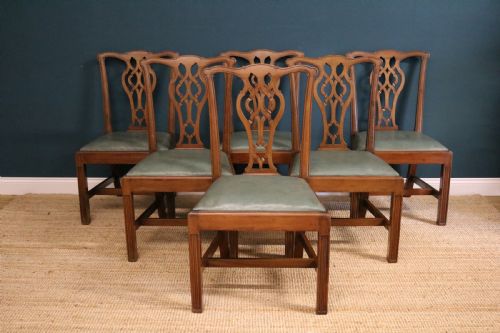


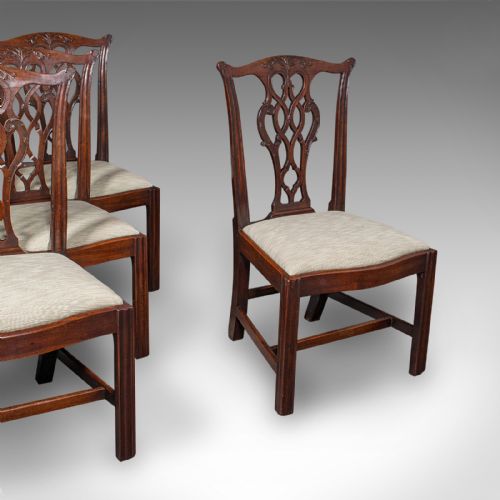

Fretwork Wooden Chair
A fretwork wooden chair offers intricate pierced splats and solid joinery, bringing architectural elegance and tactile warmth to any room.
Fretwork Wooden Chair
When you search for a fretwork wooden chair, you are looking at seating defined by pierced wooden splats, intersecting lattice, and carved openwork backs. These pieces span the Georgian, Edwardian, and nineteenth-century periods, capturing styles from George III revival to Chinese Chippendale.
The versions you are most likely to meet on this page include mahogany dining chairs, armchairs, and side chairs with upholstered, cane, or fabric seats. They range from formal dining sets to singular elbow chairs and unique architectural seating forms.
Makers and workshops across different centuries adopted pierced fretwork to lighten heavy timber frames while displaying cabinetmaking skill. You will find dining chairs alongside library and occasional chairs that share this distinctive openwork vocabulary.
How they were made
Cabinetmakers constructed these chairs primarily using mahogany and hardwood, selecting timber capable of holding sharp, intricate profiles without splintering. The pierced fretwork was hand-sawn and carved from solid sections or laminated blanks before being integrated into the back frame.
Joints were typically secured with mortise and tenon construction, ensuring the delicate openwork frame could withstand daily use. Seats were upholstered in leather, velvet, fabric, or tapestry, while others incorporated woven cane panels.
Fretwork Wooden Chair Retail Price Guide 2026
Typical asking prices for fretwork wooden chair among the pieces listed under this phrase on Sellingantiques today, from the lower quarter to the upper quarter. They describe what is for sale here now, not the wider market.
This site's listings feature mahogany, hardwood, fabric, leather, cane, and brass materials across Georgian and Edwardian periods.
What varies in quality
The distinction between ordinary and exceptional work lies in the crispness and depth of the carved fretwork. Sharp, well-defined piercing and smooth transitions within the lattice demonstrate superior cabinetmaking skill.
Timber selection and grain continuity across the crest rail and splat also separate standard production from masterwork execution. Solid structural integrity combined with untouched original joinery defines the upper tier of these pieces.
Thomas Chippendale·Robert Manwaring
The Fretwork Wooden Chair Glossary
- Fretwork
- Ornamental openwork formed by cutting patterns through a thin board. It creates light, decorative wooden lattice effects.
- Splat
- The central vertical strip of wood in the back of a chair. Fretwork chairs feature pierced or carved splats.
- Elbow chair
- An armchair with wooden armrests, often designed as part of a dining set. It provides wider seating dimensions.
- Klismos
- An ancient Greek chair form with curved legs and a concave backrest. Revival versions adapt these sweeping lines in wood.
- Bergère
- An enclosed upholstered armchair with exposed wooden framing. It often includes cane panels on the sides or back.
Fretwork Wooden Chair: Frequently Asked Questions
How were these chairs used historically?
These chairs served primarily as formal dining seating, library armchairs, or decorative occasional furniture. Dining sets accommodated guests around large tables, while individual elbow chairs stood in parlours or halls.
Their intricate backs were designed to be seen from behind, often placed away from walls to display the openwork carving.
How do I care for a wooden fretwork chair?
Maintain the timber by dusting regularly with a soft, dry cloth and avoiding harsh chemical polishes. Keep the chair away from direct heat sources and strong sunlight to prevent wood shrinkage and fading.
Inspect the joints periodically and protect upholstered or cane seats according to their specific material needs.
How do I tell periods apart?
Dating relies on timber choice, carving style, and construction methods. Georgian and revival pieces often display rich mahogany with intricate Chinese-inspired fretwork, while Edwardian examples show lighter secondary woods and machine-assisted precision.
Seat upholstery styles, stretcher configurations, and leg shapes further indicate whether a chair is eighteenth-century or a later nineteenth-century revival.