



Fretwork Hanging Shelves
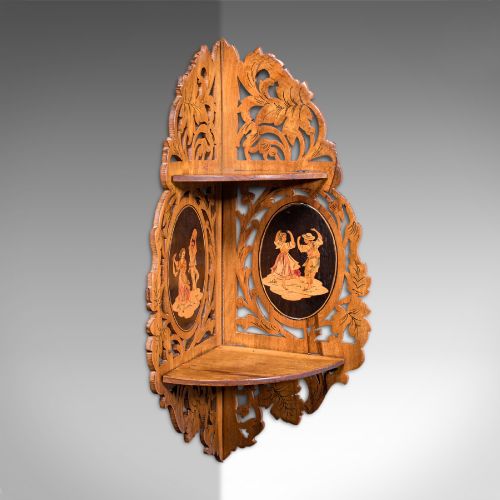
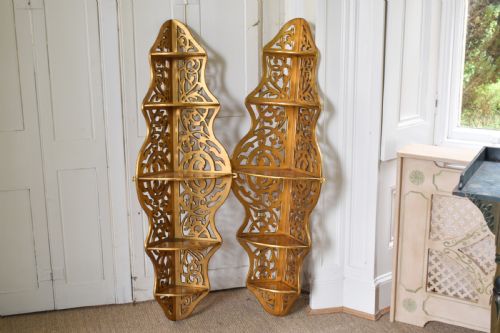
These fretwork hanging shelves bring carved lightness to a wall, offering small ledges for display in mahogany, pine, and rosewood.
Fretwork Hanging Shelves
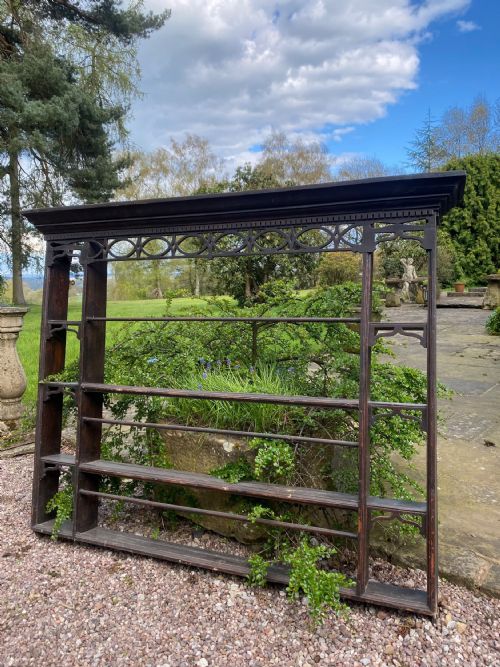
Fretwork hanging shelves are wall-mounted tiers designed to hold plates, books, and small ornaments within pierced wooden frames. When you search for fretwork hanging shelves, you meet wall shelves, corner shelves, plate racks, wall brackets, and wall mirrors across various periods.
The selections span the Georgian and Victorian eras into the Edwardian period, alongside Regency and William IV examples. You encounter styles ranging from Gothic Revival and Victorian Sorrento to Chippendale Revival and Victorian Italianate.
Forms vary from compact corner units to multi-tiered wall displays. Many pieces utilise mahogany, rosewood, pine, and stained oak, sometimes incorporating glass, brass, giltwood, and gesso.
How they were made
Cabinetmakers constructed these shelves using timber such as mahogany, rosewood, and pine, shaping the decorative pierced elements by hand or with early mechanical saws. Surfaces often received polish or inlay, utilising olive wood in Sorrento pieces and delicate brass fixtures.
Giltwood and gesso appear on mirror frames and brackets, providing a reflective or heavily ornamented finish. Joinery techniques varied from simple pegging to fine dovetailing appropriate for weight-bearing wall furniture.
Fretwork Hanging Shelves Retail Price Guide 2026
Typical asking prices for fretwork hanging shelves among the pieces listed under this phrase on Sellingantiques today, from the lower quarter to the upper quarter. They describe what is for sale here now, not the wider market.
Some nineteenth-century makers used olive wood from Sorrento to turn plain corners into intricate inlaid Mediterranean showcases.
What varies in quality
Quality rests in the crispness of the pierced fretwork and the choice of primary timber, where dense mahogany or figured rosewood elevates a piece above standard pine. The intricacy of inlay work, such as that seen on Sorrento pieces, distinguishes simpler utility shelves from finer decorative items.
Structural integrity matters deeply in wall-hung furniture, separating sturdily joined tiers from those weakened by poor past alterations or split joints.
The Fretwork Hanging Shelves Glossary
- Fretwork
- Openwork ornamentation carved or pierced through thin wood to create geometric or floral patterns. This technique defines the airy silhouette of the shelves.
- Whatnot
- A multi-tiered open piece of furniture designed for displaying ornaments and small objects. Edwardian examples often adopted this name.
- Delft plate rack
- A wall-mounted rack specifically built with slots and ledges to display ceramic plates. Pine and eighteenth-century examples frequently take this form.
- Giltwood
- Wood that has been coated with a thin layer of gold leaf. It appears on Victorian mirrors and decorative brackets.
- Gesso
- A plaster-like material applied to wood surfaces as a base for gilding or painting. It allows for crisp moulded details on frames.
Fretwork Hanging Shelves: Frequently Asked Questions
How do I hang these shelves safely?
Wall-mounted shelves require secure fixings into solid masonry or wall studs to bear the weight of the timber and displayed items safely.
Check the original hanging loops or brackets on the back of the piece to ensure they remain structurally sound before mounting.
How do I date a set of hanging shelves?
Dating relies on timber selection, construction methods, and stylistic cues such as Chippendale Revival piercing or Victorian inlay work.
Examining the backboards, fixings, and secondary woods helps place a piece within periods like the Georgian, Victorian, or Edwardian eras.
Can these shelves hold heavy books?
Most fretwork hanging shelves are designed for lighter displays, such as small volumes, ceramics, or decorative plates rather than heavy libraries.
The delicate pierced wooden brackets provide charm and moderate support rather than heavy-duty load capacity.