



French Wrought Iron Chandelier
A French wrought iron chandelier brings industrial strength and sculptural grace to a room, forged by hand to hold candles or electric light.
French Wrought Iron Chandelier
A french wrought iron chandelier is a substantial overhead fixture shaped from forged metal, frequently appearing alongside glass, crystal, or gilt elements. These pieces originate from periods spanning the late nineteenth century through the mid twentieth century, encompassing styles such as French Chateau, Art Nouveau, and French Provincial.
How they were made
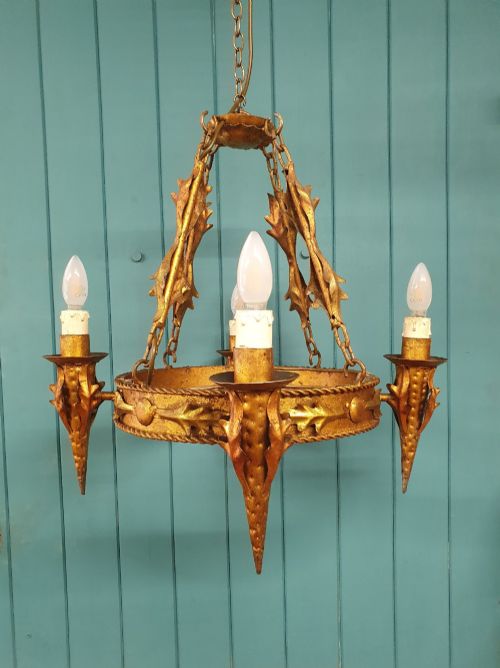
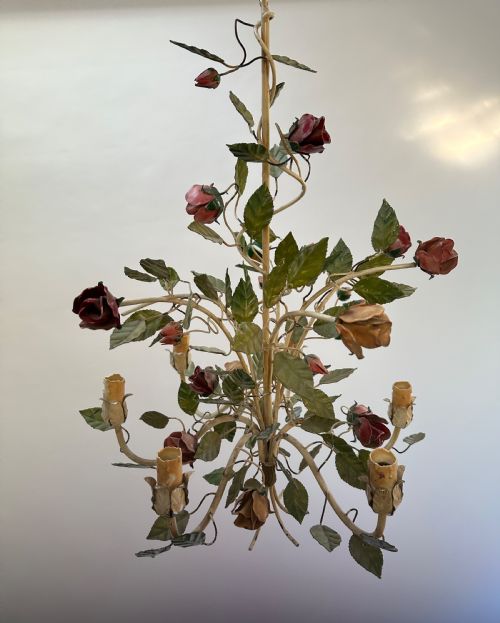
Makers shaped wrought iron and steel by hand, beating and twisting the metal while hot to form rigid structural branches and ornate scrollwork. They combined the dark forged metal with contrasting materials, integrating gilt details, polychrome paint, or giltwood components.
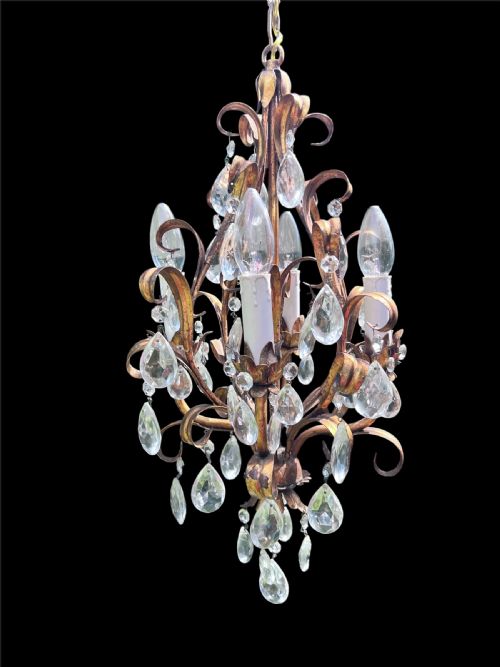
Lighting elements incorporated pressed glass, cut glass cage structures, and pate de verre shades. Artisans suspended glass crystal drops, beads, and fruit motifs from the iron frames to catch and refract the illumination.
Some iron branches bear heavy glass apples and grapes, proving that French smiths occasionally preferred an orchard over standard scrollwork.
What varies in quality
The distinction between ordinary and exceptional examples lies in the finesse of the metalwork and the integration of decorative elements. Master smiths produced fluid, lifelike curves and balanced arm proportions, whereas lesser pieces display rigid or heavy construction.
Quality also depends on the originality and execution of associated glass components, such as hand formed pate de verre shades or multi faceted crystal fruits. Cohesion between the iron armature and the applied gilt, polychrome, or glass finishes determines the overall visual merit.
Verrerie Des Vosge·Muller Freres
The French Wrought Iron Chandelier Glossary
- Wrought iron
- A tough, malleable form of iron that can be heated and hammered into complex shapes by hand. It provides the strong, dark structural backbone for many period ceiling fixtures.
- Pricket
- A sharp spike on a candle chandelier designed to impale and secure a tallow or beeswax candle. This form points to earlier traditional lighting methods before socket holders became standard.
- Pate de verre
- A glass-working technique where finely crushed glass is packed into a mould and fused in a kiln. It produces rich, dense colours and textured translucent shades typical of Art Nouveau lighting.
- Coronet
- A small, crown shaped upper framework on a chandelier from which subsidiary chains or drops descend. It adds height and decorative vertical emphasis to the fixture profile.
- Hall lantern
- An enclosed ceiling fixture designed specifically for narrow entrance spaces and corridors. These pieces protect the light source behind glass panels set within a rigid metal frame.
French Wrought Iron Chandelier: Frequently Asked Questions
How do I hang a heavy iron chandelier safely?
Suspension requires fixing directly into ceiling joists or installing a dedicated metal brace capable of supporting the combined weight of iron and glass. Professional electricians should verify that the structural ceiling hook matches the load before wiring.
Once secured at the correct height, the fixture becomes a permanent architectural anchor for the room. Ensure the weight is borne entirely by the chain and ceiling fixing rather than the electrical flex.
Can I convert a candle chandelier to electricity?
Many candle and pricket fixtures receive discreet electrical wiring to accommodate modern bulb fittings while retaining their historic appearance. Specialists thread hidden cables along the iron branches and fit appropriate candle tube covers.
This adaptation allows period pieces to function safely in contemporary domestic settings. The original aesthetic remains undisturbed when conversion work is executed with sympathetic restraint.
How do I clean wrought iron and crystal?
Maintenance involves dusting the iron framework gently with a dry cloth and avoiding harsh chemical polishes that strip historic surface finishes. Glass crystals and drops benefit from careful washing in warm soapy water while detached from the frame.
Regular upkeep prevents grime accumulation on both the metalwork and the reflective glass elements. Keeping the components clean ensures the chandelier retains its intended visual presence and sparkle.
What rooms suit a hall lantern?
Enclosed hall lanterns provide focused downward illumination suited to entranceways, landings, and high ceilinged corridors. Their compact profile allows them to inhabit vertical spaces without obstructing passage below.
These fixtures create an immediate impression upon entering a home while offering practical illumination for transitional areas. They bridge the gap between architectural hardware and decorative lighting.