
French Wooden Refectory Table
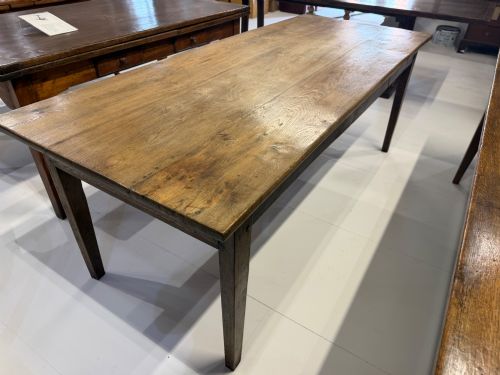
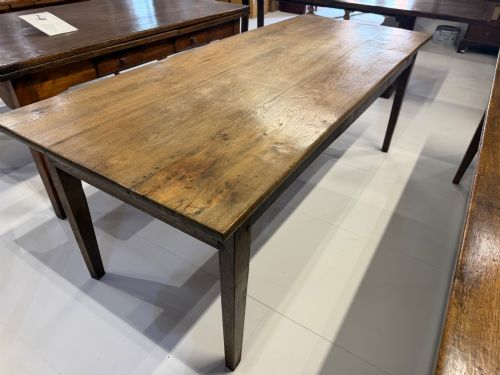
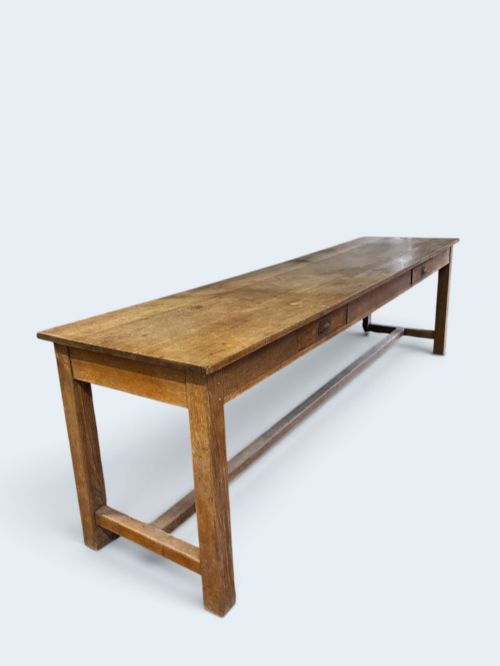
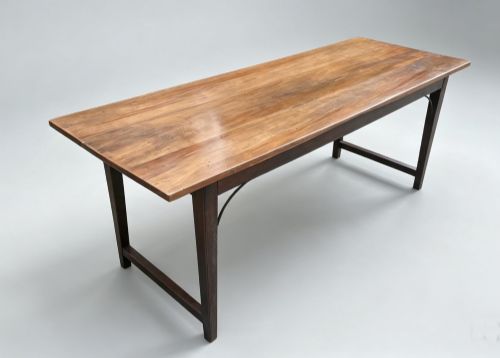
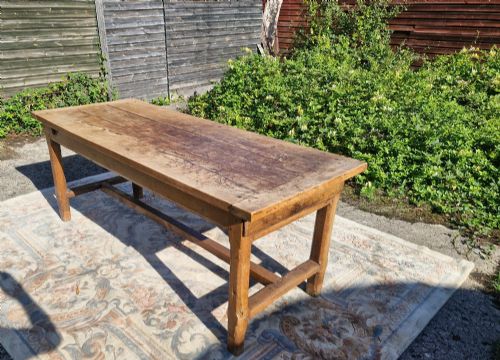
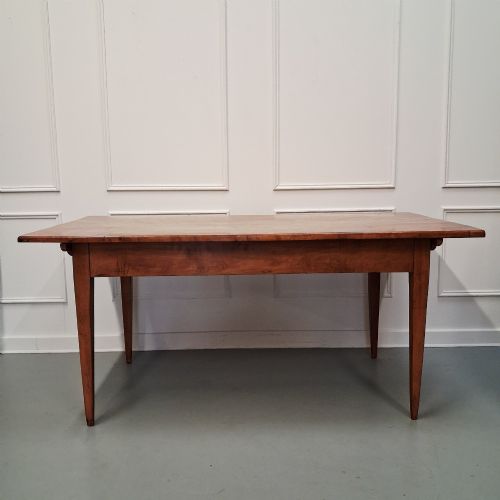
A french wooden refectory table brings sturdy timber and generous proportions to the dining room, offering a practical centrepiece for everyday meals.
French Wooden Refectory Table
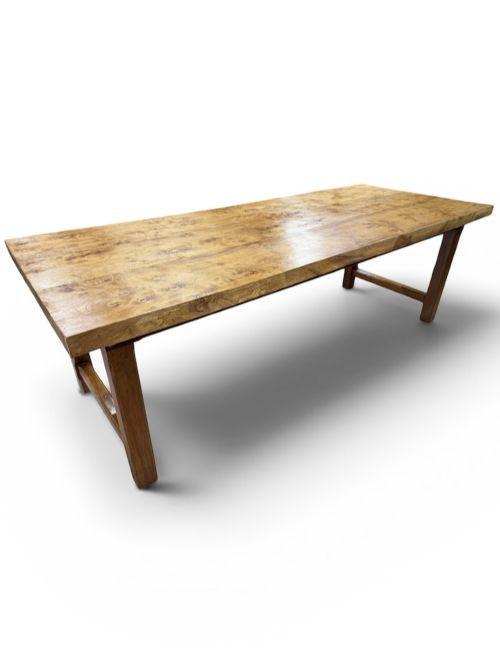
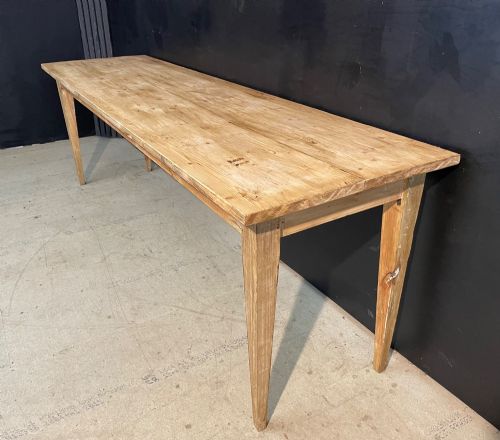
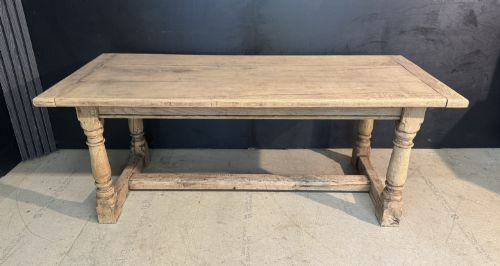
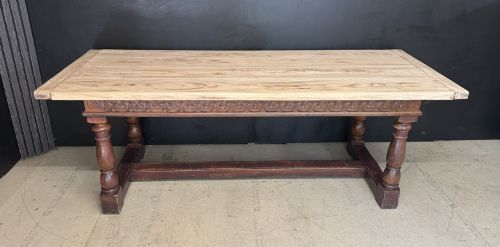
A french wooden refectory table serves as the primary gathering place for dining and kitchen tasks, built with long rectangular proportions designed to seat many people. When searching for a french wooden refectory table, buyers encounter sturdy dining and serving surfaces rooted in domestic traditions.
The selections span various eras, with the nineteenth century heavily represented alongside examples from the eighteenth century and the early twentieth century. These pieces often carry stylistic traits linked to rustic farmhouse, provincial, and country traditions.
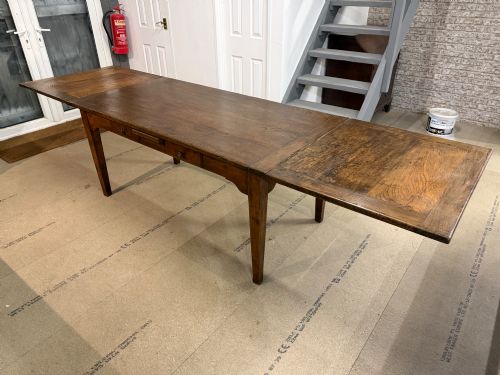
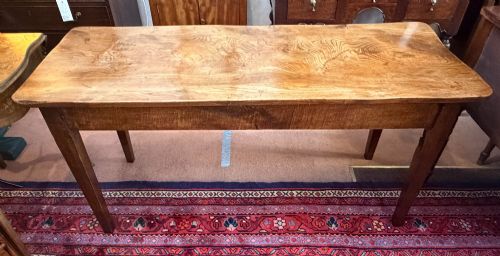
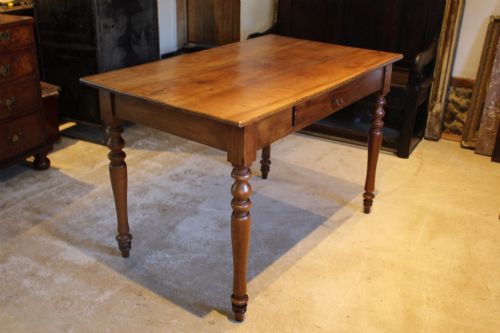
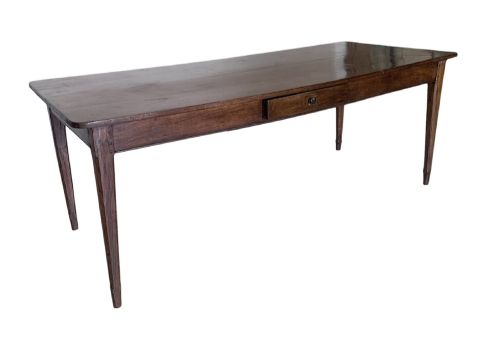
Most items appear in robust timber forms, ranging from standard dining formats to extending and draw leaf variants. Tables frequently incorporate practical additions such as drawers built into the frieze.
Materials and construction
Construction relies heavily on solid hardwoods and softwoods selected for durability, with oak, fruitwood, cherrywood, pine, elm, walnut, and chestnut appearing across the pieces. Joinery is traditional and robust, designed to withstand heavy daily use in domestic settings.
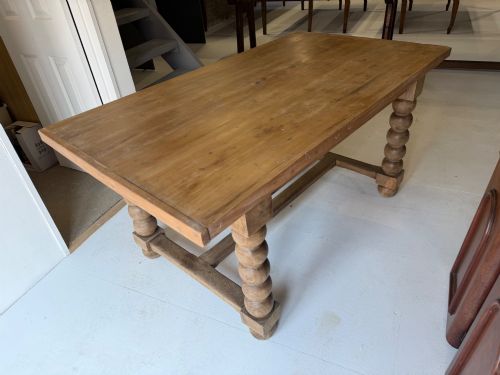
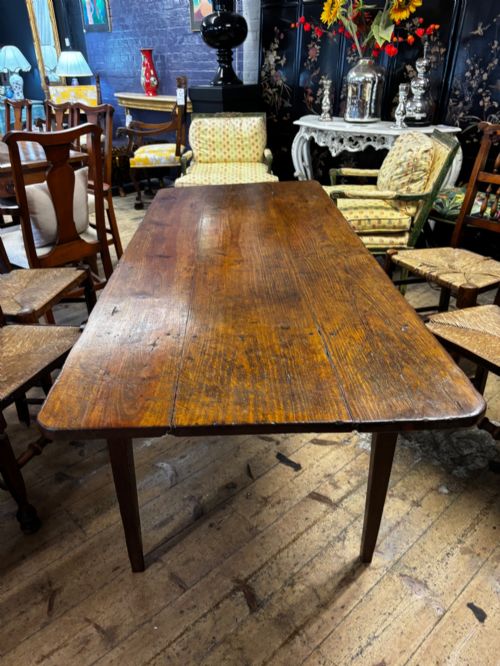
Tops are often constructed from multiple boards joined securely, sometimes supported by tapered, bobbin, or barrel legs. Additional elements such as iron and brass hardware appear on specific formats, including tables fitted with drawers.
Listings feature woods including oak, fruitwood, pine, cherrywood, elm, walnut, and chestnut.
Separating top quality from standard work
Quality rests in the selection and conditioning of the timber, where dense grain and well-matched boards create a stable, handsome top. Superior examples show careful attention to the joinery of the legs and frame, ensuring long-term rigidity without excessive bulk.
The proportion and handling of the woodwork define the better items, particularly where subtle details like tapered legs or fitted drawers integrate smoothly into the overall design. Surface texture and the depth of the wood grain distinguish finely finished examples from simpler utilitarian pieces.
The French Wooden Refectory Table Glossary
- Refectory table
- A long, narrow dining table traditionally used in communal dining halls. These pieces have evolved into central dining furniture for domestic kitchens and rooms.
- Draw leaf
- A table design featuring extension leaves hidden beneath the main top that pull out to lengthen the surface. This mechanism allows the table to accommodate larger gatherings easily.
- Fruitwood
- Timber sourced from fruit-bearing trees such as cherry or pear, valued for its fine grain and warm tone. It was frequently utilised in provincial cabinet making.
- Frieze
- The horizontal band running beneath the top edge of the table. In many designs, this section houses practical storage drawers.
French Wooden Refectory Table: Frequently Asked Questions
How do I clean a wooden table top?
Wipe surfaces gently with a damp cloth and dry immediately to protect the timber finish.
Avoid harsh chemical cleaners that can strip the natural grain and dry out the wood over time.
Can I use these tables daily?
These tables are constructed from solid hardwoods and softwoods intended for heavy domestic use.
Their robust frames and thick tops easily withstand the demands of daily family meals and kitchen tasks.
What is a draw leaf mechanism?
A draw leaf system uses sliding panels stored beneath the main surface that pull out from the ends.
This clever design extends the table length quickly without requiring separate loose leaves.
How do I date an antique table?
Dating relies on observing construction methods, tool marks, timber choices, and overall design characteristics.
Comparing the legs, joinery, and hardware styles helps place the piece within a specific century or period.