

French Wooden Desk
A french wooden desk brings tactile warmth and period utility to a room, offering practical writing surfaces shaped by centuries of European craftsmanship.
French Wooden Desk
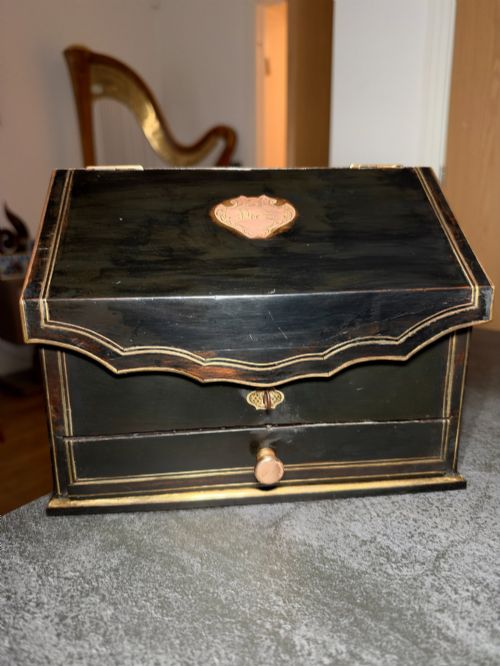
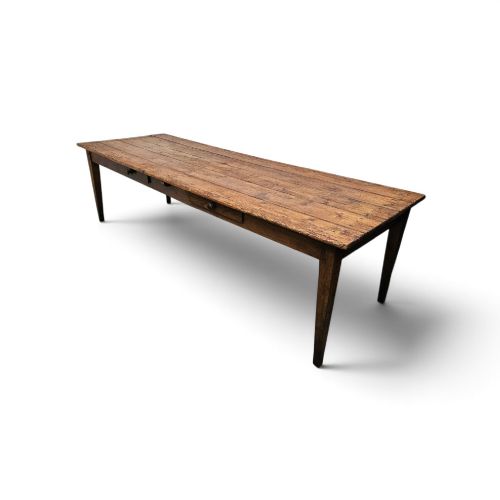
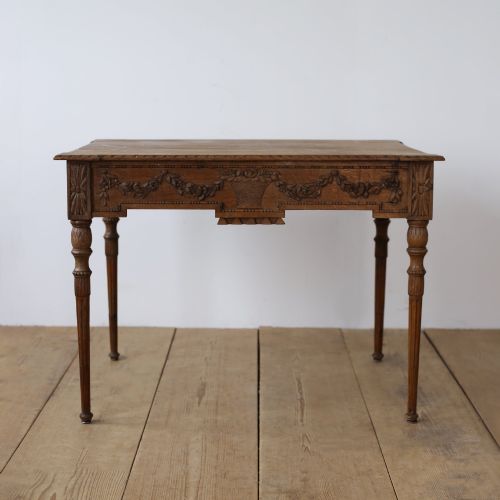
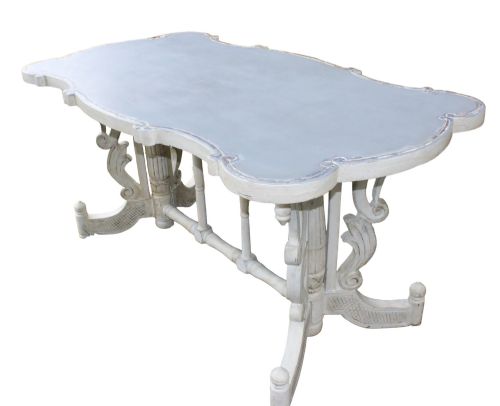
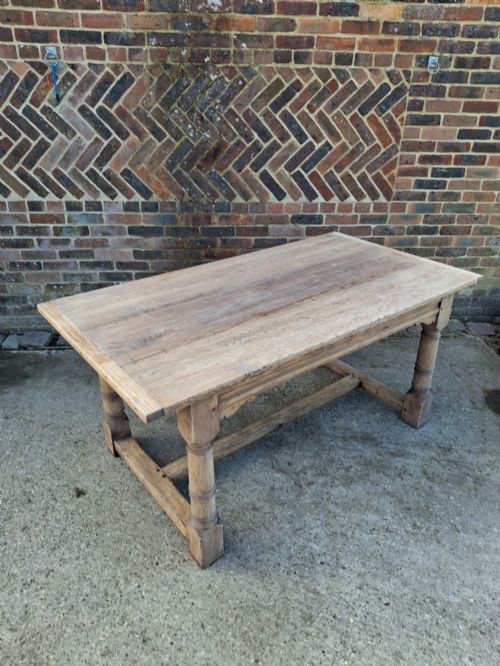
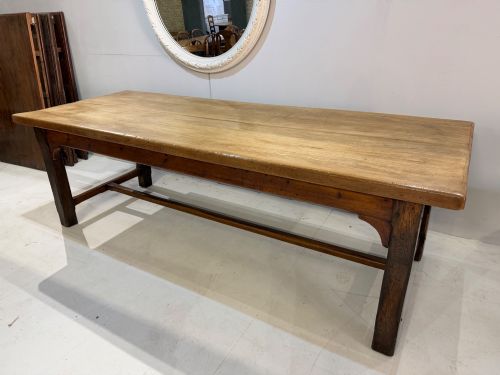
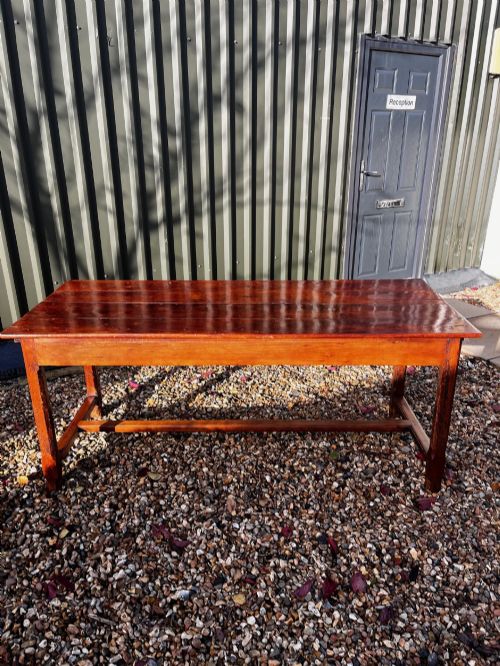
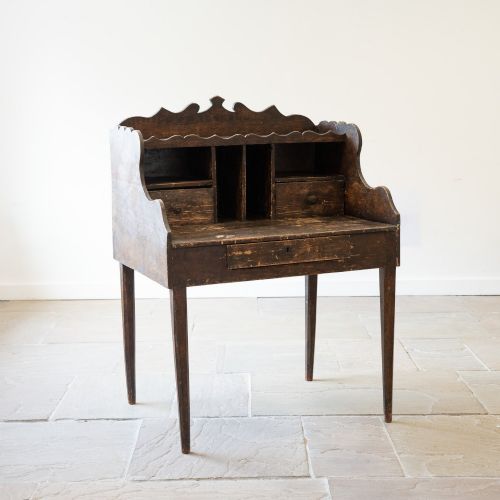
A french wooden desk spans robust provincial worktables adapted for writing, refined bureau plat models, and fall-front secretaire abattant designs. These pieces emerge from periods ranging through the eighteenth century, the nineteenth century, and into the early twentieth century.
Buyers encounter solid oak and fruitwood farmhouse variants alongside inlaid walnut and mahogany creations bearing French Directoire or Louis XVI styling. The selection reflects both rustic utility and formal salon elegance.
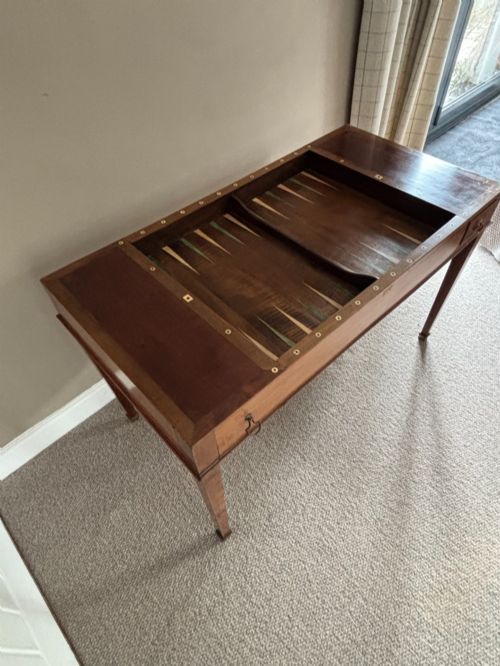
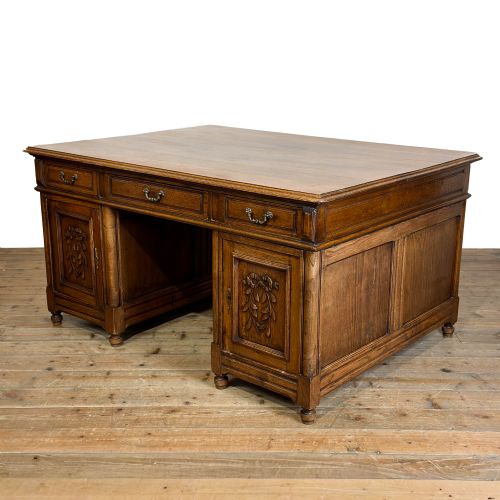
Writing tables appear with fitted drawers, leather inserts, and brass mounts, reflecting the diverse domestic and professional demands of past centuries.
Judging quality
Quality rests on the precision of the cabinetmaking, visible in the tightness of the dovetail joints and the integrity of the timber framing. Superior examples retain their original brass hardware, leather writing surfaces, and uncompromised structural alignment.
The sophistication of the surface decoration defines the tier of the piece, distinguishing restrained provincial joinery from elaborate walnut parquetry and fine marquetry work.
French Wooden Desk Retail Price Guide 2026
Typical asking prices for french wooden desk among the pieces listed under this phrase on Sellingantiques today, from the lower quarter to the upper quarter. They describe what is for sale here now, not the wider market.
Some provincial desks retain ink stains inside their drawers, left behind by writers who abandoned their quips centuries ago.
Étienne Kohlmann
The French Wooden Desk Glossary
- Secretaire abattant
- A tall upright desk featuring a fold-down writing flap that conceals an interior arrangement of small drawers and pigeonholes. It provides a concealed workspace when closed.
- Marquetry
- Decorative veneer work arranged in pictorial or geometric patterns using various coloured woods. It requires high skill to fit the thin wood pieces together.
- Parquetry
- Geometric wood inlay forming patterned surfaces such as cubes or chevrons on table tops and drawer fronts. This technique enhances the visual depth of the timber.
- Directoire style
- A transitional design period bridging Louis XVI and Empire styles characterised by clean neoclassical lines and restrained ornamentation. It draws inspiration from ancient Roman forms.
French Wooden Desk: Frequently Asked Questions
What is a bureau plat?
A bureau plat is a flat-topped freestanding writing table equipped with drawers beneath the work surface. It was designed to sit in the centre of a room rather than against a wall.
These tables frequently feature leather inserts and brass mounts, serving as functional desks for administrative or correspondence tasks.
How do I identify a secretaire abattant?
A secretaire abattant is a tall, vertical writing cabinet featuring a hinged drop-front panel. When lowered, the panel creates a horizontal writing desk.
Behind this flap lie small compartments and drawers for stationery, while lower cabinet doors conceal deeper storage space.
What woods were used in these desks?
Cabinetmakers utilised a variety of domestic and imported timbers depending on the region and period. Common structural and surface woods include oak, walnut, cherry wood, mahogany, and fruitwood.
Inlays often incorporate contrasting veneers to create geometric patterns or floral marquetry scenes across the writing surfaces and drawers.
How should I care for a wood desk?
Maintain the timber by keeping the desk away from direct heat sources and strong sunlight, which can dry out the wood and fade polished finishes. Regular dusting with a soft, dry cloth prevents particulate build-up.
Condition the surface periodically with appropriate wax to nourish the grain without leaving heavy residue.