


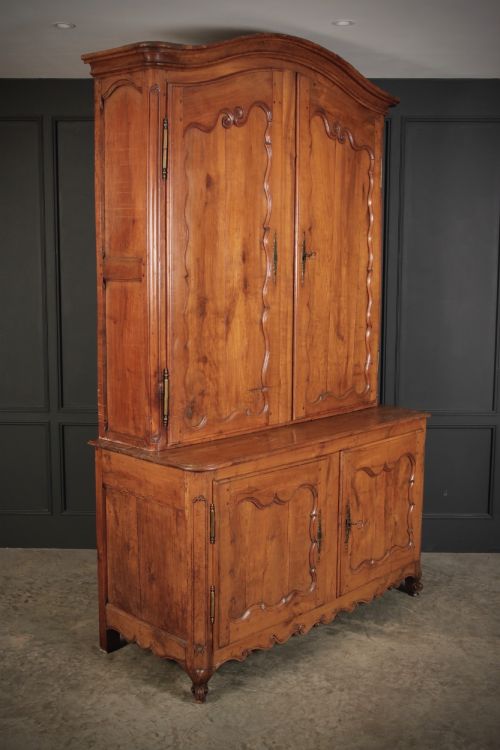


French Wooden Bookcase
A french wooden bookcase brings warmth and structure to a room, offering practical shelving disguised in fine provincial or classical cabinetry.
French Wooden Bookcase
A french wooden bookcase is a functional storage piece that ranges from simple open library shelves to grand glazed display cabinets. Buyers searching for this phrase encounter items spanning the eighteenth century through to the Edwardian period, built in varied regional workshops across France and the wider continent.
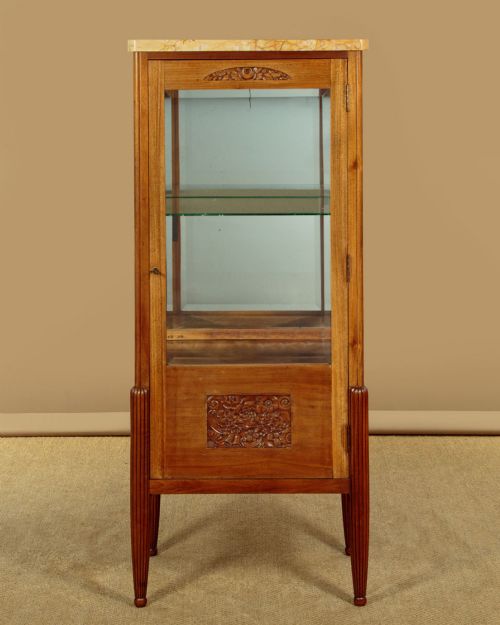
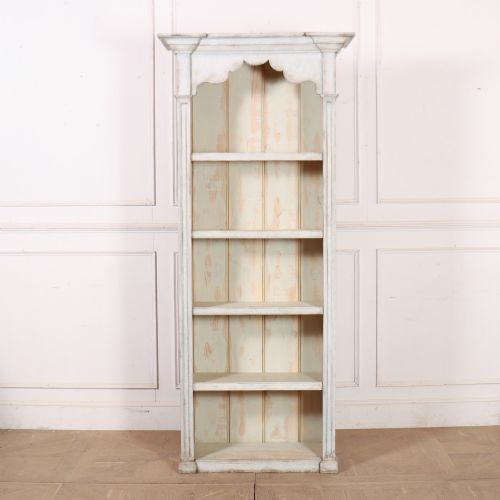
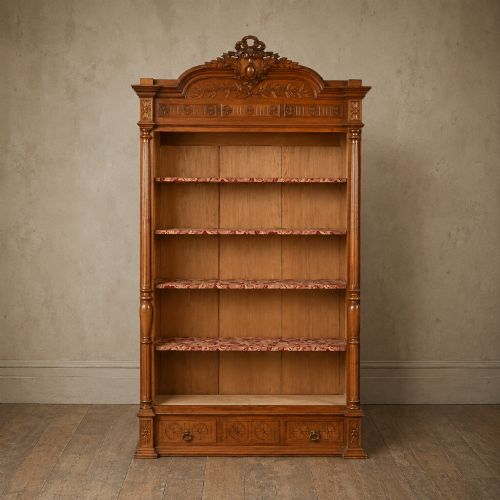
The selections on this page lean heavily towards nineteenth-century walnut, mahogany, and painted finishes. You will find compact dwarf bookcases alongside large open library pieces and side cabinets fitted with glass doors.
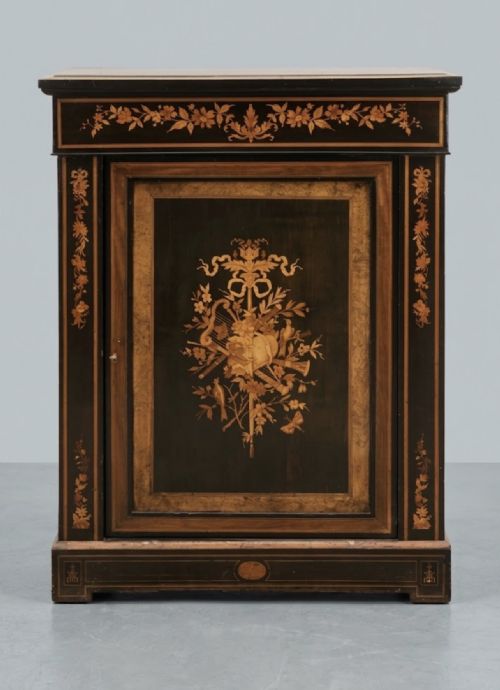
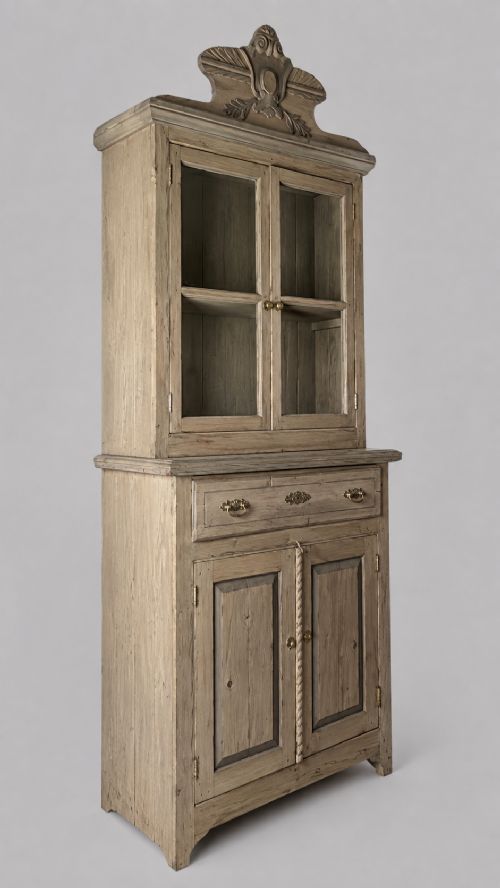
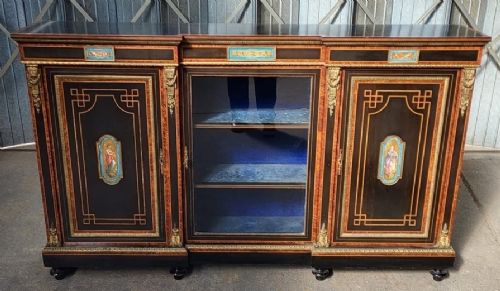
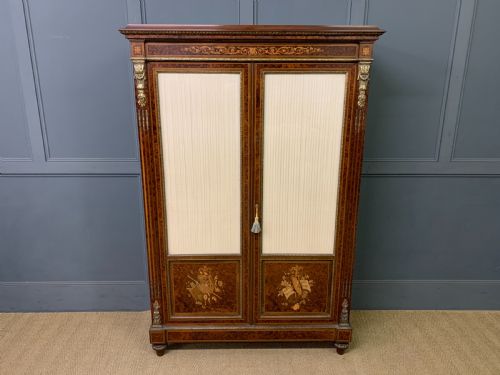
Regional diversity defines these objects, shifting from rustic eighteenth-century cherry and oak provincial cupboards to elaborate Napoleon III kingwood and ormolu-mounted creations. Each variation serves the fundamental purpose of housing books while adding architectural presence to an interior.
How they were made
Cabinetmakers relied on solid woods such as walnut, mahogany, oak, and cherry, often applying fine veneers like satinwood, amboyna, and kingwood to key surfaces. Carved details, turned legs, and inlaid patterns demonstrate traditional joinery methods suited to the weight of heavy timber libraries.
Metal mounts in brass and ormolu provide structural accents and decorative borders on empire and Victorian examples. Glazed doors utilise individual glass panes set into wooden lattice frames, protecting volumes from dust while maintaining visibility.
French Wooden Bookcase Retail Price Guide 2026
Typical asking prices for french wooden bookcase among the pieces listed under this phrase on Sellingantiques today, from the lower quarter to the upper quarter. They describe what is for sale here now, not the wider market.
Cabinet styles span French provincial, empire, rococo, and Victorian designs.
What varies in quality
The standard of a piece rests upon the selection of timber figures and the crispness of any hand-carved ornamentation or brass mounting. Superior examples demonstrate tight joinery, balanced proportions, and well-chosen veneers that age gracefully across the centuries.
Finishes range from distressed painted surfaces on provincial cupboards to high-gloss polish on formal cabinet work. The integrity of the internal shelving and the smoothness of adjustable mechanisms distinguish utilitarian storage from exceptional decorative furniture.
The French Wooden Bookcase Glossary
- Ormolu
- Gilded bronze mounts applied to furniture for decorative effect. This technique was favoured in French empire and rococo designs.
- Vitrine
- A glass-fronted cabinet designed for displaying books or objects of curiosity. These pieces often feature glazed doors on the front and sides.
- Kingwood
- A dense, richly figured exotic wood used for veneering fine nineteenth-century cabinets. It creates striking striped patterns on polished surfaces.
- Provincial
- Describing furniture made in the French regions outside Paris, typically characterised by solid local woods and simpler, sturdier construction.
French Wooden Bookcase: Frequently Asked Questions
How do I clean a wooden bookcase?
Dust regularly with a dry, soft cloth to prevent particle buildup on carved surfaces and mouldings.
Avoid chemical polishes and keep timber away from direct sunlight and radiators to protect the antique finish.
Are the shelves adjustable?
Many nineteenth-century open library designs feature adjustable shelving systems to accommodate books of varying heights.
Enclosed cupboards and older provincial pieces often have fixed shelves integral to their internal structure.
What is the difference between a vitrine and a bookcase?
A vitrine incorporates glass panels specifically to display contents safely while keeping them visible.
Standard bookcases focus primarily on open access for heavy volumes rather than enclosed display.
How do I identify a nineteenth-century piece?
Look for construction traits such as hand-cut dovetails, timber shrinkage patterns, and period-specific hardware like brass locks and hinges.
Stylistic markers including empire ormolu mounts and ebonised wood finishes also point clearly to this era.