




French Walnut Shelving
French walnut shelving brings warmth and architectural line to a room through rich timber and refined mounts.
French Walnut Shelving
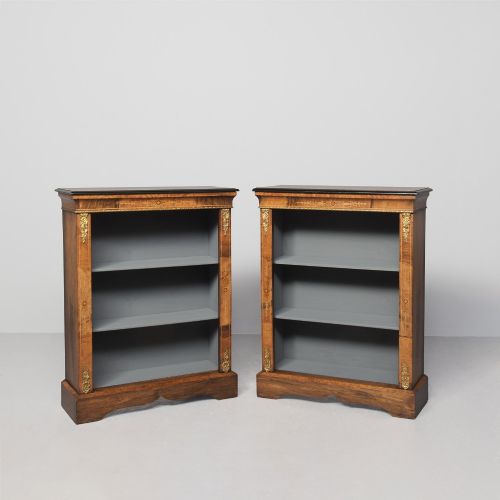
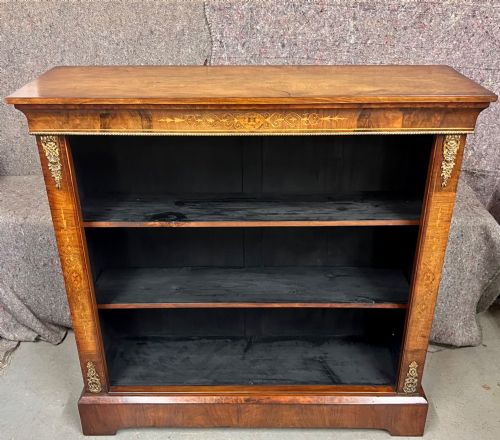
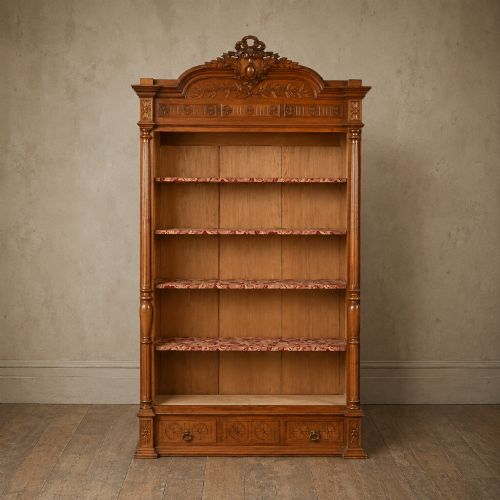
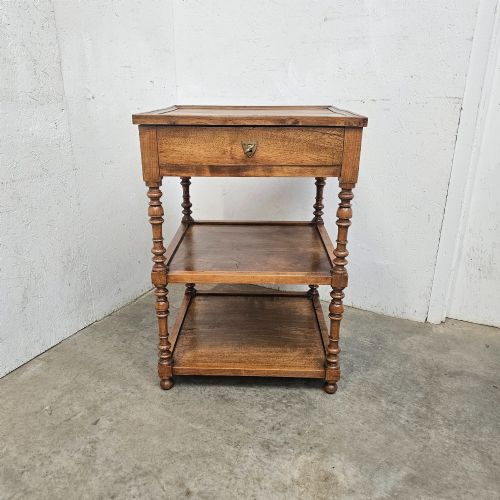
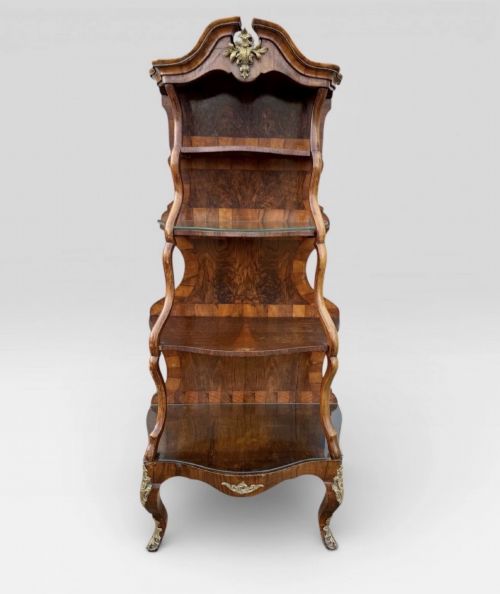
Buyers seeking french walnut shelving encounter a refined range of open etageres, wall shelves, and multi-tier whatnots dating chiefly from the nineteenth century. These pieces combine rich walnut and burr walnut timbers with decorative metal mounts, serving both practical display and decorative emphasis.
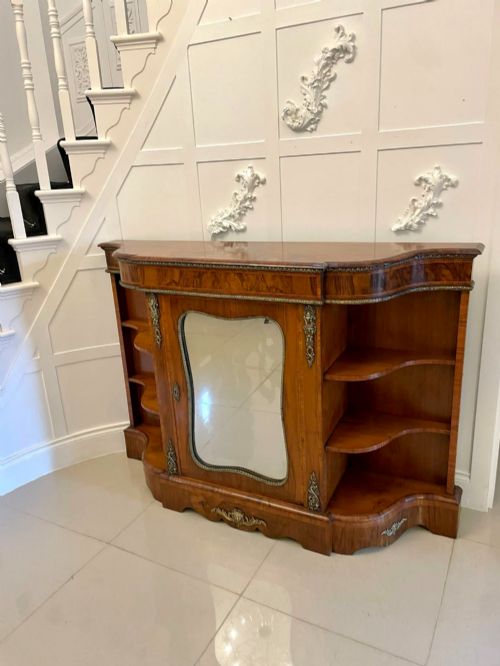
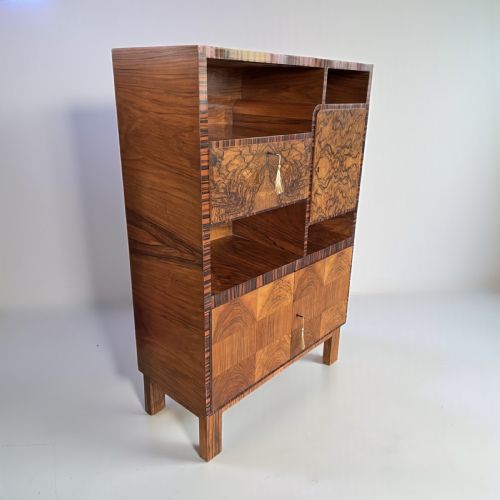
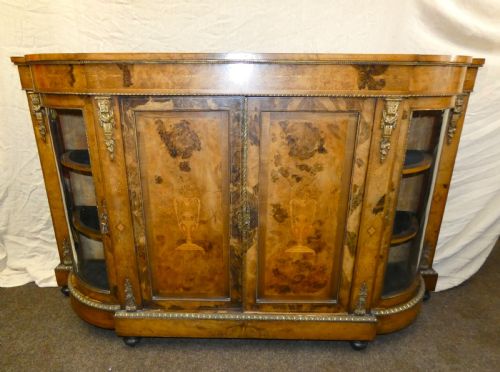
The selection on this page spans distinct nineteenth-century and early twentieth-century periods, including Victorian, Edwardian, and Art Deco interpretations. Forms range from diminutive three-tier stands and serpentine whatnots to substantial open library bookcases and brass-mounted cabinets.
Continental craftsmanship shapes much of this furniture, drawing on French Provincial, Rococo Revival, and Napoleon III design traditions. Makers utilised marquetry veneer, hand carving, and ebonised details to create functional display furniture that anchors a residential interior.
Materials and construction methods
Makers built these pieces using solid walnut and burr walnut veneer, frequently enhancing the timber figure with intricate marquetry inlay. Ebonised wood often provided contrasting dark borders or structural accents.
Metal enrichment is central to the construction, employing ormolu and gilt metal mounts, alongside brass inlays and structural components. Glass panels and turned legs further define the fabrication of etageres and cabinets across the periods.
French Walnut Shelving Retail Price Guide 2026
Typical asking prices for french walnut shelving among the pieces listed under this phrase on Sellingantiques today, from the lower quarter to the upper quarter. They describe what is for sale here now, not the wider market.
Even the tiniest nineteenth-century whatnot demands a polished surface to reflect its brass mounts.
Distinctions in quality
Quality rests upon the selection of timber figure, particularly the richness of the burr walnut and the precision of the marquetry veneer. Superior examples display seamless grain matching across panel surfaces and drawers.
The execution of metalwork marks the upper tier of production, where cast ormolu and gilt mounts are crisply chased and securely fitted to the walnut body. Hand-carved decorative elements show depth and clean tool work rather than shallow moulding.
Structural integrity and joinery refinement separate standard production from finer pieces, evident in the stability of multi-tier etageres and the smooth operation of adjustable shelving in bookcases.
The French Walnut Shelving Glossary
- Etagere
- An open tiered piece of furniture designed for displaying small objects or books. These typically feature multiple shelves supported by slender uprights or turned legs.
- Ormolu
- Gilded bronze mounts applied to furniture for decorative effect. The technique involves mercury gilding on a bronze base, producing a bright golden finish.
- Marquetry
- Decorative veneer work formed by fitting together small pieces of wood, shell, or ivory to create pictorial or geometric patterns on a surface.
- Burr walnut
- Timber taken from a tree growth or burr, yielding a swirling, highly figured grain pattern prized for cabinet fronts and tabletops.
- Whatnot
- A freestanding piece of furniture with several open shelves placed one above the other, used in nineteenth-century interiors for ornaments.
French Walnut Shelving: Frequently Asked Questions
How do I clean french walnut shelving?
Dust the timber regularly with a soft, dry cloth to prevent grit accumulation on the polished surface.
Apply a microcrystalline wax periodically to nourish the walnut and protect the finish from moisture.
Are these shelves suitable for heavy books?
Open etageres and etageres with turned legs are designed primarily for decorative display and lighter volumes.
Substantial library bookcases and credenzas with solid wood construction better support heavy book collections.
What distinguishes Victorian from Art Deco pieces?
Victorian walnut shelving often incorporates ornate carved details, ormolu mounts, and revived historical motifs.
Art Deco pieces from later periods favour clean geometric lines, simplified forms, and unadorned walnut surfaces.
Can wall shelves hold significant weight?
Wall-mounted walnut shelves require secure fixing into solid masonry or stud work to bear loads safely.
Their primary function remains the display of smaller decorative objects rather than heavy household items.