



French Umbrella Rack
A french umbrella rack is a practical hallway furnishing designed to hold walking sticks and wet gear with continental flair.
French Umbrella Rack
A french umbrella rack serves as a utilitarian hallway furnishing designed for sticks and canes, appearing in forms such as umbrella stands, coat stands, and combined hall stands. These pieces originate across various eras including the nineteenth century, eighteen-seventy, eighteen-ninety, nineteen-hundred, nineteen-ten, nineteen-twenty, and nineteen-thirty.
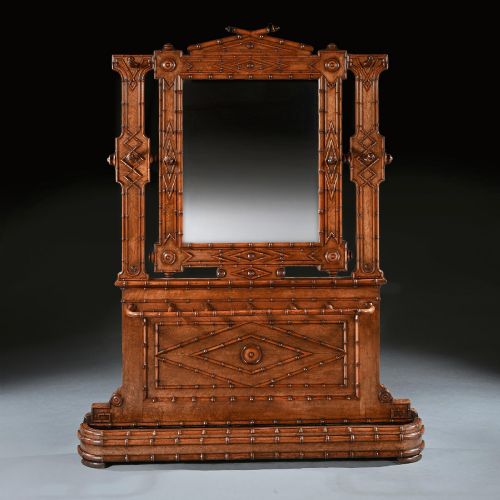
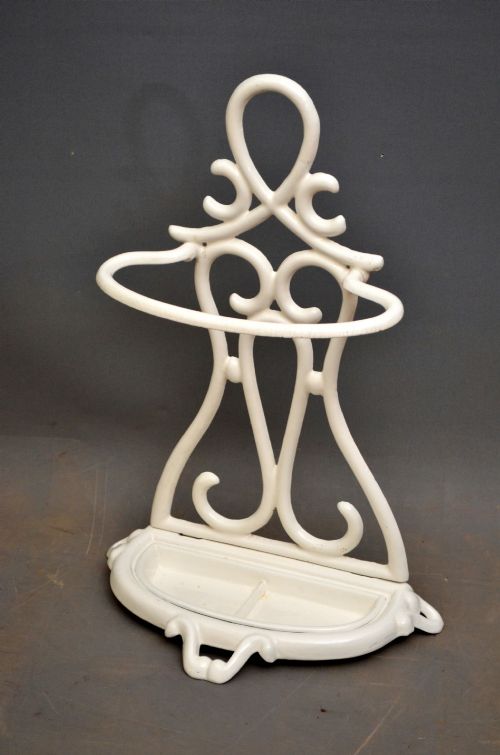
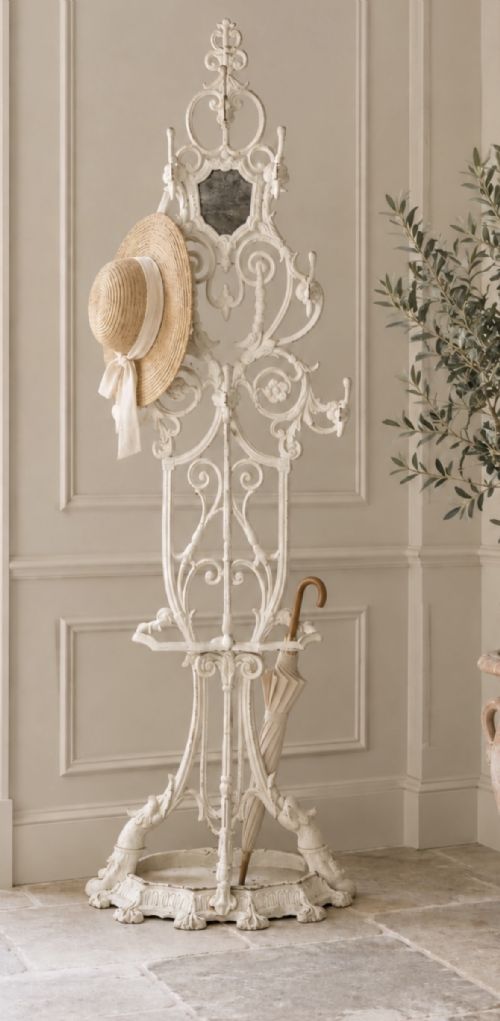
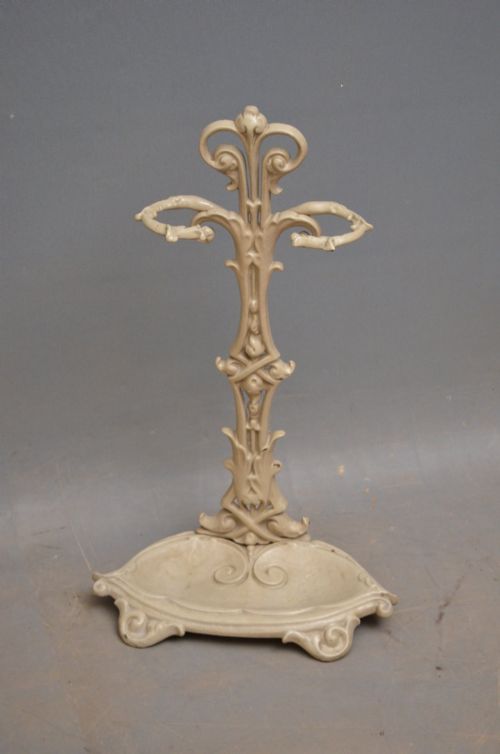
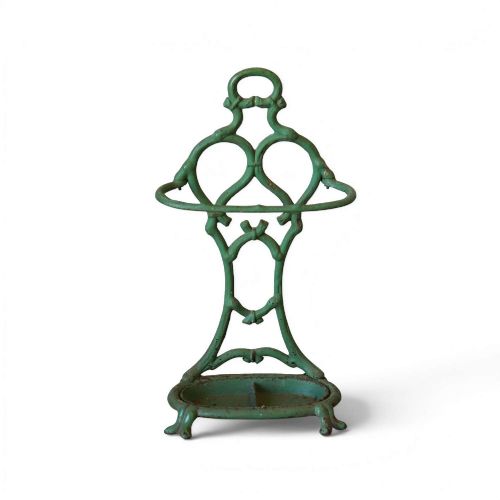
The most common iterations on this page manifest as cast iron umbrella stands and stick stands, frequently displaying decorative motifs like faux bois bamboo designs or white enamel finishes. Buyers also encounter larger pieces incorporating coat hooks and mirrors within the hall stand category.
Stylistic diversity runs deep among these items, drawing from Rococo Revival, Gothic Revival, Victorian, Aesthetic Movement, Art Nouveau, and Art Deco traditions. Examples range from ebonised hat and coat combinations formed as crossed halberds to minimalist wrought iron creations.
Materials and Construction Methods
Makers utilised rigid metals such as cast iron and wrought iron to form robust umbrella stands capable of withstanding heavy damp walking sticks. These metal versions often feature moulded textures or applied enamel finishes for protection and visual interest.
Wood construction appears through turned wood, oak, and birdseye maple, sometimes shaped into faux bamboo or ebonised surfaces. Artisans also integrated glass elements into broader hall stand designs.
Construction techniques balanced load-bearing strength with decorative flair, evident in structural joinery for hall stands and intricate casting for iron stick stands.
French Umbrella Rack Retail Price Guide 2026
Typical asking prices for french umbrella rack among the pieces listed under this phrase on Sellingantiques today, from the lower quarter to the upper quarter. They describe what is for sale here now, not the wider market.
An eighteenth-seventy hall stand shapes its ebonised frame entirely as three crossed medieval pikes to greet your guests.
Assessing Quality and Execution
Superior examples demonstrate meticulous attention to detail in their decorative casting or woodwork, such as convincing faux bois bamboo textures and well-finished enamel coatings. Lesser versions show simpler execution with less refined surface detailing.
The complexity of the form dictates distinction, separating straightforward stick stands from multifunctional hall stands that integrate coat hooks, mirrors, and umbrella wells into a cohesive architectural unit. Material selection also plays a role, with choice hardwoods like birdseye maple elevating the sophistication of a hall stand.
The French Umbrella Rack Glossary
- Hall stand
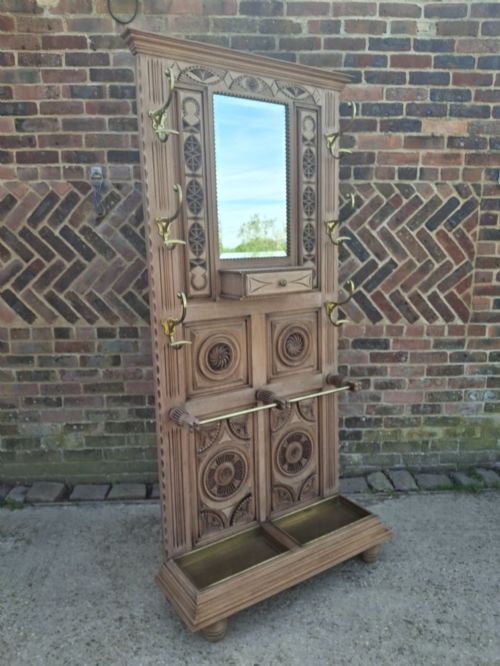
- A combined entryway furnishing featuring hooks for coats, a mirror, and a base section for umbrellas and walking sticks. These multifunctional pieces anchor hallway decor.
- Faux bois
- An artistic imitation of wood grain applied to other materials, commonly seen on metal umbrella stands mimicking bamboo. This technique was popular in nineteenth-century design.
- Ebonised
- Wood treated with a finish to resemble ebony, creating a dense black surface. This treatment was frequently used on nineteenth-century hall furniture for dramatic contrast.
- Halberd
- A two-handed pole weapon featuring an axe blade and spike, sometimes utilised as a decorative motif for hall stand frames. Such designs reflect nineteenth-century romantic historicism.
- Aesthetic Movement
- A late nineteenth-century design ethos prioritising visual beauty over narrative or moral function. Pieces from this movement often incorporate Japanese-inspired motifs.
French Umbrella Rack: Frequently Asked Questions
What is a french umbrella rack?
A french umbrella rack is a hallway furnishing built to hold wet walking sticks, umbrellas, and occasionally hats and coats. These items range from single-purpose cast iron stands to large wooden hall stands.
Originating across the nineteenth and early twentieth centuries, they combine utilitarian drainage designs with distinct periods like Art Nouveau and Art Deco.
How were these stands used historically?
Historically, these stands stood in domestic entryways to receive outdoor gear before residents entered the main living spaces. They kept wet umbrellas contained and outer garments organised.
Combined hall stands provided a central station for visitors to deposit hats, coats, and sticks upon arrival in a grand hallway.
Where should I place a hall stand?
A hall stand fits best in an entrance hall, mudroom, or spacious corridor where coats and umbrellas are naturally deposited. Its footprint requires adequate wall space and clearance for hanging garments.
Freestanding umbrella racks suit smaller corners near an entryway door for quick access to walking sticks.
How do I identify Art Nouveau pieces?
Art Nouveau pieces display organic, flowing lines inspired by natural forms rather than rigid geometric symmetry. Look for whiplash curves and plant-like tendrils in the metalwork.
In umbrella stands, this style often manifests as cast iron moulded with undulating plant motifs or faux bamboo structures.