
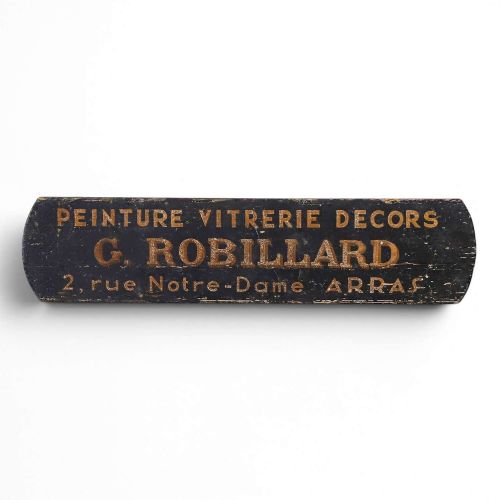


French Trade Sign
These French trade sign pieces are commercial artefacts of exceptional visual character that bring industrial personality and history into any interior.
French Trade Sign
When you search for a french trade sign, you encounter commercial boards and displays created to advertise historic trades and shops. These items span the nineteenth century, nineteen hundred, and nineteen twenty periods, capturing the commercial identity of past French commerce.
The objects take various forms including wall signs, hanging signs, advertising display units, and decorative shop displays shaped like gloves, fish, or birds. They reflect specific professions such as painters, dentists, opticians, doctors, and hat makers.
You meet pieces fashioned from wood, sheet metal, iron, and toleware, often bearing original hand-painted lettering or motifs. Their presence ranges from rustic folk art carvings to industrial commercial signage.
Materials and Construction
Makers utilised timber, solid wood, and sheet metal as the primary foundations for these commercial boards and sculptural displays. Wood was carved into specific animal and object forms, while metals were shaped into toleware and iron structures.
Surfaces were finished with paint and sometimes gold leaf to highlight lettering, trade names, and pictorial elements. These traditional finishes weathered through decades of outdoor and indoor exposure, retaining authentic patinas.
Historic French merchants proudly advertised sturgeon, caviar, and whale oil directly on their shopfronts.
Distinguishing Quality
Quality in a french trade sign depends upon the clarity of its original hand-painted lettering and the preservation of its surface paint. Pieces retaining authentic signs of trade use demonstrate greater visual authenticity than heavily restored examples.
The sculptural ambition of the object also defines the tier, where three-dimensional carved wooden animals or shaped toleware forms display superior craftsmanship compared to plain flat boards.
The French Trade Sign Glossary
- Toleware
- Painted or lacquered sheet metal used to form shaped shop displays and signs. This material allowed makers to create lightweight, three-dimensional objects representing specific goods.
- Gold Leaf
- Hammered gold sheet applied to sign surfaces for lettering and detail work. It provided durable metallic brilliance that caught the eye of passing street trade.
- Folk Art
- Unvarnished, traditional craftsmanship created by local artisans rather than industrial factories. These items display charming rustic irregularities in shape and paint application.
- Belle Epoque
- A period of French history spanning the late nineteenth century to the First World War. Signs from this era often exhibit ornate lettering and sophisticated painted details.
French Trade Sign: Frequently Asked Questions
What trades are represented on these signs?
These pieces represent a wide variety of historic professions, including painters, dentists, opticians, doctors, hat makers, and food merchants.
Specific trades often advertised their services through pictorial displays shaped like the goods they sold or the tools they utilised in daily work.
Where were these signs originally displayed?
Original locations included the exterior facades of French shops, street walls, and interior mercantile spaces.
They served to catch the attention of pedestrians and identify the profession or merchandise available inside the establishment.
How do I date a trade sign?
Dating relies on the analysis of materials, painting techniques, typography styles, and the specific historic terminology used in the lettering.
Nineteenth-century examples often feature hand-carved wood and folk art aesthetics, whereas nineteen twenties pieces lean towards industrial metal and commercial display units.
How do I hang a heavy wooden sign?
Secure mounting requires fixing directly into wall studs or using heavy-duty masonry anchors suited to the weight of solid wood or iron.
Due to the substantial materials like cast iron and solid timber, proper structural support ensures safe display in a home or interior setting.