




French Silver Tableware
French silver tableware brings together sterling silver, silver plate, and vermeil across forms from coasters to cutlery sets.
French Silver Tableware
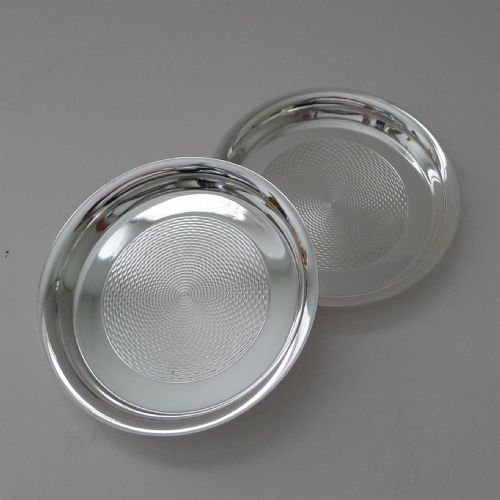
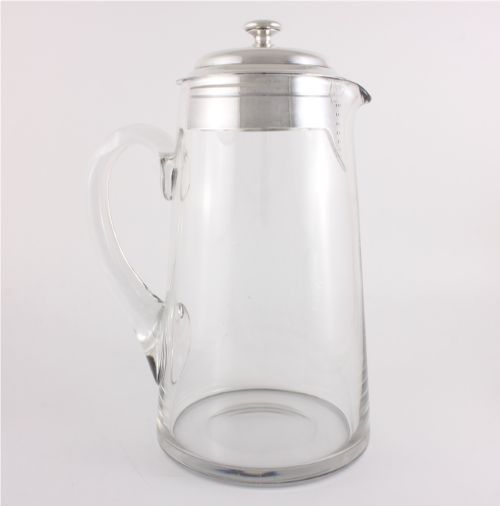
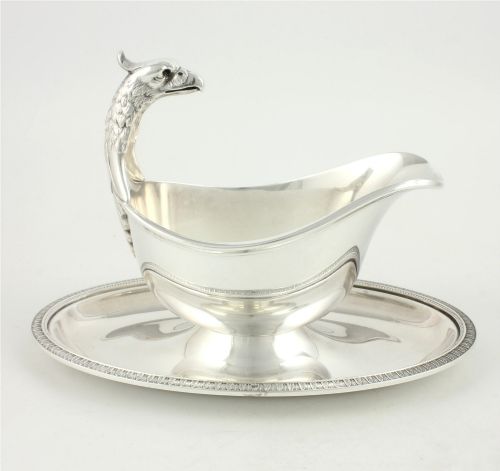
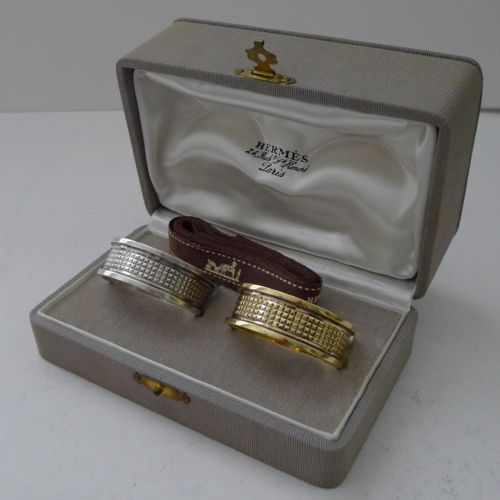
French silver tableware encompasses functional dining items created from precious metals, silver plate, and vermeil, frequently appearing alongside glass and wood components. When exploring French silver tableware on this page, buyers encounter domestic table accessories ranging from salt cellars and napkin rings to larger hollowware such as pitchers, water jugs, and sauce boats.
The selection includes diverse historical periods and design movements, moving from the early eighteenth-century chocolate pots through nineteenth-century Victorian and Art Nouveau pieces to twentieth-century Art Deco and Mid-Century Modern creations. Makers such as Christofle and Hermes, Paris, shape the physical inventory found here.
Materials and construction methods
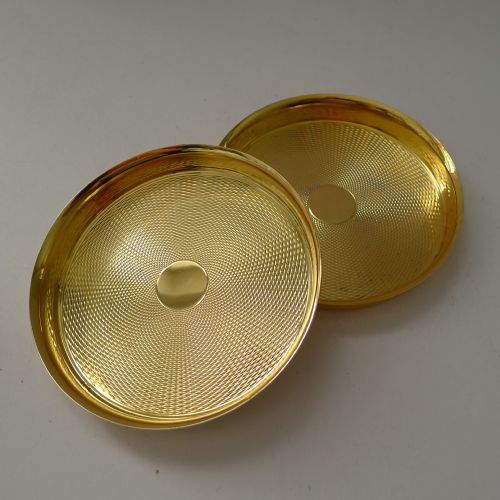
Makers utilise solid sterling silver, heavy silver plating over base metal, and gold gilt on silver known as vermeil to construct these dining accessories. Glass and wood frequently integrate into the designs, particularly in water jugs, pitchers, and coasters where transparent vessels or wooden bases provide contrast to the metal work.
Techniques range from cast and chased decorative motifs seen in Rococo Revival and Art Nouveau styles to the clean, geometric lines characteristic of Art Deco and Mid-Century Modern production. Surface finishes include polished silver plate, bright vermeil, and intricate engraving on items like salt spoons and flatware.
French Silver Tableware Retail Price Guide 2026
Typical asking prices for french silver tableware among the pieces listed under this phrase on Sellingantiques today, from the lower quarter to the upper quarter. They describe what is for sale here now, not the wider market.
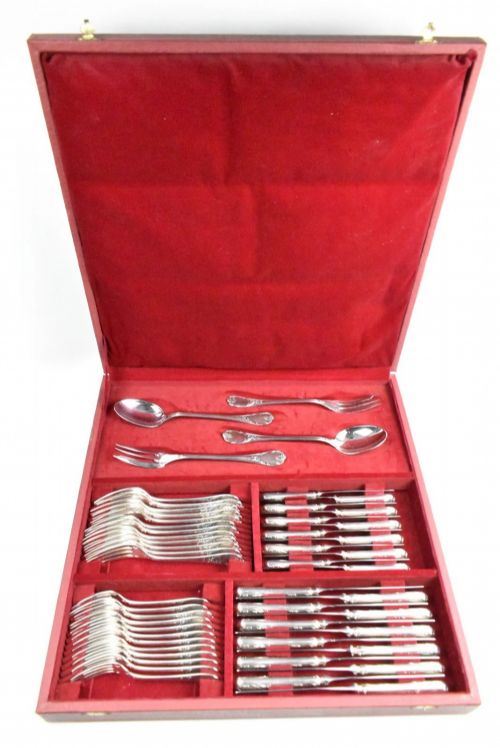
Object forms include functional dining accessories such as coasters, sauce boats, chocolate pots, napkin rings, flatware sets, and salt cellars.
Distinctions in execution and condition
The distinction between tiers of quality rests upon the weight of the metal, the crispness of the chased or cast ornament, and the integrity of the underlying base metal where plating is present. Solid sterling silver and heavy vermeil exhibit a substantial feel in the hand, while finer makers employ precise hand-finishing on details such as handles and rims.
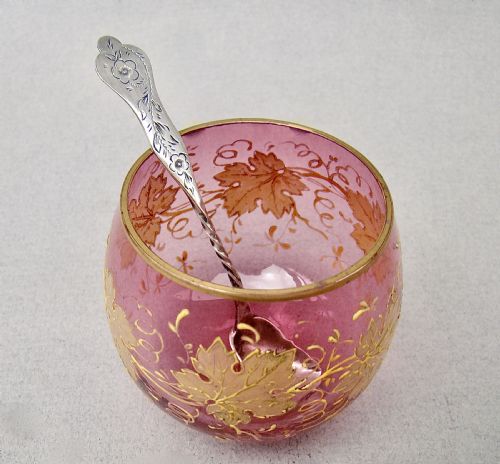
Preservation of original surface treatments, maker marks, and associated fitted cases for flatware sets or matched pairs further delineate the standard of individual pieces. Integrated materials like cranberry glass or fitted wooden elements require secure seating and unblemished surfaces to maintain their integrity.
Hermes Paris·Christofle Gallia·Christofle·Boin Taburet Paris
The French Silver Tableware Glossary
- Vermeil
- Sterling silver that has been plated with gold. This technique provides the rich appearance of solid gold while utilising silver as the structural base.
- Hollowware
- Tableware items such as bowls, pitchers, jugs, and sauce boats that possess volume rather than flat items like plates or trays.
- Sauce boat
- A specialised vessel designed for serving gravies or sauces, often featuring an integrated or separate undertray and a pouring spout.
- Salt cellar
- A small open vessel used to hold salt at the dining table, frequently paired with a miniature spoon.
- Silver plate
- A layer of silver applied to a base metal core through electroplating or older manufacturing methods.
French Silver Tableware: Frequently Asked Questions
What is the difference between silver plate and sterling silver?
Sterling silver consists of a solid silver alloy throughout the entire object, marked by standard purity hallmarks. Silver plate utilises a base metal core covered by a thin outer layer of silver.
Plated items offer the visual appeal of silver at a different weight and structural composition compared to solid silver pieces.
How do I care for antique vermeil and silver tableware?
Maintain these pieces by washing them gently in warm water with a mild, non-abrasive soap and drying them immediately with a soft cloth. Avoid harsh chemical dips, particularly on vermeil or items containing glass and wood components.
Store them in tarnishing-resistant cloth or dedicated fitted cases when not in use to preserve the metal surface.
What periods do these tableware pieces represent?
The pieces span multiple centuries, beginning with early eighteenth-century items from the George I era through nineteenth-century styles like Art Nouveau and Victorian.
Twentieth-century examples cover Art Deco, Mid-Century Modern, and mid-century French productions from workshops active in Paris.
How can I identify the maker of a French silver item?
Makers typically stamp their pieces with specific hallmarks, punch marks, or full signatures on the underside or rim of the metal. Workshops like Christofle and Hermes stamp their designated touchmarks and company names directly into the silver or silver plate.
Consulting historical maker mark registers helps match these punches to specific Parisian manufacturers and dates.