
French Rococo Lighting
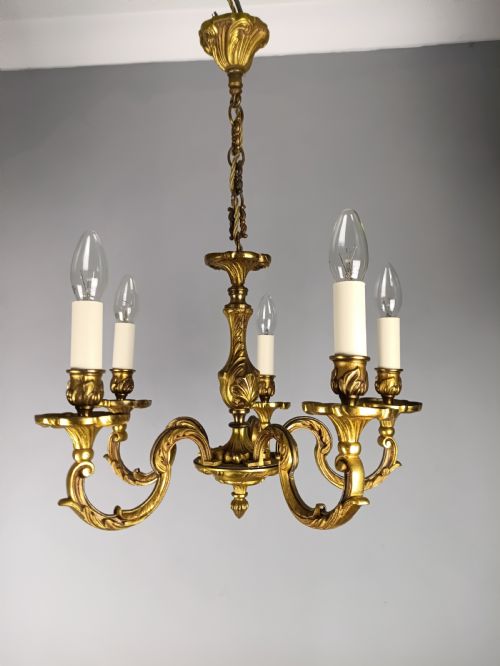
French rococo lighting delivers exuberant brass and gilt bronze work designed to illuminate interiors with asymmetric curves and botanical scrolls.
French Rococo Lighting
French rococo lighting encompasses elaborate chandeliers, wall lights, and wall sconces drawing on eighteenth-century decorative traditions. These pieces originate across the nineteenth and early twentieth centuries, spanning revivals from the eighteen-eighties to nineteen-thirties.
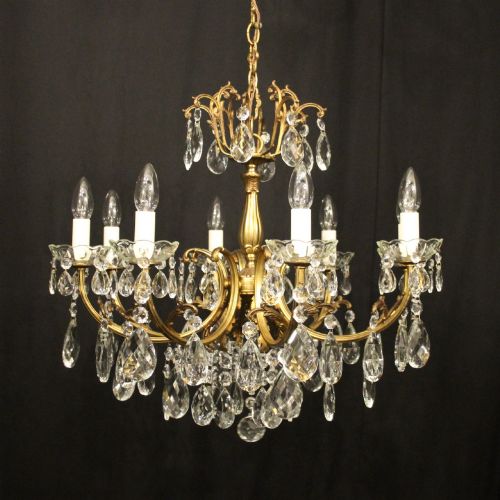
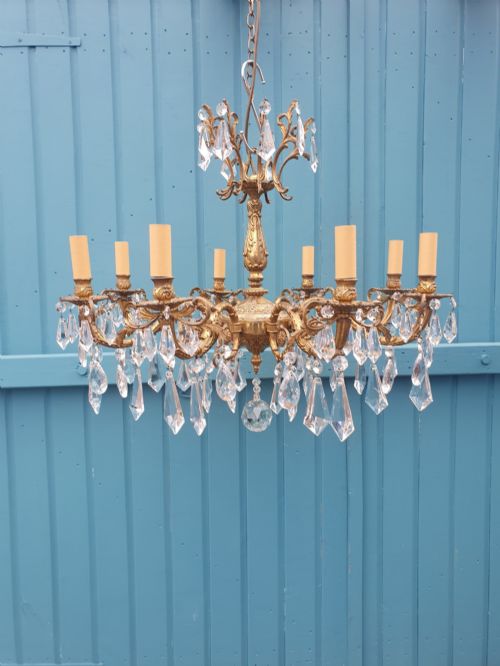
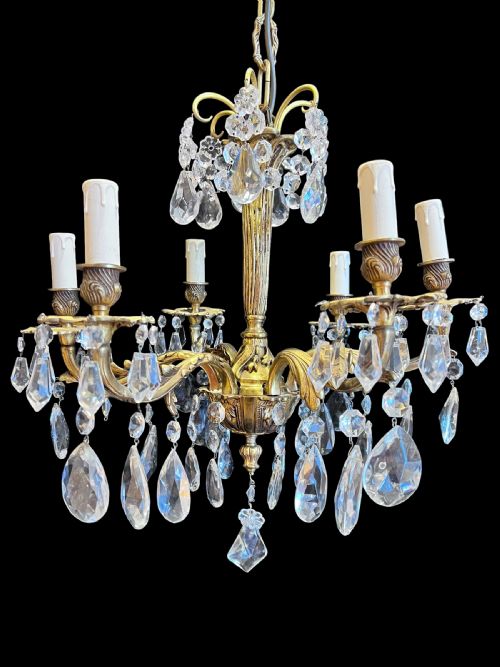
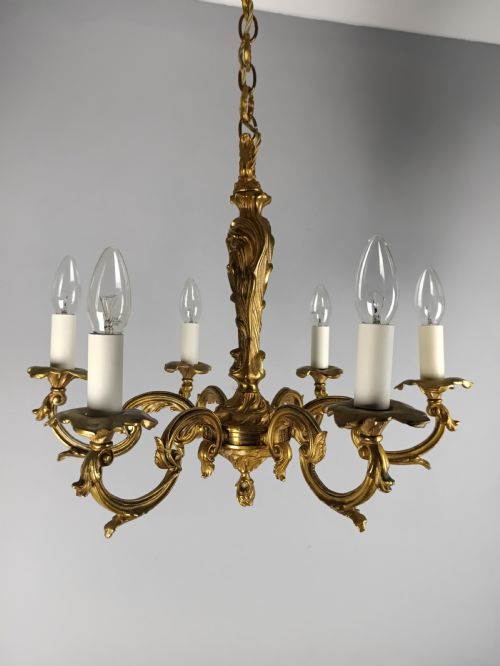
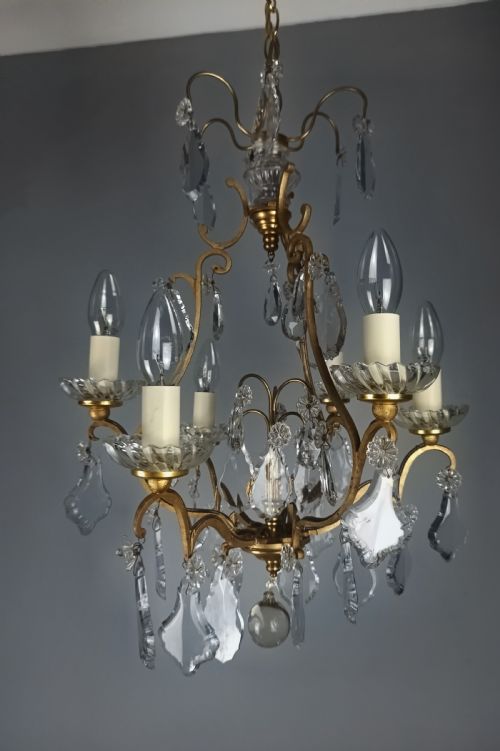
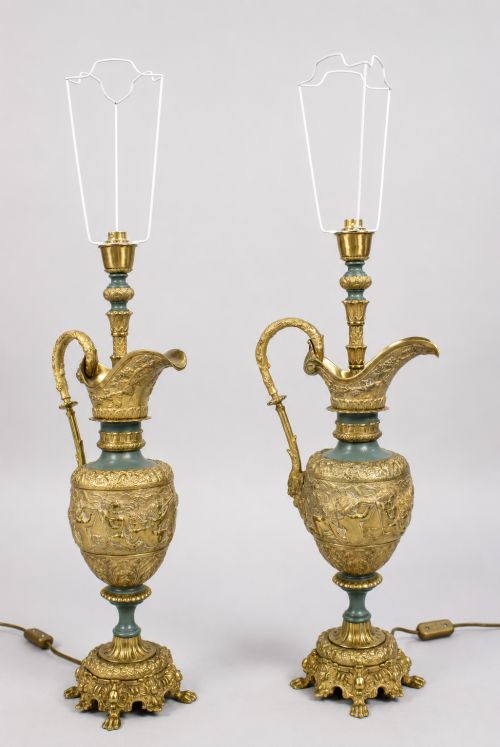
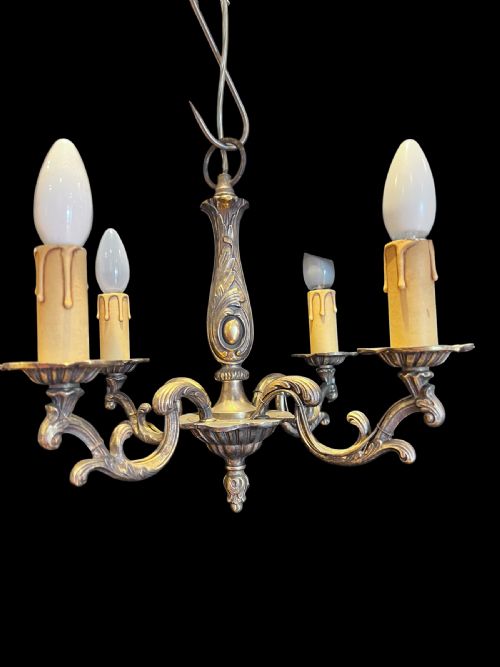
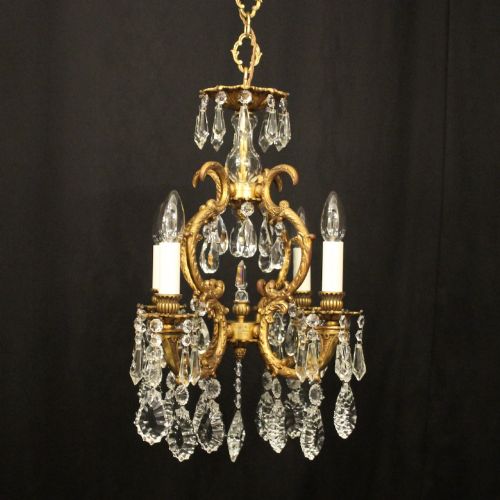
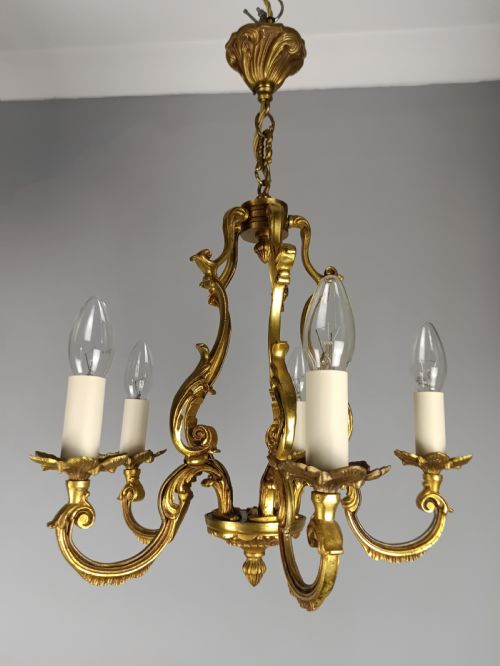
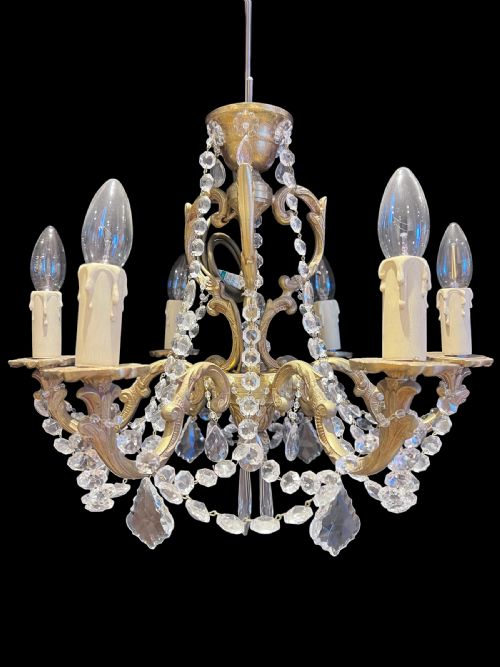
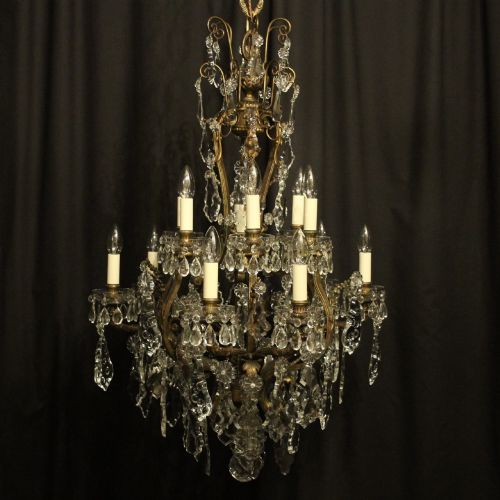
Chandeliers and wall appliques dominate the selection, frequently carrying multiple light branches and cascading crystal drops. Smaller fixtures include table lamps and hall lanterns utilising similar cast metal frameworks.
Stylistic influences extend beyond strict French origins to include Italian rococo revival and Victorian interpretations. Brass, gilt bronze, and ormolu provide the primary structural foundation for these ornate decorative items.
Materials and Construction
Foundry workers cast brass, bronze, and ormolu into intricate asymmetrical scrolls, floral motifs, and figurative elements. Gidling or silver gilding applied to the metal surfaces enhances the reflective quality under candle or electric light.
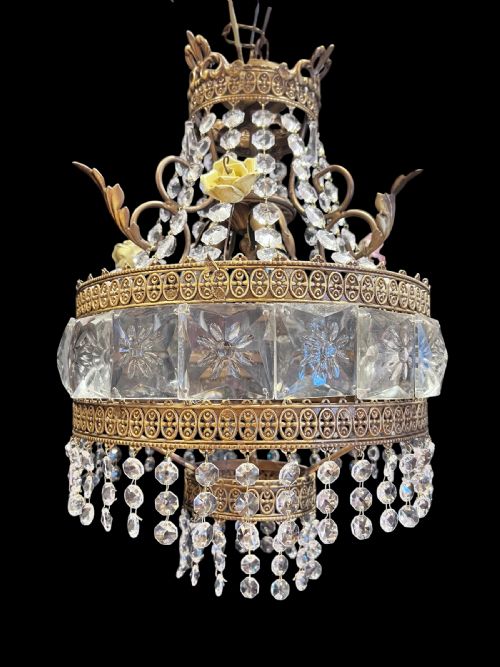
Glass and crystal components, including cut glass spikes and hanging drops, complement the metal armatures in multi-light chandeliers. Porcelains occasionally appear as decorative floral additions integrated into the metal branches.
Listed items span diverse production dates, including pieces from the eighteenth, nineteenth, and early twentieth centuries.
Defining Quality
The precision of the metal casting dictates the definition within foliage, cherubs, and scrollwork. Crisp chiselling on gilt bronze and ormolu separates superior decorative output from softer, later commercial production.
The integration of crystal elements and the completeness of matching multi-arm sets influence the visual cohesion of large chandeliers and wall light pairs.
The French Rococo Lighting Glossary
- Ormolu
- Gilded bronze produced through mercury amalgamation or modern electroplating methods. This technique imparts a rich golden lustre to cast metal mounts.
- Applique
- A wall-mounted lighting fixture designed to hold candles or electric lamps. These pieces project illumination outward using multiple decorative arms.
- Chandelier
- A branched suspended lighting fixture holding multiple bulbs or candles. Large examples incorporate extensive crystal drops and intricate metal frames.
- Spelter
- A zinc alloy used as a cost-effective alternative to bronze in decorative castings. It often receives a bronze or gilt finish to mimic higher-value metals.
- Lantern
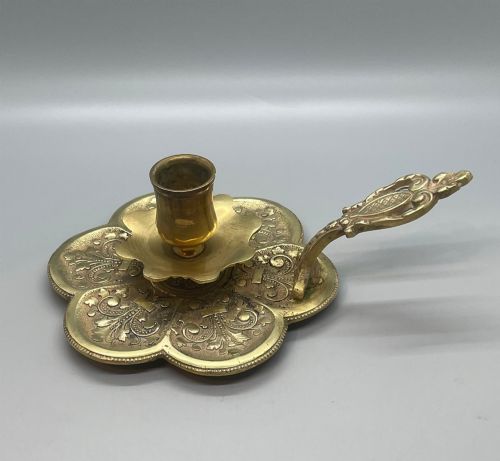
- An enclosed or semi-enclosed hanging light fixture fitted with glass panels. Brass and gilt metal frameworks house the internal light source.
French Rococo Lighting: Frequently Asked Questions
What periods do these lights come from?
The lighting fixtures span from the eighteenth century through the nineteenth century and into the early twentieth century. Many pieces reflect later revivals produced during the eighteen-eighties, eighteen-nineties, and nineteen-twenties.
Original eighteenth-century examples exist alongside revival pieces created to capture the same ornate aesthetic. Dating relies on the casting techniques, metal composition, and assembly methods visible in the construction.
How do wall lights and appliques differ?
Wall lights and appliques both mount directly to vertical surfaces to provide targeted illumination. The terms frequently overlap in descriptions of decorative multi-branched wall fixtures.
These items range from single-light brass lanterns to twin-arm and triple-arm gilded bronze assemblies. They often coordinate with larger central chandeliers in a unified room scheme.
What metals are used in these pieces?
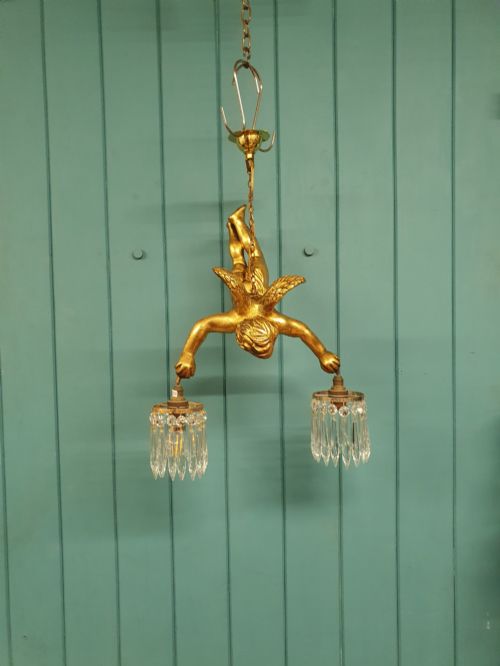
Makers utilised brass, gilt bronze, ormolu, and gilt metal to build the structural armatures. Spelter also appears as a base material for figures like cherubs before receiving a gilt finish.
Surfaces frequently feature hand-applied gilding or silver gilding to increase brilliance. Crystal, glass, and porcelain elements are then integrated into the gilded metal framework.
Are these fixtures wired for electricity?
Many antique fixtures arrive adapted for modern electrical supplies during their working lifetime. Original configurations were designed for candles before later conversions took place.
Buyers should inspect the internal wiring and consult a qualified electrician to ensure safe installation. The physical conversion typically preserves the external antique metal and crystal components.