




French Rococo Ceramic Urns
French rococo ceramic urns combine scrolling porcelain bodies with ormolu mounts, bringing nineteenth-century opulence to a mantel or console.
French Rococo Ceramic Urns
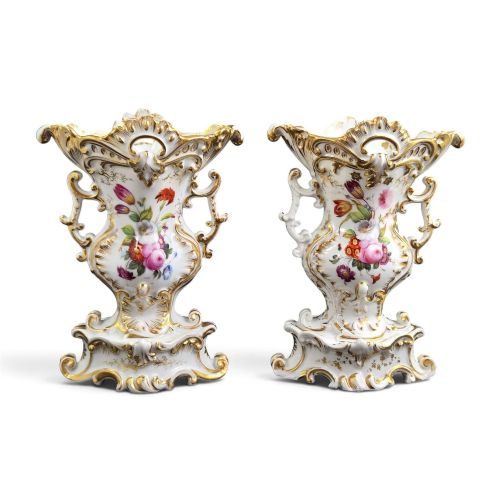
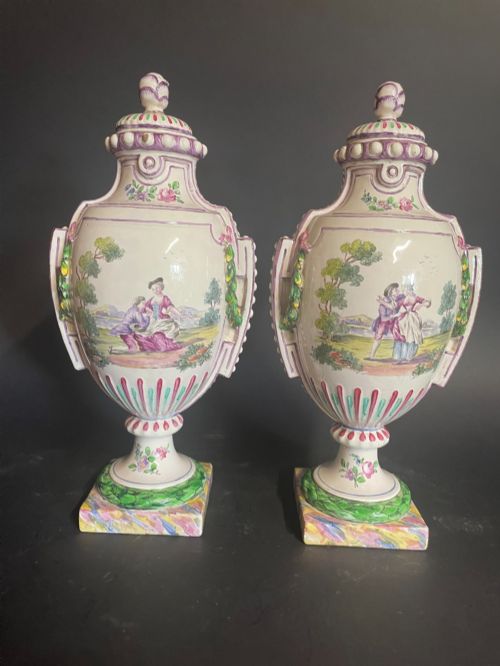
French rococo ceramic urns encompass decorative vases, lidded vessels, and table lamps shaped by nineteenth-century revivals of eighteenth-century excess. These works frequently draw on porcelain and faience, often styled after Sèvres or fashioned by makers such as Jacob Petit and Samson of Paris. The forms lean heavily into ornate, asymmetrical scrolls and floral motifs associated with the French Rococo and French Chateau aesthetics.
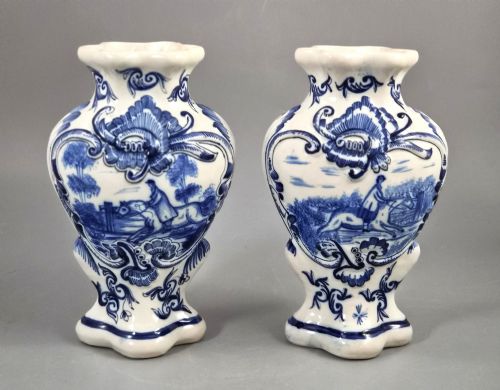
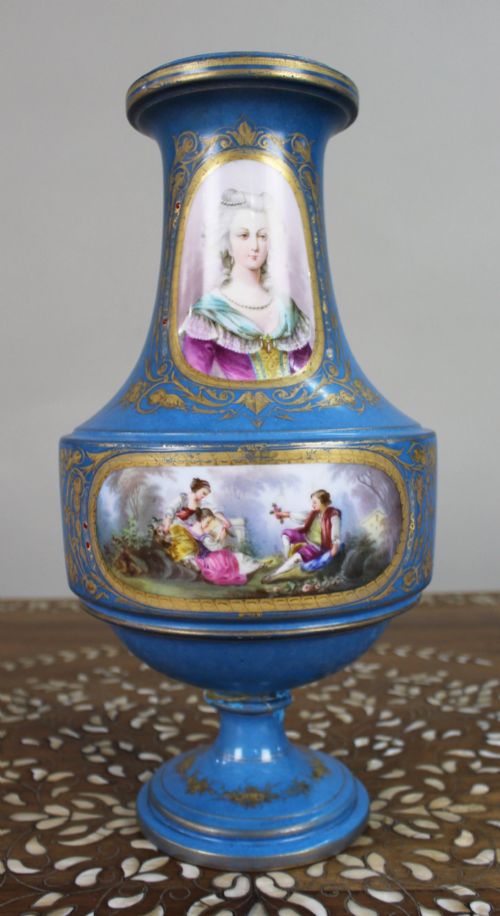
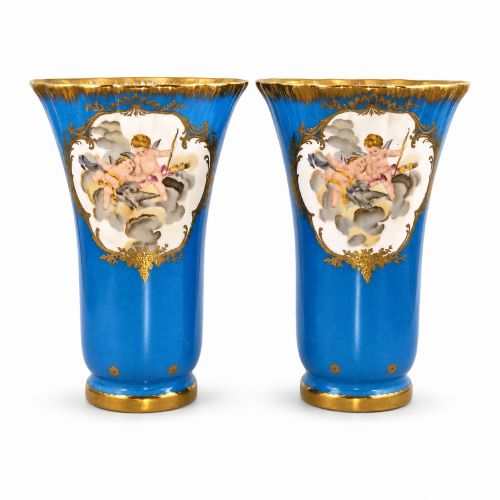
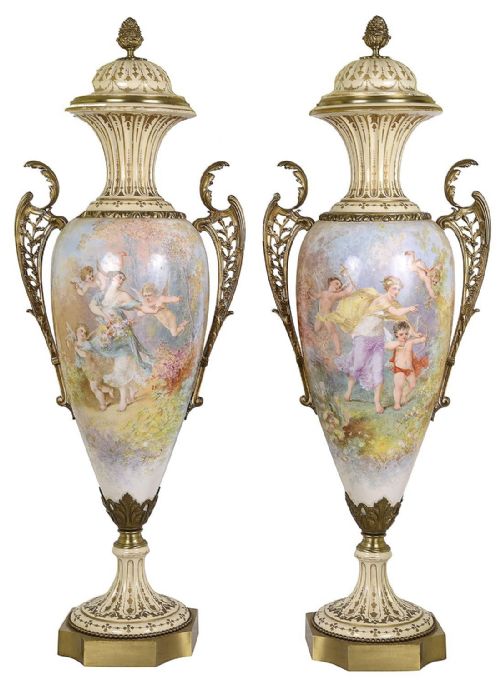
Buyers encountering this selection will most frequently meet nineteenth-century porcelain vessels mounted in gilt bronze or ormolu. Pairs dominate the offerings, spanning tall lidded vases, table lamps, and mantel clocks outfitted with hand-painted floral designs or distinctive bleu céleste glazes. Earthenware and faience from centres like Desvres and Sceaux also appear, showcasing blue and white or manganese palettes.
The objects serve primarily as decorative focal points rather than utilitarian vessels. Their presence in nineteenth-century interiors was intended to project a refined, classical French taste through elaborate handles, mounts, and polychrome painting. Collectors typically source them to anchor formal room schemes with period authenticity.
How they were made
The fabrication relies upon ceramic bodies shaped in porcelain, earthenware, or faience, decorated with hand-painted floral scenes, raised white enamel, and coloured grounds such as bleu céleste. Artisans fired these ceramic forms before applying intricate surface details, including gilding and cobalt pigments in the manner of Delft or traditional Chinese blue and white styles. Bisque porcelain also appears, offering an unglazed, matte finish that highlights sculptural relief.
Metalworking forms the second crucial element of construction, utilising gilt bronze and ormolu mounts to frame and elevate the ceramic vessels. These cast bronze mounts were chased and gilded with gold leaf, then mechanically fitted to secure handles, bases, and lids. The combination required close collaboration between ceramic painters and bronze-casters to achieve the integrated rococo silhouette.
Some nineteenth-century makers were so enamoured with earlier aesthetics they signed their pieces in simulated historical styles just to keep everyone guessing.
What varies in quality
Quality rests heavily on the crispness of the ormolu casting and the precision of the hand-painted ceramic details. Superior examples exhibit finely chased gilt bronze mounts with sharp, deep relief that complements the undulating porcelain curves beneath. Lesser pieces feature softer, shallower metal casting and mass-produced transfer printing rather than delicate hand-brushwork.
The sophistication of the palette and the fidelity to historical prototypes also divide the range. Top-tier works display carefully shaded bleu céleste grounds, raised enamel work, and well-balanced compositions executed by established houses. Simpler earthenware variants offer charm through rustic blue and white glazing, lacking the elaborate polychrome and gilt integration of premier porcelain pieces.
Jacob Petit·Fourmaintraux-Courquin·Samson Paris·Vion et Baury
The French Rococo Ceramic Urns Glossary
- Ormolu
- Gilt bronze mounts used extensively to decorate French ceramic urns. This technique involves applying a gold amalgam to cast bronze before heating to drive off the mercury.
- Bleu céleste
- A distinctive bright sky-blue ceramic ground colour popularized by the Sèvres porcelain factory. It forms the backdrop for many nineteenth-century decorative vases.
- Faience
- Tin-glazed earthenware produced in various French centres such as Desvres and Sceaux. It provides an opaque white surface suitable for hand-painted blue and manganese designs.
- Bisque
- Porous, unglazed porcelain fired to a matte finish. It emphasises sculptural detail and form over glossy surface decoration.
- Potpourri
- A perforated vessel designed to hold dried aromatic plant materials. These lidded ceramic urns often feature intricate openwork to release scent.
French Rococo Ceramic Urns: Frequently Asked Questions
What are french rococo ceramic urns?
These pieces are nineteenth-century decorative vessels, including vases, lidded urns, and lamps, inspired by earlier French design styles. They typically combine porcelain or faience bodies with elaborate gilt bronze mounts.
They reflect revivals of eighteenth-century aesthetics, utilising hand-painted florals, vibrant glazes, and asymmetrical scrollwork to achieve a rich, ornate appearance.
How were french rococo ceramic urns used?
Historically, these urns served as purely decorative ornaments placed on mantelpieces, consoles, and tables in formal rooms. Some functioned as potpourri containers with pierced lids to scent interiors.
Over time, many of these ceramic bodies were later converted into table lamps while retaining their original decorative character.
How do you style them at home?
These urns work best as symmetrical pairs on large mantelpieces, sideboards, or entryway consoles where their height and gilt mounts can catch the light. They anchor traditional or eclectic room schemes by introducing colour and nineteenth-century texture.
Allowing them space away from heavy clutter ensures the hand-painted details and ormolu mounts remain visual focal points.
How to tell periods apart?
Distinguishing periods relies on examining the specific ceramic body, glaze colour, and mounting style relative to nineteenth-century revival movements. Pieces marked by houses like Samson or Jacob Petit point directly to mid-to-late nineteenth-century production.
Later Victorian and turn-of-the-century examples often display heavier ormolu casting styles and brighter turquoise or pink grounds characteristic of mass production in that era.