





French Revival Couch
These french revival couch pieces bring continental flair to British interiors, offering sumptuous upholstery and carved wooden frames for a striking salon centrepiece.
French Revival Couch
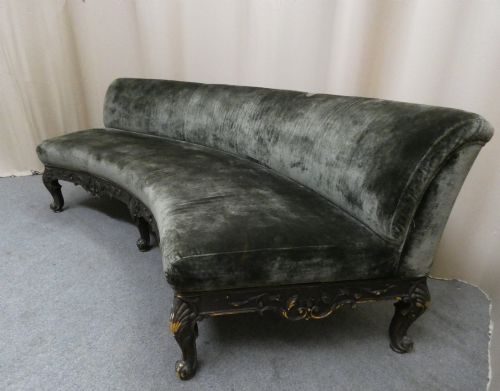
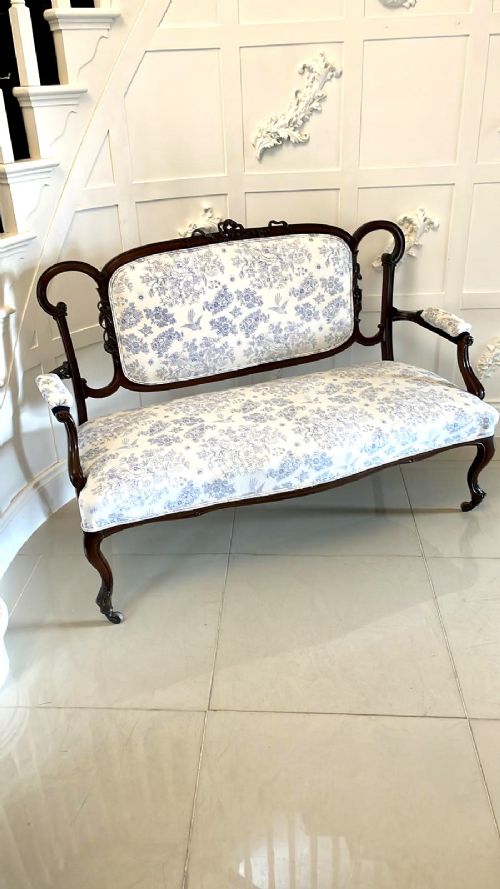
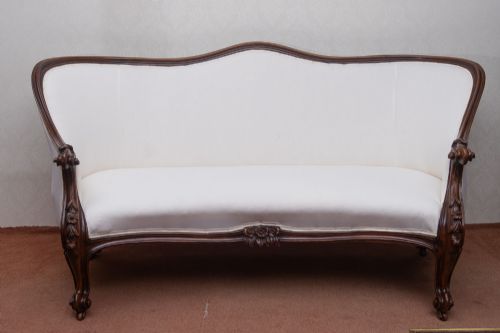
A french revival couch draws on historic continental designs, appearing in forms such as settees, sofas, and chaise longues across the nineteenth and early twentieth centuries. These seats combine substantial timber frames with elaborate curves, echoing the aesthetics of Louis XV, Louis XVI, and Rococo styles.
The versions most commonly found here date from the nineteenth century, particularly the Victorian era, alongside pieces from around nineteen hundred to nineteen ten. They span two-seater settees, three-seater sofas, and specialised daybeds, often retaining their original structural lines while wearing varied upholstery fabrics.
How they were made
Cabinetmakers constructed the supportive skeletons of these couches using dense hardwoods like mahogany, walnut, and rosewood, alongside gilded or painted wood finishes. These frames were hand-carved with floral motifs, scrollwork, and classical detailing, supported by brass mounts or ormolu in specific revival iterations.
Upholstery formed the other half of the craft, utilising fabrics such as velvet and standard upholstery fabric stretched over supportive internal webbing and springs. Canework also appears on specific lighter frames, providing a woven texture alongside traditional textile coverings.
French Revival Couch Retail Price Guide 2026
Typical asking prices for french revival couch among the pieces listed under this phrase on Sellingantiques today, from the lower quarter to the upper quarter. They describe what is for sale here now, not the wider market.
Some nineteenth-century settees were built with asymmetric ends so ladies wearing elaborate crinoline skirts could lounge without crushing their gowns.
What varies in quality
The crispness and depth of the hand-carving on the wooden framework largely distinguish finer examples from simpler production. Superior pieces exhibit deeply undercut foliage and smooth, flowing contours rather than flat or mechanical ornamentation.
The choice of primary timber and the execution of the finish, whether giltwood, painted surfaces, or polished walnut, dictate the overall stature of the item. Heavier, well-figured woods and intact metal mounts indicate a higher standard of original manufacture.
The French Revival Couch Glossary
- Ormolu
- Gilded bronze mounts applied to furniture for decorative effect. These metallic accents catch the light and enhance the neoclassical aesthetic of specific revival pieces.
- Giltwood
- Timber treated with a thin layer of gold leaf or gilt paint. This finish gives the wooden frame a bright, reflective appearance suited to formal reception rooms.
- Bergere
- An enclosed upholstered armchair or sofa with wooden framing and woven cane panels. It provides a lighter alternative to fully padded upholstery.
- Chaise Longue
- An elongated chair designed for reclining, combining a seat with an attached footrest and a partial backrest. It functions as a single-person daybed for boudoirs and salons.
- Rococo Revival
- A nineteenth-century design movement mimicking the asymmetrical scrolls and shell motifs of the eighteenth-century French court. This style prioritises curved lines and naturalistic ornamentation.
French Revival Couch: Frequently Asked Questions
What is a french revival couch?
A french revival couch is a nineteenth or early twentieth-century seat styled after earlier continental periods like Rococo or Louis XV. These pieces feature carved wooden frames and upholstered seating.
They serve as decorative statement furniture, bringing historical aesthetic references into domestic sitting rooms and reception spaces.
How were these sofas used?
These sofas functioned primarily as formal seating in nineteenth-century drawing rooms, salons, and parlours. They were designed for social gatherings and formal entertaining.
Chaise longues and daybeds also provided reclining spaces for resting during the day within private chambers.
How do I style one today?
Pairing a carved wooden settee with contemporary surroundings creates a deliberate contrast between historic craftsmanship and modern minimalism. Placing the piece as a focal point in a hallway or living room lets the frame and upholstery stand out.
Consider the scale of the room, as these couches often feature prominent timber backs and generous proportions.
How do I tell periods apart?
Nineteenth-century examples often display heavy mahogany or walnut frames with pronounced carving, whereas pieces from around nineteen ten can feature lighter painted surfaces or canework. Stylistic markers range from heavy Victorian upholstery to leaner neoclassical revival lines.
Examining the construction methods beneath the upholstery and the depth of the timber carving helps clarify the era of manufacture.