
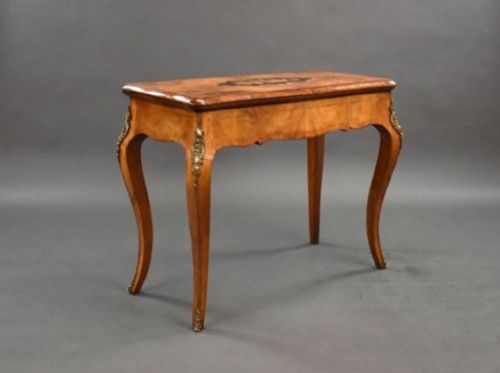


French Revival Console Table
These french revival console table pieces bring nineteenth-century continental display into a room through carved timber, marble, and gilt.
French Revival Console Table
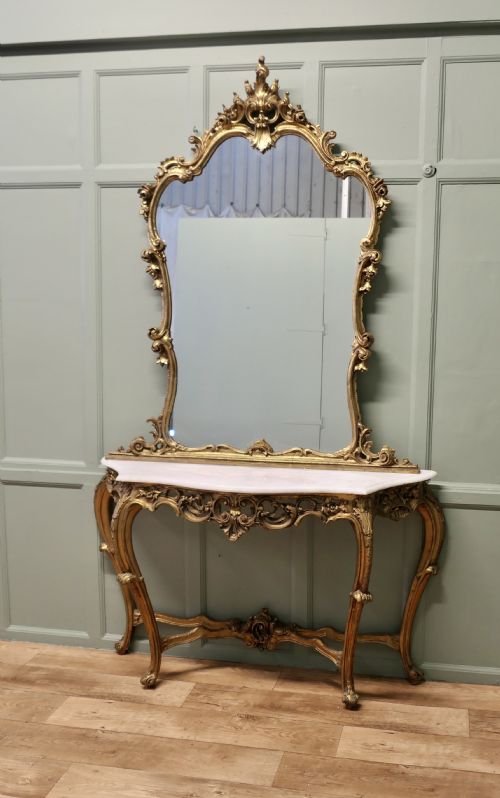
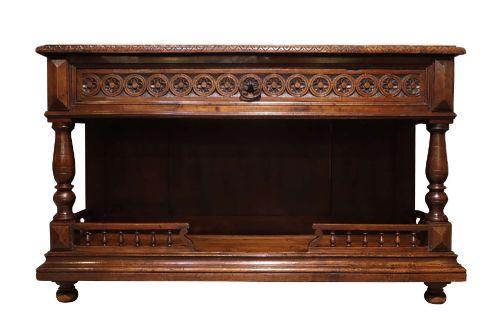
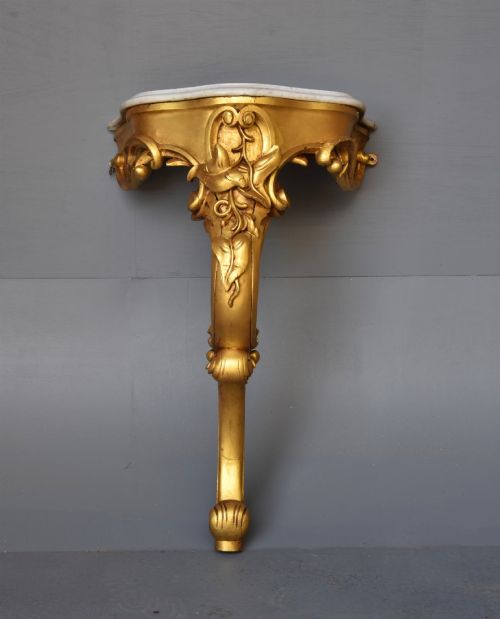
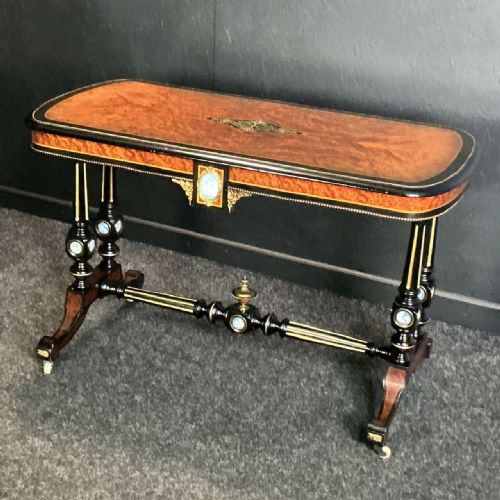
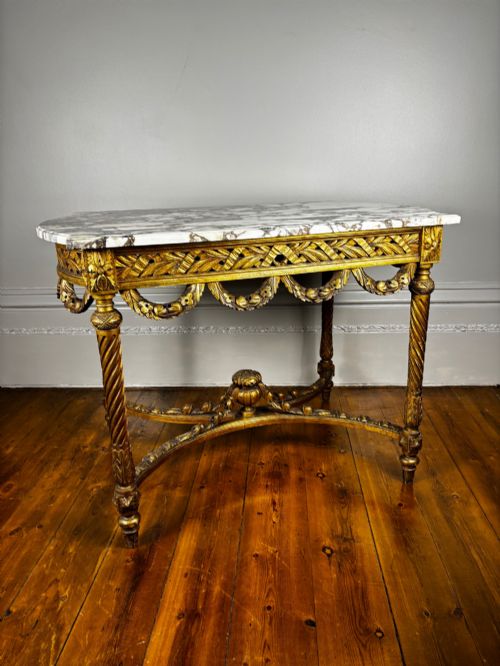
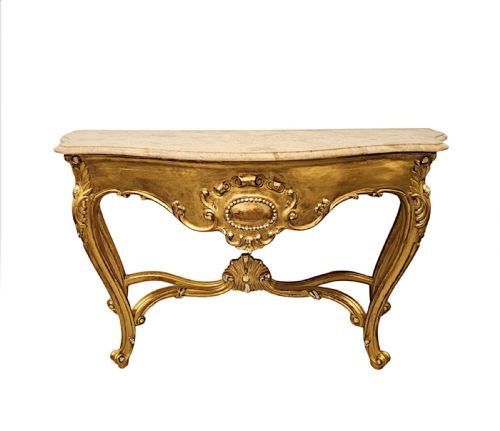
A french revival console table stands against a wall as a decorative surface, frequently paired with a matching wall mirror in nineteenth-century interiors. The forms available range from grand giltwood pier tables to walnut card tables and smaller occasional pieces.
Most examples originate from the nineteenth century, drawing heavily on Louis XV and Louis XVI design vocabularies. Makers also produced related centre tables, buffets, and games tables using the same revival aesthetic.
Materials and construction
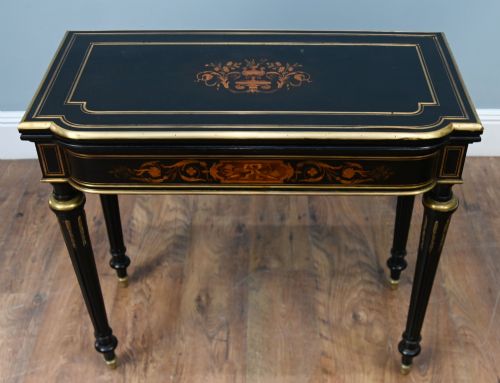
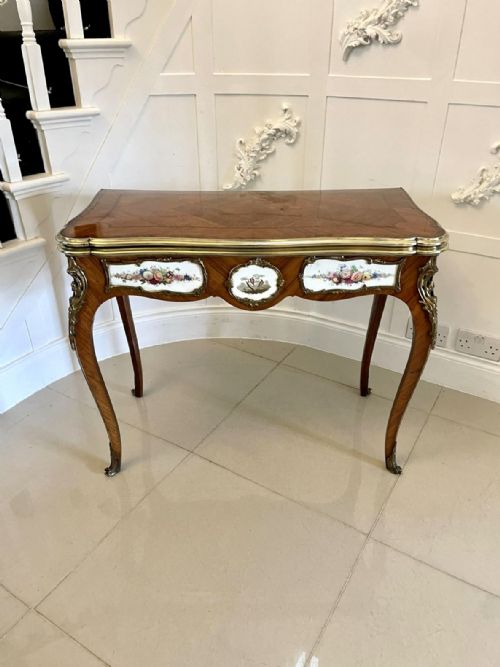
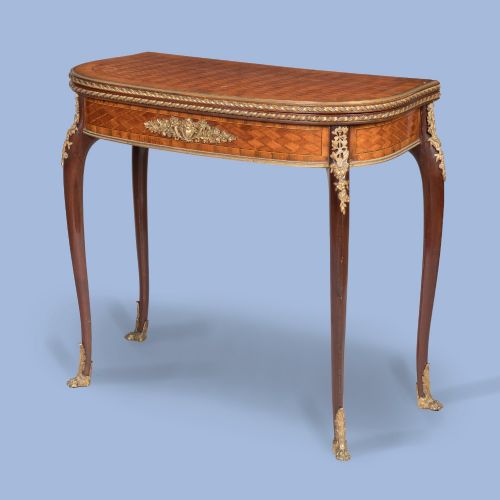
The construction relies on solid timbers such as walnut, mahogany, and kingwood, often enhanced with intricate marquetry and parquetry inlays. Giltwood frames provide a reflective surface for carved ornamentation.
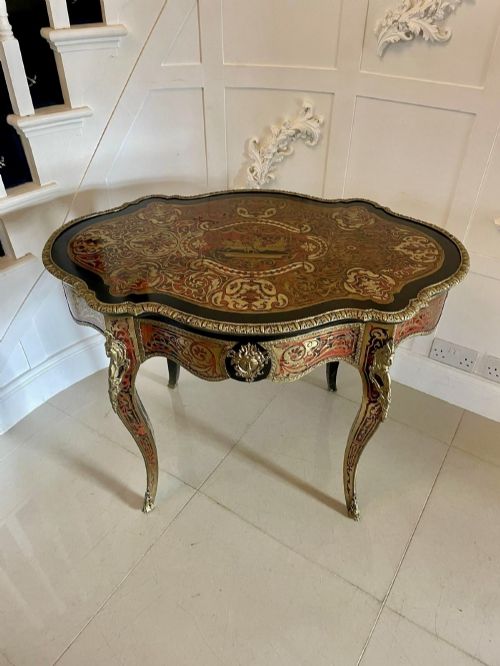
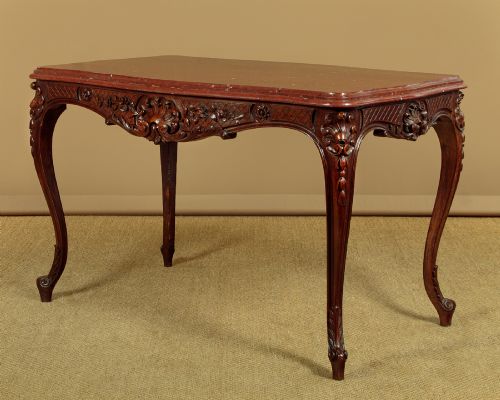
Heavy use of marble tops in white, rouge, and onyx provides a cool, durable surface. Ormolu mounts in cast brass add gilt bronze detailing to corners, aprons, and cabriole legs.
Periods represented span the eighteenth century, the Victorian era, and the early twentieth century up to nineteen-thirty.
Factors that separate examples
The crispness of hand-carved details on wooden frames and the weight and chasing of ormolu mounts distinguish finer pieces from simpler production. Superior marquetry utilises varied timber veneers arranged with geometric precision.
The thickness and selection of marble tops, alongside the integrity of original gilding, mark the difference between standard cabinet work and exceptional workshop output.
G T Morant·François Linke·Edwards & Roberts·Holland + Son
The French Revival Console Table Glossary
- Ormolu
- Gilded bronze mounts applied to furniture. This technique creates decorative gilt highlights on corners and legs.
- Marquetry
- Inlaid wood veneers forming decorative patterns. Craftsmen use contrasting timbers to picture floral or geometric scenes.
- Console table
- A table designed to stand against a wall, frequently fixed with brackets. These tables support decorative objects in formal rooms.
- Parquetry
- Geometric wood inlay patterns. Artisans arrange small timber blocks to create tiled surface designs.
- Giltwood
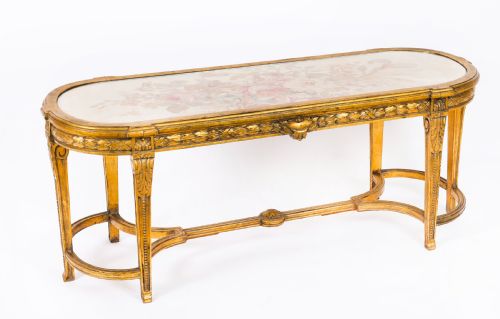
- Timber coated with gold leaf. This finish creates a bright, reflective surface on carved furniture.
French Revival Console Table: Frequently Asked Questions
What is a french revival console table?
A french revival console table is a nineteenth-century decorative furnishing inspired by earlier Louis styles. These pieces were built for formal reception rooms to display objects against a wall.
They combine carved timber frames with marble tops and gilt mounts. Many include folding leaves to function as card or games tables.
How do I style a console table?
Place a console table against a primary wall in an entrance hall or living room. The narrow depth suits passage spaces while providing a surface for lamps or ornaments.
Pairing the table with a wall mirror echoes nineteenth-century display traditions. Ensure the wall clearance matches the depth of the marble top.
How do I identify Louis XV and XVI styles?
Louis XV revival pieces feature asymmetrical curves, scrolling foliage, and cabriole legs. The decoration emphasises fluid, organic movement across the apron and frame.
Louis XVI style shifts toward straight lines, symmetry, and neoclassical motifs like fluted legs. The geometry reflects a return to classical architectural proportions.
What woods were used in these tables?
Cabinet makers utilised walnut, mahogany, and kingwood as primary structural and surface timbers. Exotic veneers allowed for contrasting marquetry patterns across the top.
Giltwood frames typically consist of softer timbers carved before receiving a gold leaf finish. Ebonised wood and satinwood also appear on specific revival pieces.