



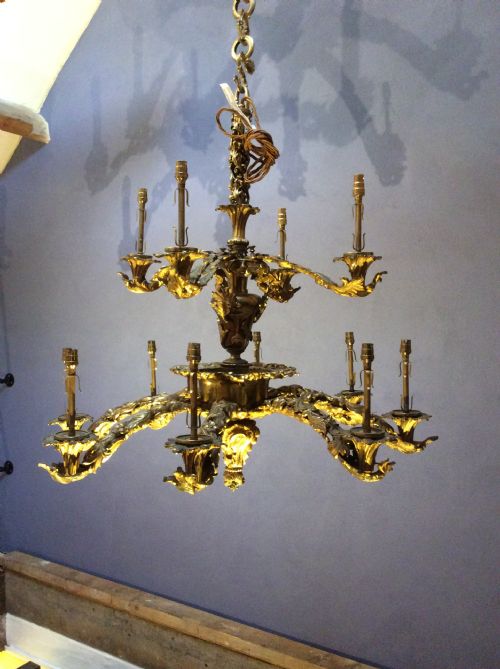
French Revival Chandelier
A french revival chandelier brings monumental scale and intricate period metalwork directly to high-ceilinged rooms.
French Revival Chandelier
A french revival chandelier draws upon historical decorative idioms from the nineteenth and early twentieth centuries, echoing courtly aesthetics. These grand ceiling fixtures translate earlier centuries of design into robust lighting for domestic and public spaces.
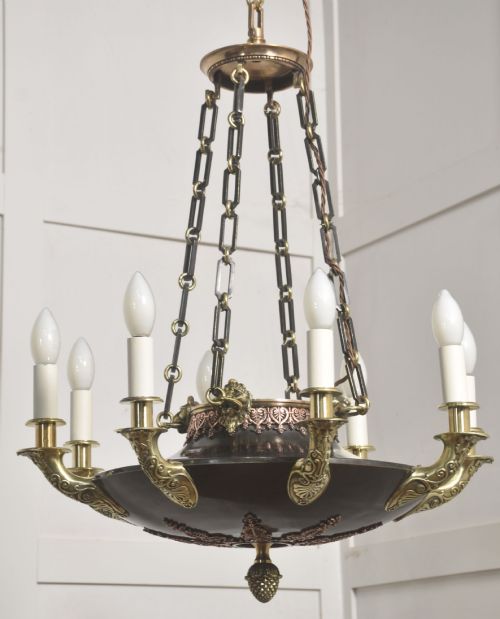
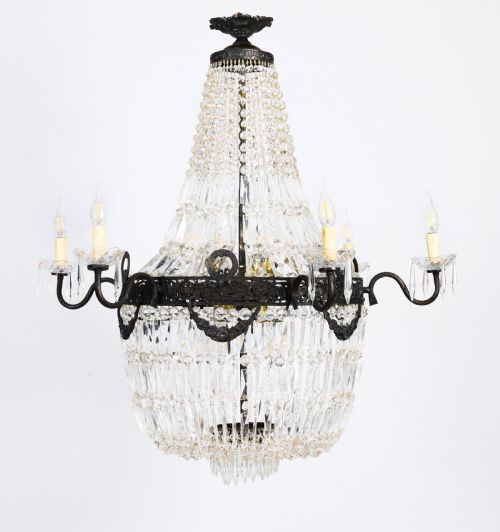
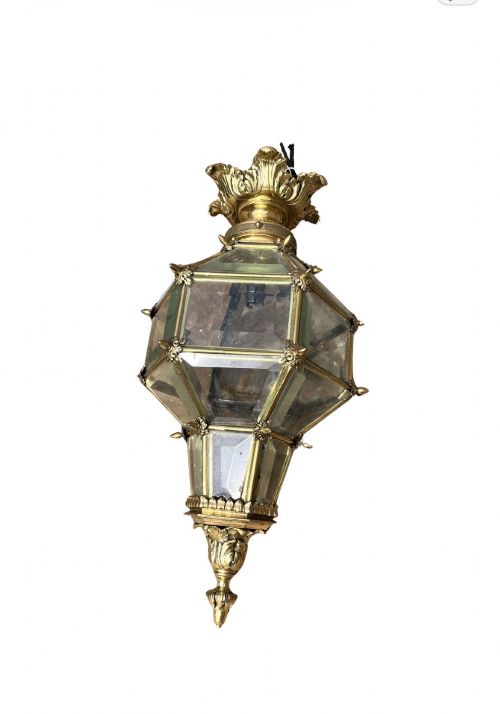
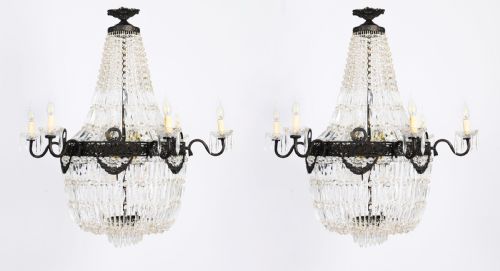
The selections available here span the nineteenth century up to around nineteen-twenty, encompassing varied regional interpretations. Common forms include multi-armed branch fixtures, expansive tent chandeliers, and structured lanterns suited to lofty interiors.
Stylistic influences range from exuberant rococo and empire revival motifs to severe gothic and arts and crafts interpretations. Brass, bronze, and gilt metal form the structural backbone of these pieces, frequently ornamented with cut crystal or glass.
How they were made
Foundry work dominated production, utilising cast brass, bronze, and ormolu to create structural arms and ornate decorative mounts. Metal surfaces were often gilded to achieve a rich, reflective finish that complemented the light sources.
Glass and crystal components were shaped by hand and wheel-cut to refract illumination across multiple facets. Precision cutting on drops, bowls, and tents maximises the visual impact of large multi-light arrangements.
French Revival Chandelier Retail Price Guide 2026
Typical asking prices for french revival chandelier among the pieces listed under this phrase on Sellingantiques today, from the lower quarter to the upper quarter. They describe what is for sale here now, not the wider market.
Listings span the nineteenth century and early twentieth century, utilising materials such as gilt brass, cut crystal, and bronze across varied revival styles.
What varies in quality
The refinement of the cast metalwork distinguishes standard productions from exceptional pieces, showing crisp relief in scrollwork and foliage. Heavy gauges of brass and bronze provide structural integrity and a substantial visual weight.
Crystal clarity and the precision of edge-cutting dictate the brilliance of the fixture when illuminated. Superior examples feature integrated suites of matched drops and uniform glass components rather than assembled replacements.
The French Revival Chandelier Glossary
- Ormolu
- Gilt bronze created by applying a finely ground high-carat gold mercury amalgam to a bronze object. This technique produces a durable, warm metallic lustre characteristic of luxury nineteenth-century lighting.
- Tent chandelier
- A lighting configuration featuring a dense canopy of small crystal beads strung from a central ring up to the crown. It creates a cascading tent effect above the primary tier of candle arms.
- Plaffonier
- A ceiling-mounted lighting fixture placed flat or close against the ceiling surface rather than suspended on a chain. These fixtures often combine glass bowls with ornate metal mounts.
- Empire revival
- A nineteenth-century design movement resurrecting the military and classical motifs of the Napoleonic era. Pieces typically incorporate architectural symmetry and refined bronze mounts.
French Revival Chandelier: Frequently Asked Questions
What rooms suit a french revival chandelier?
These grand fixtures demand generous ceiling height and proportional floor space to balance their visual weight. Hallways, formal reception rooms, and high-ceilinged dining spaces provide the necessary scale for multi-armed lighting.
Positioning the fixture centrally ensures the illumination spreads evenly across the room while allowing the metalwork and crystal drops to catch natural light from windows during the day.
How do I date a french revival chandelier?
Dating relies on examining the construction methods of the metal frame and the chemical composition of the glass or crystal components. Nineteenth-century examples often display sand-cast bronze parts with hand-finished chasing.
Later pieces from the early twentieth century may incorporate machine-threaded components and standardised electrical fittings adapted during subsequent updates.
Were these chandeliers electrified originally?
Most pieces originating from the nineteenth century were initially designed for candles or gas before being converted for electricity. Conversion work often happened in stages as domestic power became commonplace.
Wiring paths inside older brass and gilt metal arms generally run externally or through central channels adapted during twentieth-century refitting.
How do I clean cut crystal on a chandelier?
Cleaning requires a gentle solution of warm water and mild dish soap applied with a soft cloth directly to each crystal drop. Removing components individually prevents stress on delicate brass wiring loops.
Dry the glass thoroughly with a lint-free cloth to restore the refractive sparkle without leaving water spots on the surrounding metalwork.