

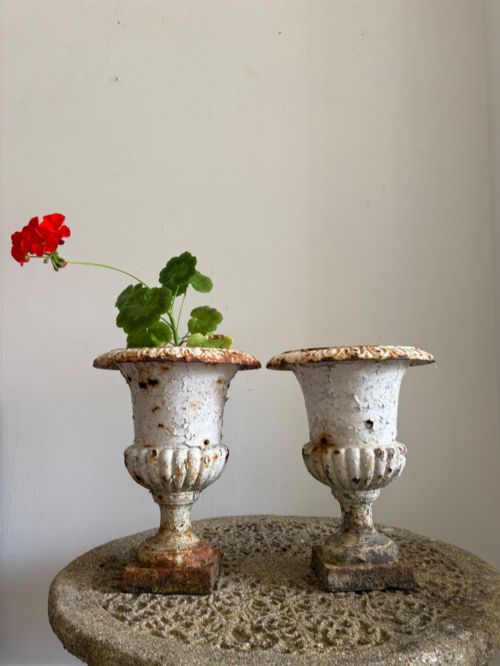

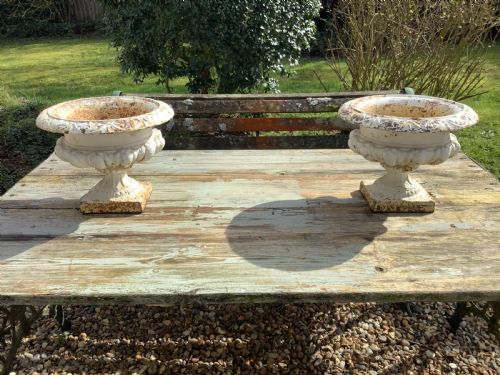


French Outdoor Urns
French outdoor urns bring classic garden form to a terrace, forged in cast iron, wrought iron, zinc and terracotta across the nineteenth century and into nineteen-twenty.
French Outdoor Urns
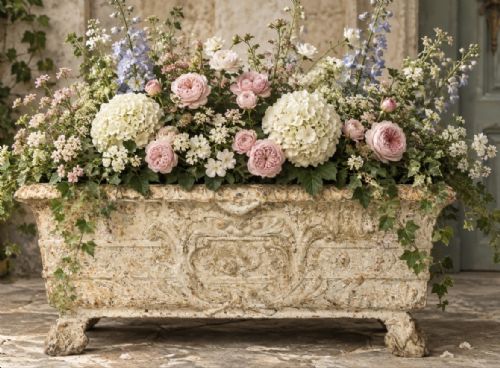
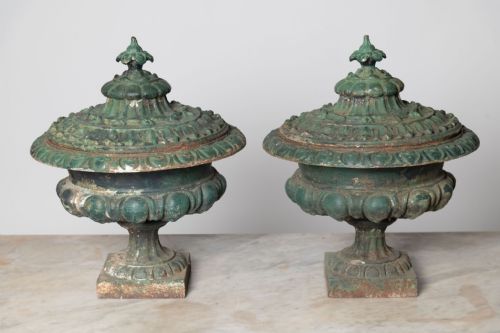
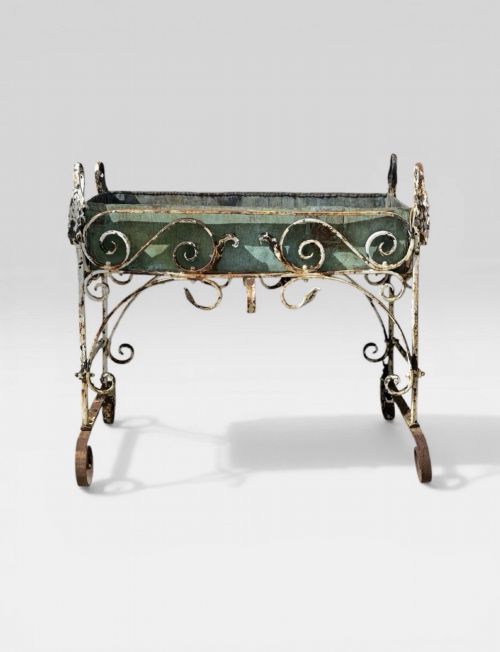
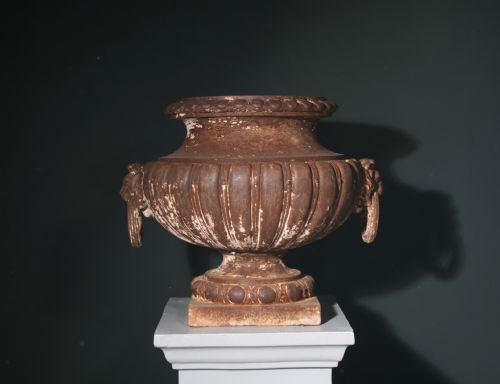
When you search for french outdoor urns, you encounter garden urns, garden planters and table urns shaped by neoclassical, classical revival and French chateau aesthetics. These vessels range from pairs of nineteenth century cast iron pieces with original distressed paint to a single terracotta garden urn featuring carved heads on the handles.
The nineteenth century dominates the listings, spanning specific dates like eighteen-fifty, eighteen-seventy, nineteen-hundred and nineteen-twenty. Makers such as the Val d'Osne foundry stamped their work, while other pieces remain anonymous examples of French country and French neoclassical design.
How they were made
Foundries shaped these items primarily in cast iron and wrought iron, alongside zinc and terracotta. Metal pieces often received coats of paint that have since weathered into distressed patinas, while terracotta versions incorporated carved details directly into the handles.
Production methods balanced robust utility for gardens with architectural ornamentation, utilising gadrooned bodies and classical proportions. Many designs accommodated matching plinths or included original lids.
French Outdoor Urns Retail Price Guide 2026
Typical asking prices for french outdoor urns among the pieces listed under this phrase on Sellingantiques today, from the lower quarter to the upper quarter. They describe what is for sale here now, not the wider market.
Some nineteenth-century terracotta handles feature carved heads that seem to supervise the garden weeds.
What varies in quality
Distinction lies in the crispness of the casting and the presence of documented foundry marks, such as Val d'Osne. Finer examples retain their original lids and untouched layers of early paint.
Proportion and decorative elements, including carved heads on terracotta handles or gadrooned detailing, separate standard garden vessels from more substantial architectural pieces.
Val d'Osne Foundry
The French Outdoor Urns Glossary
- Cast iron
- A strong, heavy alloy poured into moulds to create durable garden ornaments. It forms the primary material for nineteenth-century French examples.
- Terracotta
- Fired clay used for traditional garden vessels. It allows for hand-carved decorative elements like heads on handles.
- Gadrooned
- Ornamented with a series of convex curves or flutes. This decorative moulding appears on bodies of classical urns.
- Neoclassical
- A style drawing on the art of classical antiquity. It heavily influences the formal lines of these French garden pieces.
French Outdoor Urns: Frequently Asked Questions
Are these urns frost proof?
Cast iron and zinc variants generally withstand winter weather outdoors, though owners often move terracotta indoors during severe frosts to protect the fired clay.
Checking the material helps determine how safely a piece remains exposed to the elements year-round.
How do I clean an old garden urn?
Gentle washing with water and a soft brush preserves the aged surfaces, especially on pieces retaining original distressed paint.
Harsh scraping or chemical strippers remove the historic patinas that collectors value on nineteenth-century metalwork.
Did these urns always have plinths?
Some designs sat directly on the ground or terrace tables, while others paired with matching raised bases to increase their presence.
Gadrooned bodies and classical proportions work whether the vessel rests on a dedicated plinth or flat stonework.
How can I date an antique urn?
Stylistic cues such as nineteenth-century classical revival forms, foundry stamps like Val d'Osne, and the wear on early paint layers provide chronological markers.
Comparing the manufacturing technique, whether cast iron or terracotta from eighteen-fifty, narrows the period of origin.