


French Oak Armchairs
These French oak armchairs offer solid timber construction and regional character, grounding a room with substantial proportions and time-worn patina.
French Oak Armchairs
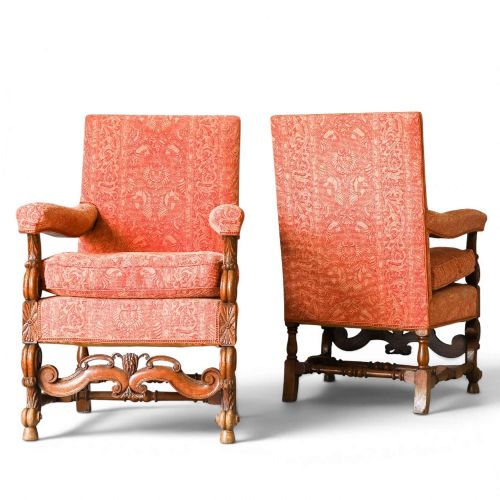
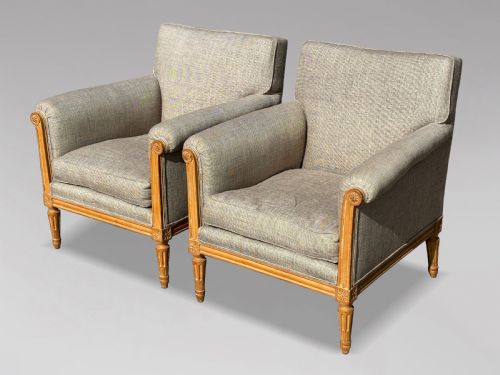
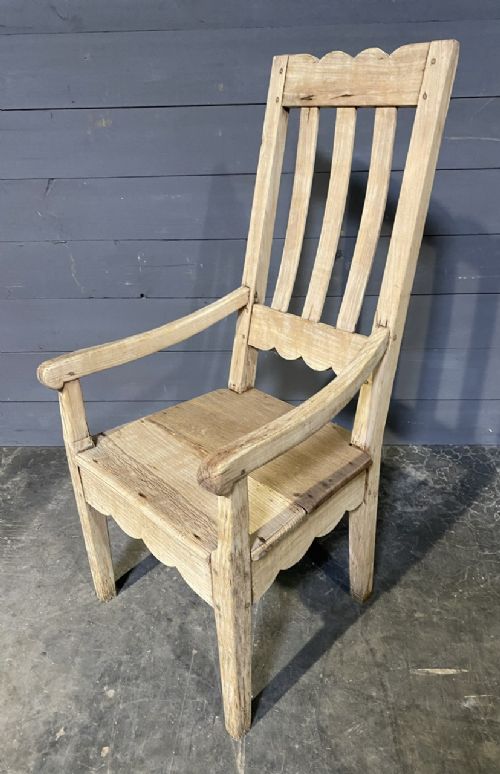
French oak armchairs encompass heavy country seating alongside formal revival forms spanning the eighteenth, nineteenth, and early twentieth centuries. These pieces emerge in styles ranging from provincial ladder backs and Breton designs to Louis XVI and Renaissance revivals.
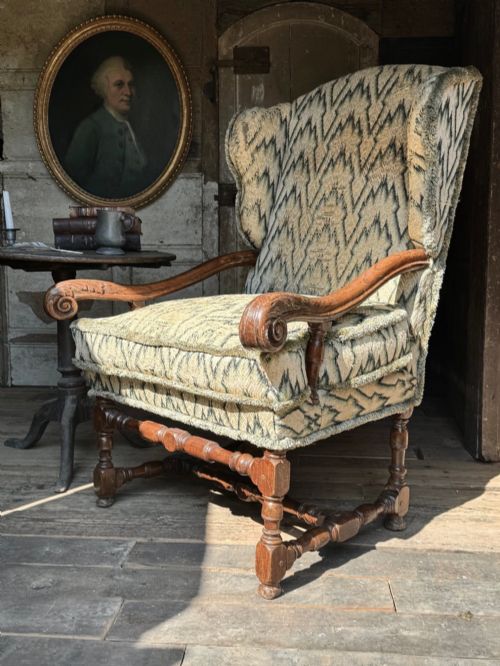
The version most frequently met on this page is the nineteenth-century carved oak armchair, often appearing in pairs with upholstered or caned seats. Buyers encounter rustic country chairs alongside grand wingbacks, bergères, and throne-like seating.
Makers shaped these oak armchairs for diverse settings, from formal chateaus to provincial kitchens and campaign use. The selection mirrors centuries of woodworking traditions rooted in French regional aesthetics.
How they were made
Joiners and cabinetmakers built these frames primarily from solid oak and related hardwoods, employing traditional mortise and tenon joinery to ensure structural endurance. Carvers rendered floral motifs, scrolls, and structural mouldings directly into the dense timber grain.
Seating surfaces integrated natural materials such as cane, woven rush, leather, and fabric upholstery supported by webbing or springs. Artisans finished the oak with oils, waxes, or stains that highlighted the natural figure of the wood over decades of use.
What varies in quality
The depth and crispness of the hand-carved ornamentation separate standard provincial joinery from high-status revival pieces executed by skilled ateliers. Superior examples retain their original timber frames with minimal structural replacement and tight, uncompromised joinery.
The integrity of secondary materials, such as tight hand-woven cane panels or premium leather and velvet upholstery, marks the distinction between ordinary utility seating and exceptional collector examples.
The French Oak Armchairs Glossary
- Bergère
- An enclosed upholstered armchair with wooden sides and an exposed frame, popular in classic French seating designs. These chairs often feature padded armrests and loose seat cushions.
- Fauteuil
- An open-framed upholstered armchair with wooden armrests, characteristic of French interior styles from the seventeenth century onward. The arms typically feature upholstered pads where the wood meets the hand.
- Caning
- A seating technique utilising woven rattan or split cane across chair backs and seats. This method provides lightweight flexibility while maintaining structural support.
- Rush
- Dried marsh grasses twisted into cords and woven tightly to form traditional flat seat pads. This material appears frequently on provincial ladder back chairs.
- Wingback
- An armchair featuring protective side panels attached to the backrest, designed to shield the sitter from draughts. Early examples utilise high upholstered backs framed in solid oak.
French Oak Armchairs: Frequently Asked Questions
How do I date an oak armchair?
Dating relies on examining the construction methods, tool marks left by joiners, and stylistic indicators present in the carved woodwork. Earlier pieces often display hand-sawn timber surfaces and pegged joints.
Later revival pieces from the nineteenth and twentieth centuries mimic historic periods while utilising machine-cut elements and standardised hardware. Comparing the proportions and decorative motifs against documented historical styles clarifies the era.
Are these chairs suitable for daily dining?
Many sturdy provincial and ladder back chairs were originally constructed for dining or kitchen use. Their solid oak frames provide reliable support for regular seating.
Buyers should verify the stability of the joinery and the condition of rush or upholstered seats before putting antique chairs into heavy daily rotation.
How should I care for antique oak furniture?
Maintaining oak timber involves keeping pieces away from direct heat sources and sudden humidity changes to prevent wood splitting. Regular dusting with a soft, dry cloth preserves the aged surface.
Applying microcrystalline wax occasionally helps nourish the wood and protects the historic patina without sealing moisture beneath a modern finish.
What is the difference between provincial and revival styles?
Provincial chairs reflect local rustic traditions, prioritising functional durability and simpler regional carving over courtly formality. They fit naturally into country houses and informal interiors.
Revival styles self-consciously emulate historic periods like Louis XVI or the Renaissance, featuring grander proportions and elaborate ornamentation designed to project status.