

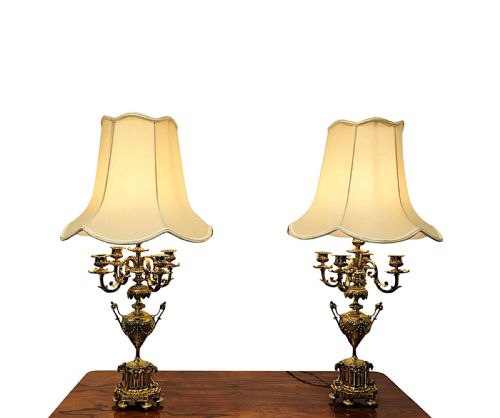
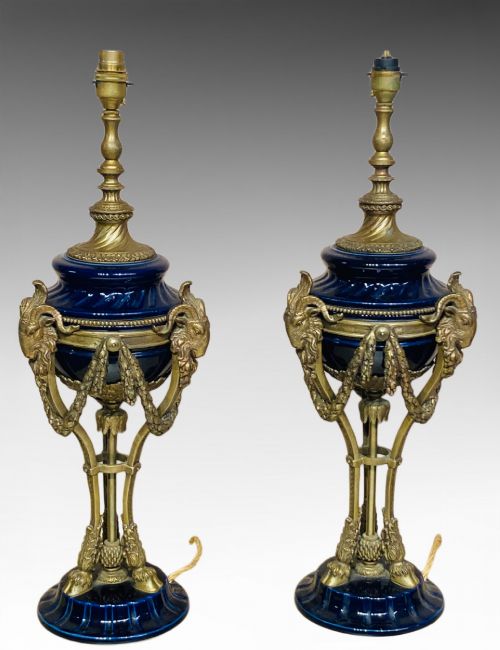
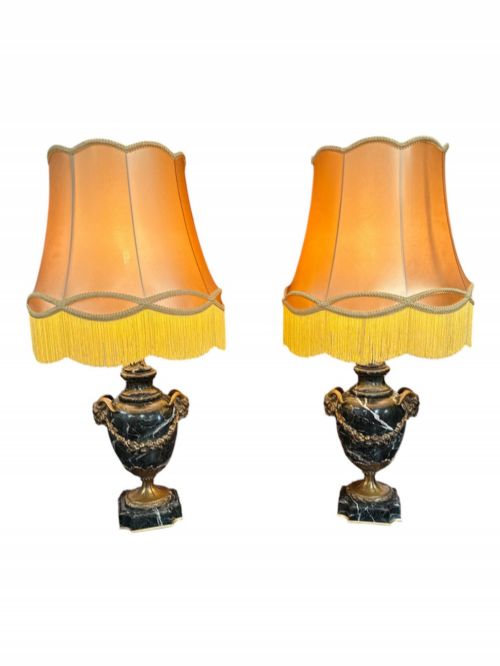
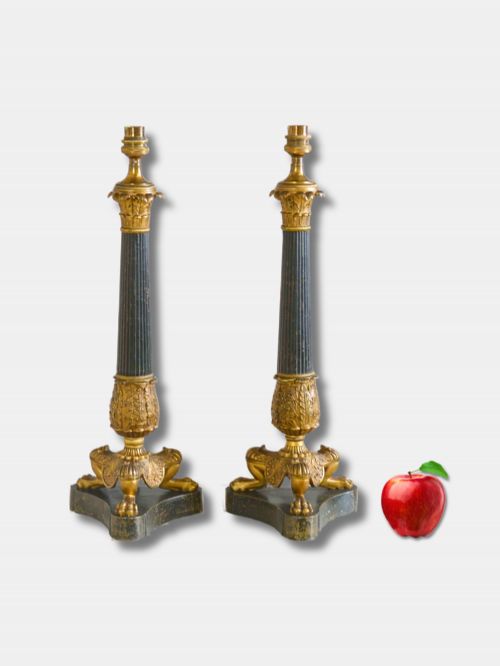
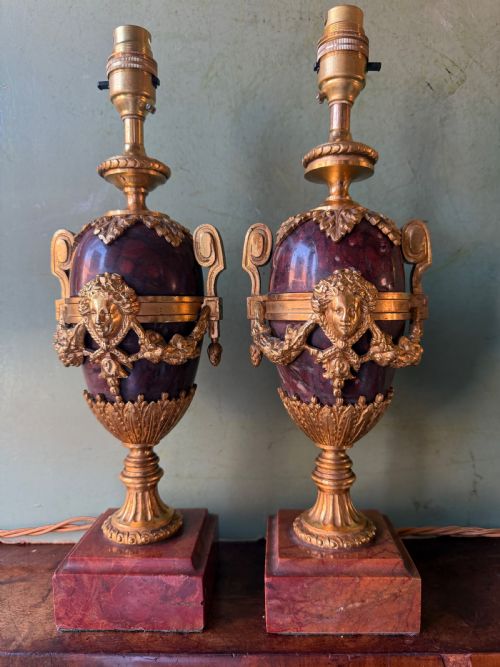
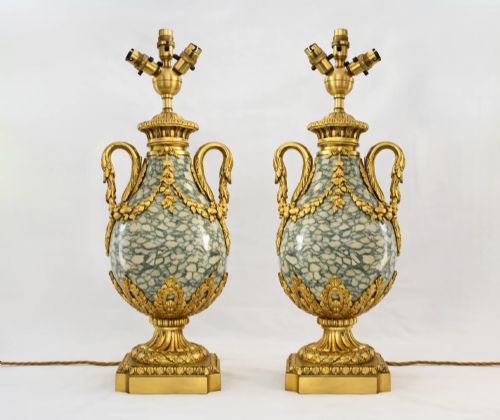


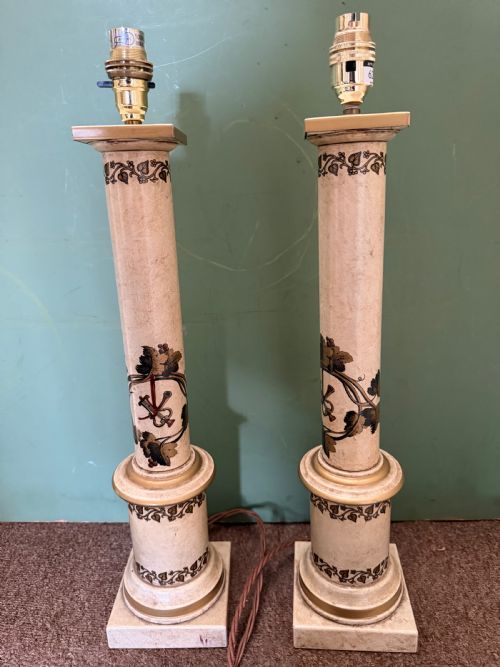


French Neoclassical Lamp Pair
These French neoclassical lamp pair pieces combine classical architectural restraint with decorative warmth, bringing balance and heritage to a room.
French Neoclassical Lamp Pair
A french neoclassical lamp pair draws on antique architectural motifs such as columns, urns and cassolettes to create symmetrical lighting for interior spaces. These items often originate from the nineteenth century or the early twentieth century, spanning revivals in the Louis XVI style and the Empire aesthetic.
The most common forms encountered here are table lamps transformed from earlier bronzes, candelabra or marble vases, alongside purpose-built column and urn bases. Workshops of this period frequently mounted cast metal components onto carved marble or stone plinths.
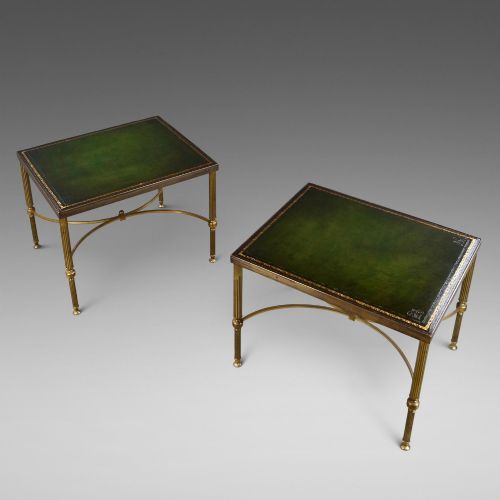
While many listings present table lamps, the broader selection includes wall lights and occasional furniture sharing the same classical vocabulary. The vocabulary relies on strict symmetry, proportional columns and disciplined ornamentation rather than heavy curves.
Materials and construction methods
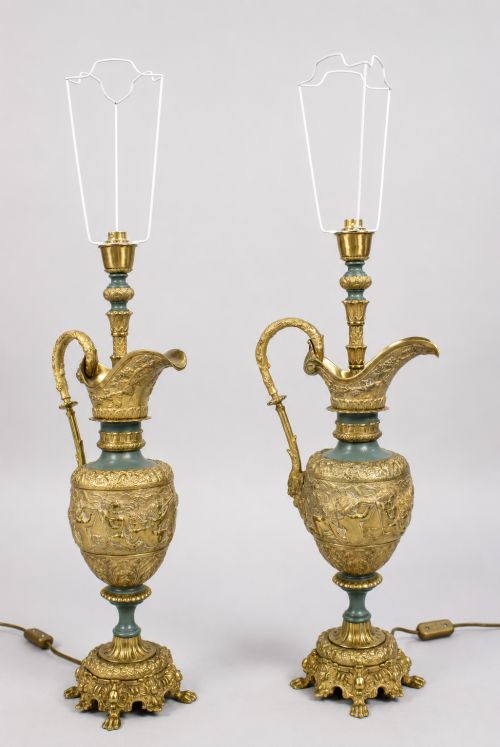
Metalworking techniques in these pieces combine cast brass, gilt bronze and ormolu with patinated bronze or tole-peinte. Craftsmen chased the cast metal surfaces by hand to sharpen details on acanthus leaves, classical figures and lion paw feet.
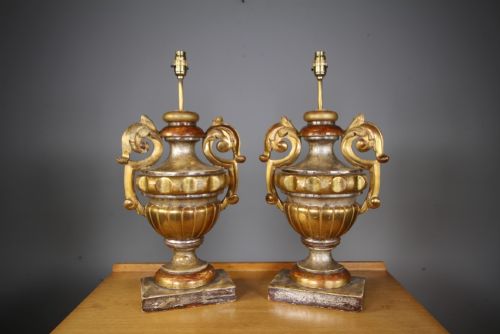
Stonemasonry and woodwork provide the substantial bases, utilising rouge marble, satin wood, carved pine and giltwood. Ormolu mounts are secured to marble bodies with threaded rods and retaining nuts hidden inside the hollow columns or urn interiors.
Many survivors began as oil lamps, candlesticks or decorative cassolettes before receiving electrical wiring in later decades. The conversion process often involved drilling through original stone or metal stems to accommodate internal flex.
Listings feature items spanning the nineteenth century through the 1940s, incorporating marble, gilt bronze and tole-peinte.
Assessing quality and craftsmanship
Quality rests primarily on the crispness of the metal chasing and the depth of the gilding or ormolu finish. Superior examples display sharply defined foliage and smooth, hand-finished joints where bronze meets marble, whereas lower tiers show soft casting edges and flat, uniform plating.
The choice and execution of the stone body indicate standard as well, with dense, richly figured rouge marble or solid turned brass holding higher merit than moulded plaster or lightweight hollow alloys. Matching within the pair matters equally; skilled turners ensured identical heights and weight distribution across both items.
The French Neoclassical Lamp Pair Glossary
- Ormolu
- Gilded bronze produced by applying a mercury and gold amalgam to a bronze object and heating it until the mercury vaporised. This technique leaves a durable, rich golden surface characteristic of fine French metalwork.
- Cassolette
- A decorative ornamental vase or urn featuring a reversible lid that functions either as a solid finial or a candle holder. These vessels often form the central body of classical lighting pieces.
- Louis XVI Style
- A revival aesthetic popular in the nineteenth century referencing eighteenth-century French design. It emphasises straight lines, classical proportions and restrained geometric ornamentation.
- Tole-peinte
- Painted tinplate or sheet metal used for lamp columns and shades. Artisans applied hand-painted decoration over a primed metallic base.
- Empire Style
- A decorative movement inspired by the classical art of ancient Greece and Rome. It favors martial motifs, sphinxes, columns and heavy gilt bronze mounts.
French Neoclassical Lamp Pair: Frequently Asked Questions
How do I wire antique lamps safely?
Rewiring requires running modern insulated flex through the original central channel without altering the historic metal or stone body. A qualified electrician should check the internal components and add an earth wire where the metal frame demands it.
Older lampholders often lack modern safety switches or insulating sleeves. Replacing the internal cord while retaining the exterior ormolu and marble components preserves the visual character.
What shades suit these lamps?
Simple pleated fabric shades in neutral tones complement the classical proportions of column and urn bases. Silk or linen helps diffuse the light evenly across the metallic and marble surfaces.
Avoid overly ornate or coloured shades that compete with the chased ormolu decoration. The scale of the shade should match the height and weight of the stone base.
Are these lamps converted candlesticks?
Many nineteenth-century lighting pieces began life as oil lamps, candelabra or decorative urns before receiving electrical fittings. Converted pieces often retain their original drip pans, burners or weighted bases.
This adaptation history is standard for antique lighting of this period. Collectors value the retention of original patina alongside functional electrical updates.
How do I distinguish Louis XVI from Empire?
Louis XVI style items feature lighter proportions, fluted columns and delicate ribbon or floral motifs. Empire pieces appear heavier and more monumental, incorporating military trophies, bold paw feet and deep patinated bronze.
Examining the casting style and secondary wood or stone helps clarify the specific revival period. Both styles draw from classical antiquity but interpret the vocabulary with different weights.