





French Marquetry Dresser
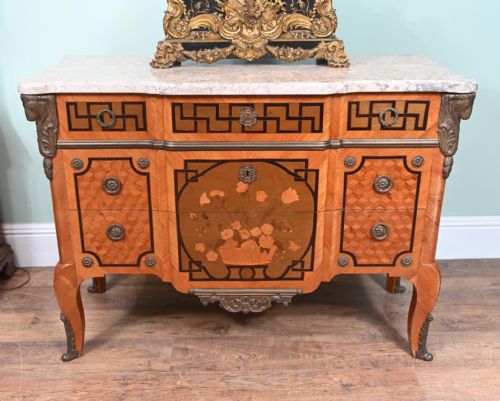
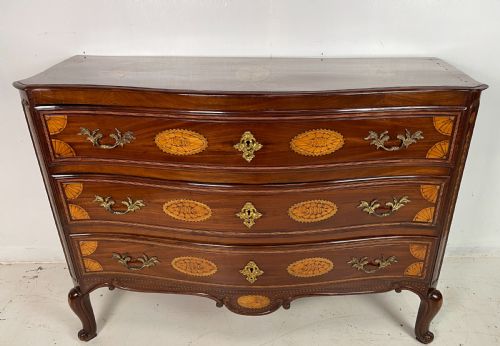
A french marquetry dresser brings contrasting wood veneers and serpentine curves into a room, offering surface display alongside deep storage.
French Marquetry Dresser
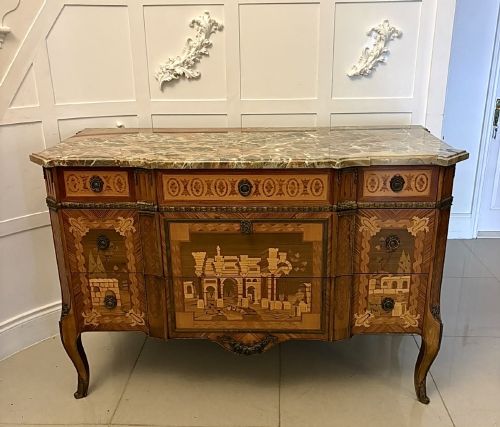
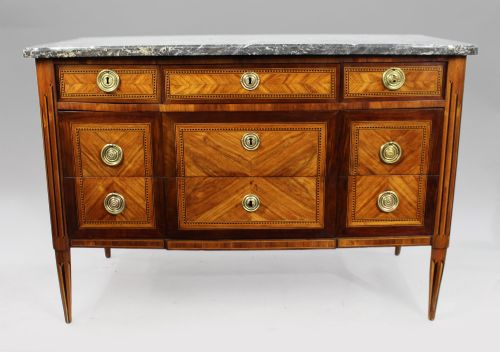
Buyers seeking a french marquetry dresser typically encounter 18th and 19th century commodes, chests of drawers, and credenzas built in walnut, kingwood, and rosewood. These pieces range from early Regence and Louis XV serpentine forms to later Louis XVI revival styles influenced by classical symmetry.
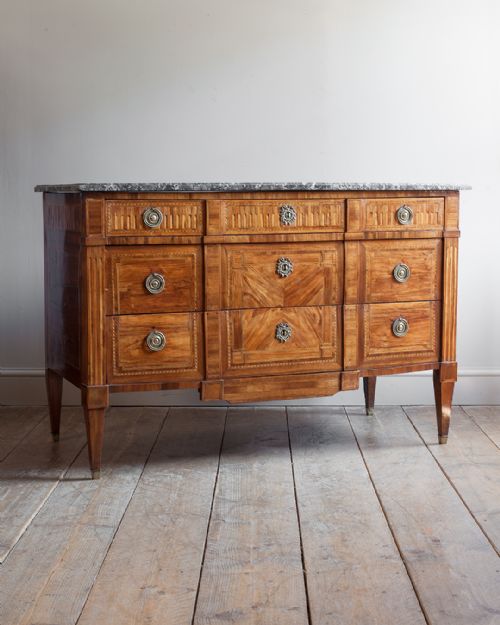
Most examples on this page date from the 19th century or the late 18th century, showcasing floral or geometric veneer patterns across drawer fronts and sides. The inventory also includes taller formats like Wellington chests and fruitwood dressers originating from regional workshops.
Forms vary from gentle bombe silhouettes to straight-fronted chests topped with fitted marble slabs in white or grey tones. Buyers select these pieces for their combination of decorative surface work and practical drawer capacity within reception rooms and bedrooms.
Materials and construction methods
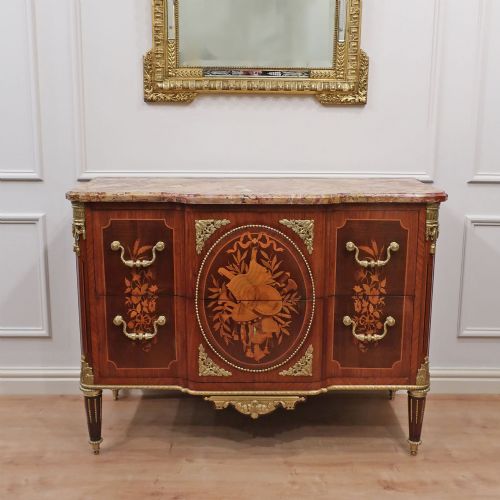
Cabinetmakers constructed carcass frames from solid timbers like walnut, oak, or fruitwood before applying fine decorative veneers in kingwood, satinwood, amboyna, and harewood. Craftsmen cut these contrasting woods into intricate pictorial panels or geometric parquetry grids.
Gilders and metalworkers mounted cast bronze and ormolu mounts to corners, handles, and aprons to protect vulnerable edges and accentuate the curvilinear profiles. Heavy marble slabs rested directly on top surfaces, shaped to follow the serpentine or bow-front contours of the commode.
French Marquetry Dresser Retail Price Guide 2026
Typical asking prices for french marquetry dresser among the pieces listed under this phrase on Sellingantiques today, from the lower quarter to the upper quarter. They describe what is for sale here now, not the wider market.
Listings feature 18th century and 19th century pieces employing kingwood, walnut, satinwood, and ormolu mounts.
Judging quality and execution
Quality rests upon the precision of the veneer work and the integration of the mounts into the wooden frame. Superior examples maintain tight joints and fluid pictorial marquetry that does not lift or warp away from the primary ground wood.
The choice of secondary timbers and the crispness of the bronze or ormolu chasing separate standard production from masterwork pieces. Original marble tops fitted correctly to the cabinet carcass indicate higher workshop standards.
Thomas Hache of Grenoble
The French Marquetry Dresser Glossary
- Marquetry
- The art of applying decorative pieces of veneer to a structural carcass to form pictorial designs. Artisans cut various coloured woods together to create seamless floral or architectural motifs.
- Parquetry
- A geometric mosaic of wood veneer arranged in repeating patterns such as cubes or chequers. This technique often covers the drawer fronts of Louis XVI revival pieces.
- Ormolu
- Gilded bronze mounts applied to the angles and feet of furniture to provide both protection and ornamentation. The best examples feature hand-chased surface detailing.
- Bombe
- A swelling, outward-curving chest profile that expands toward the base. This exuberant shape characterises many mid-18th century commodes.
- Serpentine
- A furniture front or top shaped with a central concave curve flanked by two convex sweeps. This undulating line defines much Louis XV case furniture.
French Marquetry Dresser: Frequently Asked Questions
Are these pieces suitable for daily use?
These chests and commodes provide sturdy drawer storage suitable for clothing or linens in modern bedrooms and living areas. The traditional timber construction remains robust when handled with care.
Keep pieces away from direct heat sources and drastic humidity shifts to prevent veneer shrinkage or lifting. Lift drawers slightly when opening to reduce wear on wooden runners.
How do I tell Louis XV from Louis XVI style?
Louis XV pieces feature asymmetrical curves, flowing serpentine lines, and exuberant floral marquetry without rigid symmetry. Ormolu mounts on these items accentuate the organic, swelling outlines of the carcass.
Louis XVI furniture introduces straight tapering legs, crisp geometric parquetry, and classical architectural proportions. This later style reflects a revival of interest in ancient Roman and Greek design.
What is the difference between a commode and a dresser?
A commode typically refers to a low chest of drawers designed with decorative mounts and a marble top, originating as a French reception room form. These pieces prioritize elegant surface display alongside functional containment.
Dressers in this selection encompass taller upright formats or regional fruitwood cabinetry intended for general storage. Each type employs similar marquetry and veneering traditions regardless of overall height.