

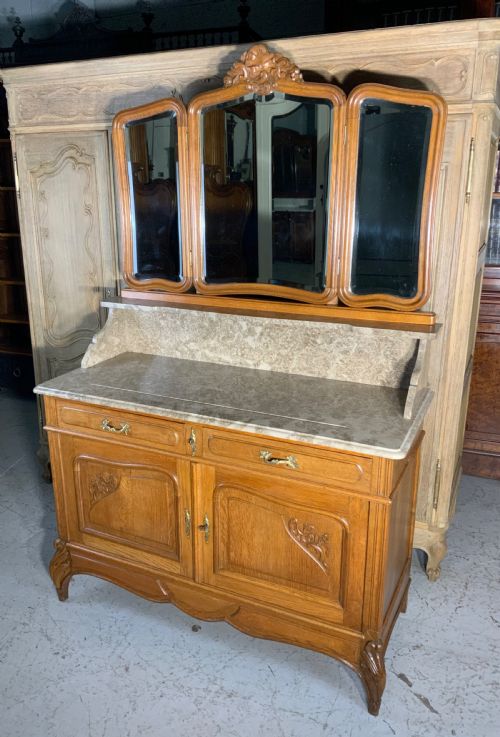
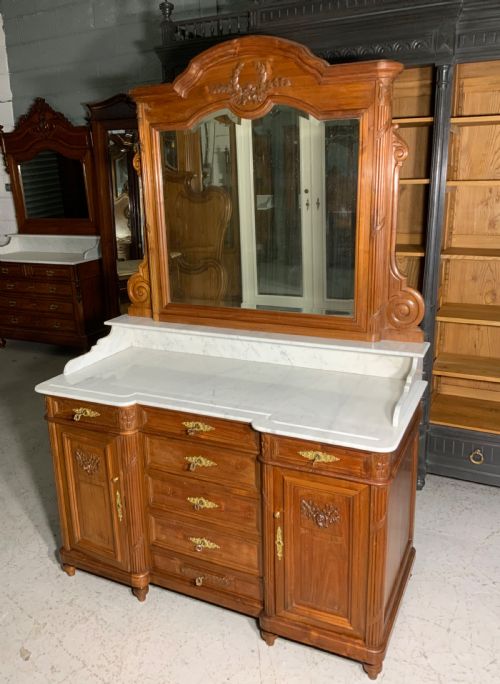
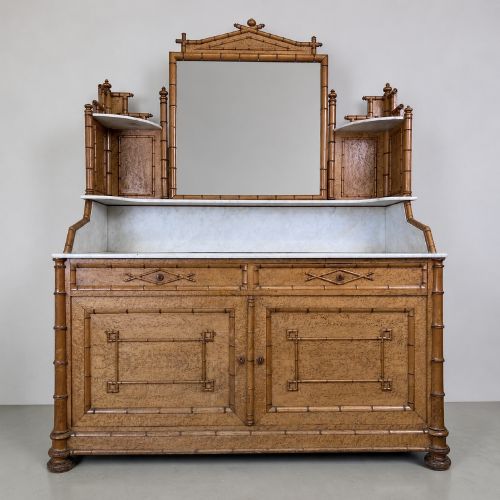
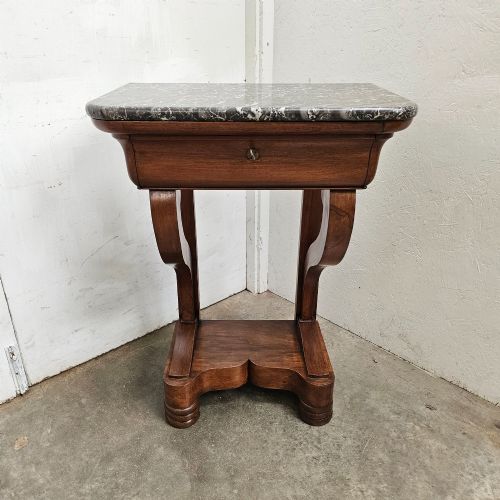
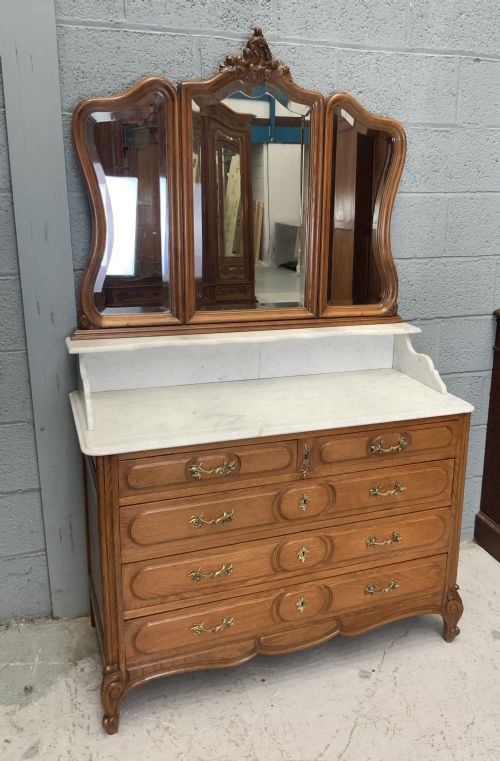


French Marble Top Washstand
A french marble top washstand brings solid marble surfaces and timber frames together to anchor a bedroom with practical nineteenth and early twentieth century utility.
French Marble Top Washstand
A french marble top washstand combines a heavy stone slab with a wooden base, providing a durable surface originally designed for morning ablutions. These pieces appear in forms ranging from dedicated washstands to dressing tables, console tables, and commodes.
The versions most commonly met on this page date from the nineteenth century through to the early twentieth century, spanning periods like the Victorian era, 1900, 1910, 1920, and 1930. Makers utilised regional timbers such as walnut, mahogany, oak, pine, and birds-eye maple to build the structural carcases.
Stylistic influences vary widely across the selection, featuring French Provincial, French Rococo Revival, Louis Philippe, French Aesthetic Movement, Victorian faux bamboo, and Art Deco designs. Buyers frequently encounter variations that cross over between washstands, dressing cabinets, and chests of drawers.
Assessing quality and craftsmanship
The integration between the stone slab and the timber carcase dictates the structural integrity of the piece, with finer examples showing precise joinery that bears the heavy weight securely. Carved walnut and oak demonstrate the carver's hand through depth and relief rather than shallow machine stamping.
The choice of secondary woods and the complexity of styling, such as elaborate Rococo Revival curves or precise faux-bamboo turning, separate standard utility pieces from higher decorative works. The grain selection in mahogany, walnut, and birds-eye maple further distinguishes the ambition of the original workshop.
French Marble Top Washstand Retail Price Guide 2026
Typical asking prices for french marble top washstand among the pieces listed under this phrase on Sellingantiques today, from the lower quarter to the upper quarter. They describe what is for sale here now, not the wider market.
Victorian craftsmen painstakingly carved ordinary timber to mimic exotic bamboo, fooling visitors before they even touched the grain.
The French Marble Top Washstand Glossary
- Marble
- A metamorphic rock prized for its smooth, cool surface and varied natural veining, used extensively for water-resistant tabletops. It provides a heavy, durable counter that withstands damp environments.
- Faux bamboo
- A decorative technique where wood is carved and painted to imitate natural bamboo stalks. This style gained popularity during the nineteenth century under Asian design influences.
- Commode
- A low piece of furniture featuring drawers or doors, often adapted to house washing equipment in European bedchambers. It shares a similar form to many marble-topped washstands.
- Part-ebonised
- Wood finished with a black stain or paint applied to specific sections to create a sharp contrast against natural walnut or mahogany grain. This decorative treatment highlights structural mouldings.
- Rococo Revival
- A nineteenth-century design movement characterised by asymmetrical scrollwork, naturalistic floral carving, and flowing, curved lines. It draws inspiration from earlier French royal decorative arts.
French Marble Top Washstand: Frequently Asked Questions
What is a french marble top washstand used for today?
Modern interiors utilise these stone-topped pieces as vanity units in bathrooms, stylish side tables in hallways, or functional surfaces in bedrooms. The water-resistant marble makes them practical for holding daily accessories.
Their robust timber frames and varied storage compartments also suit living rooms and dressing areas as console tables or chests of drawers.
How do I care for the marble top?
Cleaning requires warm water and a soft cloth, avoiding acidic substances that can etch the polished stone surface over time. Regular wiping preserves the natural finish of the marble.
Applying a suitable stone sealer periodically helps protect the top from moisture and staining during everyday use.
How can I tell the period of these pieces?
Dating relies on stylistic clues, such as the curved ornamentation of Rococo Revival pieces, the geometric lines of Art Deco, or the turned details of faux-bamboo furniture. Construction methods and timber choices also point towards specific decades.
Earlier nineteenth-century pieces often display heavier mahogany or walnut timber work, whereas later 1920 and 1930 items introduce simplified forms.
Can I use a washstand in a modern bathroom?
Plumbing can be integrated into many of these wooden cabinets with professional adaptation for modern basins and taps. The durable marble surface naturally withstands splashing and daily bathroom humidity.
Care should be taken to protect the historic timber frame from standing water by sealing interior surfaces appropriately.