

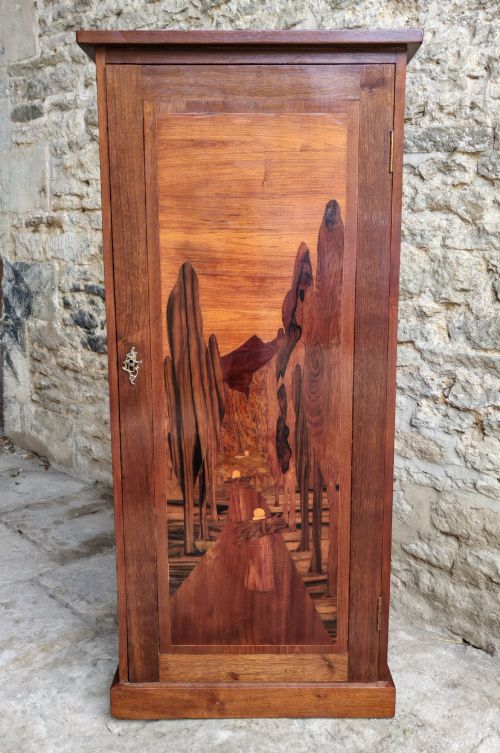


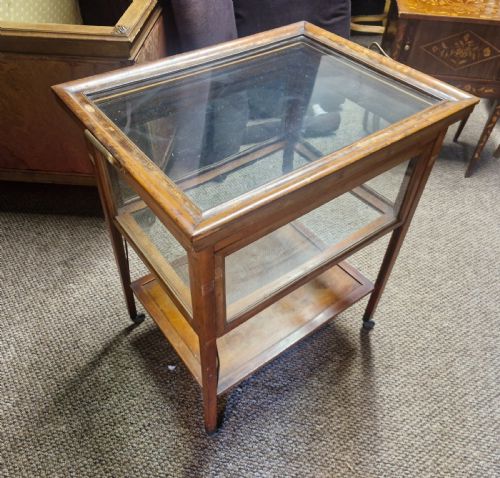
French Mahogany Side Cabinet
A french mahogany side cabinet brings continental elegance to an interior, offering practical enclosed storage beneath a refined display surface.
French Mahogany Side Cabinet
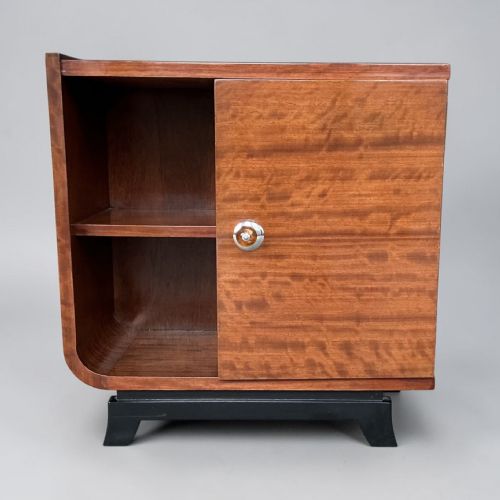
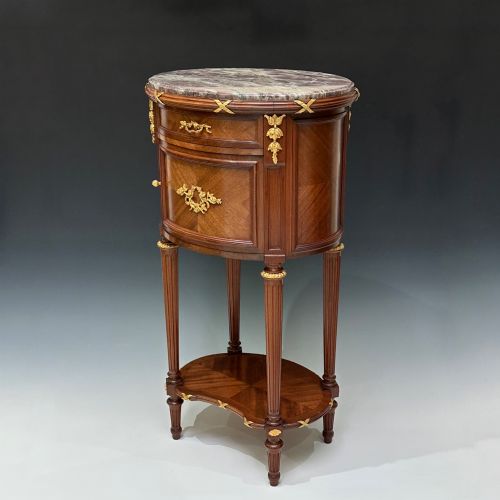
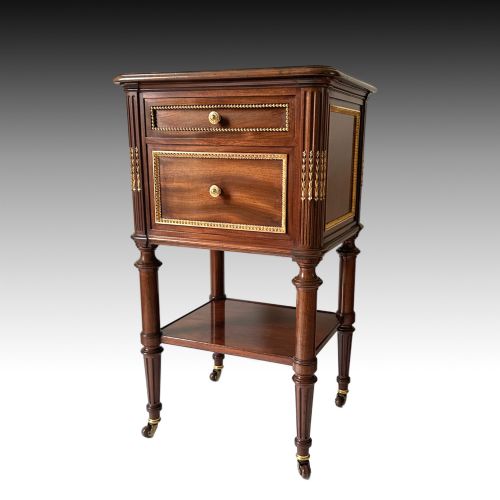
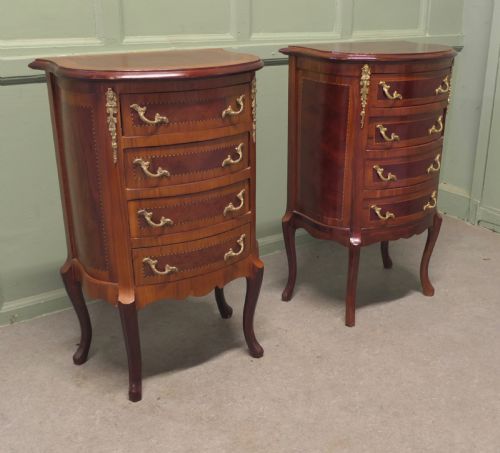
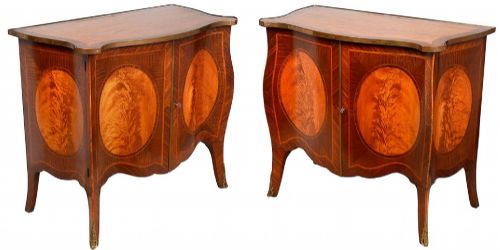
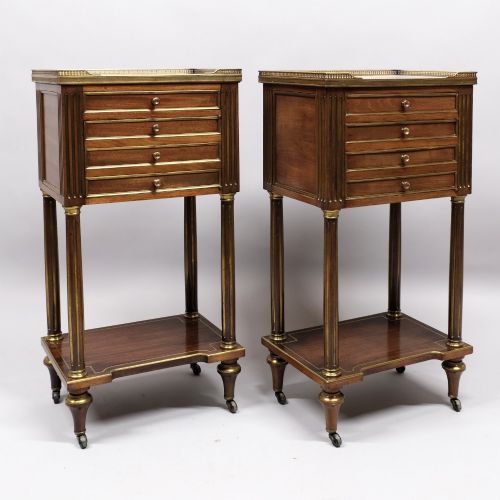
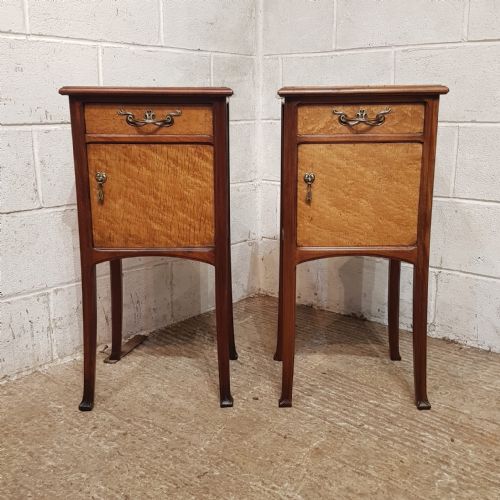
A french mahogany side cabinet typically encompasses compact bedside storage, pot cupboards, and small commodes designed in continental European workshops. The pieces seen most frequently on this page date from the nineteenth and early twentieth centuries, spanning revival styles such as Louis XV, Louis XVI, and French Empire.
Makers and designers drew upon classical proportions, often pairing rich timber bodies with inset stone surfaces and metal mounts. Buyers regularly encounter these items in pairs, serving as bedside tables or compact hallway storage units.
Construction materials and methods
Cabinet makers utilised solid mahogany and figured veneers applied over secondary timbers like oak, frequently incorporating marble tops in white, green, or fossil varieties. Brass, ormolu, and gilt bronze mounts were cast and chased to accent corners, handles, and feet.
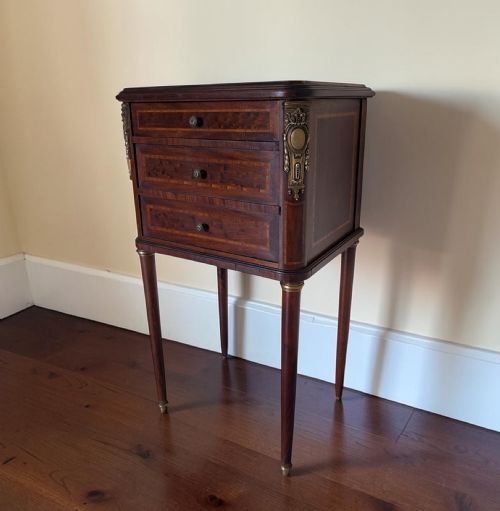
Marquetry and parquetry techniques added geometric or floral patterning across drawer fronts and doors, while delicate brass stringing outlined panel borders. Structural joins relied on traditional cabinet-making methods suited to housing heavy stone surfaces.
Listings feature mahogany, brass, marble, and ormolu across periods spanning the early nineteenth century to the Art Deco era.
Assessing craftsmanship and finish
The division between standard output and top-tier pieces rests upon the selection of timber figures, such as flame mahogany or burr walnut, and the precision of the veneer matching. Superior examples display crisply cast ormolu mounts that retain their original fire-gilt finish rather than flat, secondary metalwork.
Internal construction, including hand-cut dovetails on drawer linings and the integration of heavy, well-fitted marble slabs, distinguishes workshop output from mass-produced later alternatives. The fluency of carved details and marquetry adds further distinction.
François Linke·Jean-Henri Riesener
The French Mahogany Side Cabinet Glossary
- Ormolu
- Gilt bronze applied as a decorative mount to furniture. This technique was widely utilised during the eighteenth and nineteenth centuries to accent cabinet corners and drawer fronts.
- Marquetry
- The art of applying small pieces of veneer to a structure to form decorative patterns. Artisans used contrasting timbers to depict floral arrangements or geometric scenes.
- Commode
- A low chest of drawers or cabinet designed for domestic storage. French examples often feature curved fronts and marble surfaces.
- Parquetry
- Geometric wood mosaic work used for flooring or cabinet surfaces. It relies on symmetrical arrangements of contrasting veneer blocks.
- Bijouterie
- A glass-topped table or cabinet designed for displaying small valuables and curiosities. These pieces often feature glazed sides and velvet-lined interiors.
French Mahogany Side Cabinet: Frequently Asked Questions
How do I style a side cabinet at home?
These compact cabinets suit placement beside a bed or alongside a living room seating arrangement. Their marble tops provide a durable surface for lighting or decorative objects.
Keep surrounding furniture balanced by pairing dark mahogany tones with neutral walls or contrasting metallic accents. The enclosed cupboards keep small items out of sight while maintaining a tidy interior.
Were these cabinets used only as bedside tables?
While many examples function as nightstands or pot cupboards, larger versions served as sideboards, console units, or music cabinets. Their versatile proportions allowed them to fit into various domestic rooms.
Historical usage often dictated interior fittings such as shelves for chamber pots or specialised drawer depths for linen and books. Today, those same compartments accommodate modern household storage needs.
How do I identify a Louis XV revival piece?
Louis XV revival pieces are characterised by serpentine fronts, cabriole legs, and asymmetrical gilt bronze mounts. The overall silhouette emphasises flowing, organic curves rather than rigid geometry.
Cabinet makers working in the nineteenth century revived this eighteenth-century aesthetic using rich mahogany or kingwood veneers. Look for swept aprons and scrolling feet to confirm the style.