

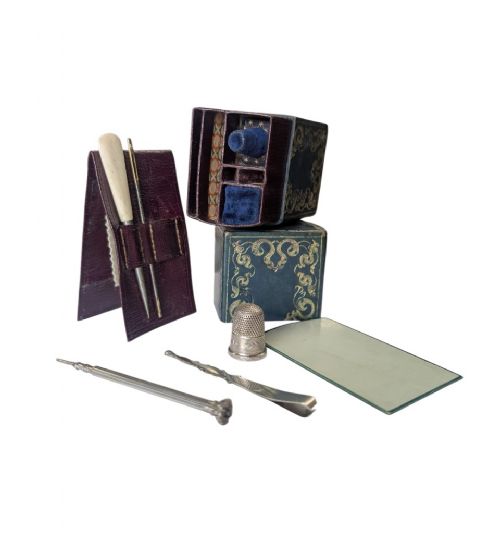


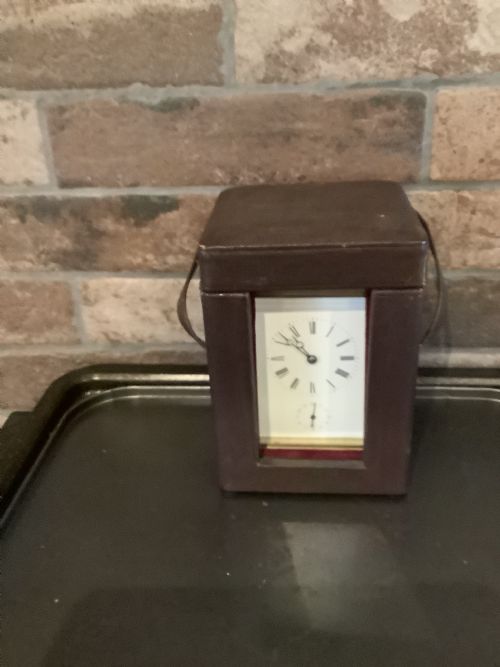


French Leather Box
These french leather box pieces bring nineteenth-century craftsmanship and travel history directly into your home.
French Leather Box
When you search for a french leather box, you encounter a varied selection of containers ranging from small trinket cases to large travel trunks and storage crates. These items span periods from the early nineteenth century through the Victorian era up to the mid-twentieth century.
The objects serve multiple practical and decorative functions, including sewing boxes, hat boxes, writing cases, and scent bottle caskets. Many pieces reflect specific historical contexts, such as military use or luxury Parisian retail.
You are most likely to meet examples in wood, brass, and leather, often lined with silk or velvet. The assortment includes items designed for personal adornment, travel, and domestic organisation.
Materials and construction
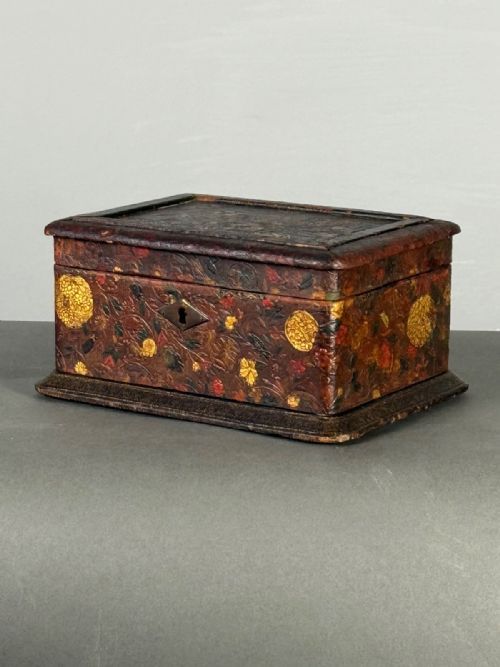
Makers built these pieces using wood and canvas as a core structure, covering the exterior in leather that was frequently embossed, gilded, or tooled by hand. Brass mounts, locks, and handles reinforced the corners and edges.
Interiors often incorporated velvet or silk linings tailored to hold specific items like jewellery, fans, decanters, or stationery.
French Leather Box Retail Price Guide 2026
Typical asking prices for french leather box among the pieces listed under this phrase on Sellingantiques today, from the lower quarter to the upper quarter. They describe what is for sale here now, not the wider market.
Listings feature items utilising gold leaf, velvet, brass, and glass alongside leather and wood across the nineteenth and twentieth centuries.
Variations in quality
The standard of execution depends on the precision of the leather tooling, the richness of the gilding, and the quality of the internal silk or velvet lining. Stamped maker marks and the inclusion of original brass hardware elevate the standing of a piece.
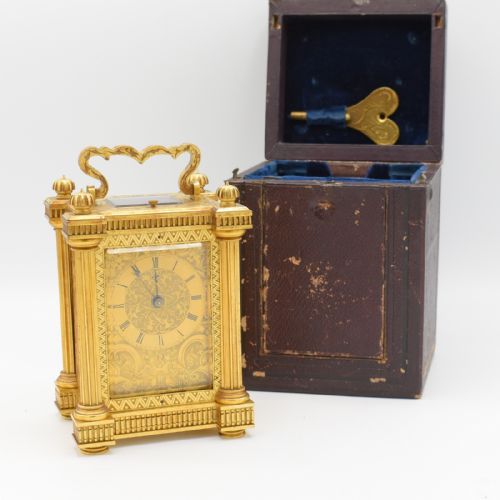
Simpler storage crates and utilitarian trunks contrast with finely finished jewellery caskets and gilt bronze mounted carriage clock cases, showing distinct tiers of domestic and travel luxury.
Susse Freres Paris·Howell & James London·Victor Raulin·Aux Etats Unis·Delion Paris
The French Leather Box Glossary
- Cartonnier
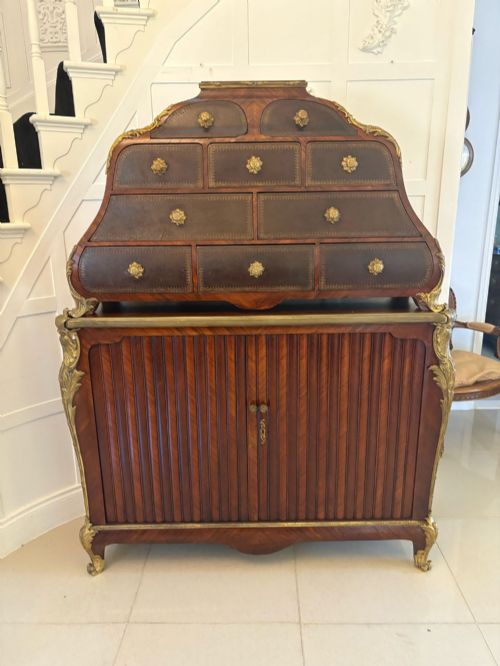
- A decorative cabinet or piece of furniture designed for holding papers, documents, or boxes. These items often feature leather-bound drawers or compartments.
- Gilt bronze
- An alloy of copper and zinc treated with a thin layer of gold, commonly used for mounts, clock cases, and decorative hardware on boxes.
- Tooled leather
- Leather decorated with pressed patterns, motifs, or gold leaf using heated metal tools. This technique defines the surface of many decorative caskets.
- Sarcophagus
- A shape characterised by a sloping lid and a rectangular or polygonal base, frequently utilised for nineteenth-century tea caddies and jewellery boxes.
- Shako
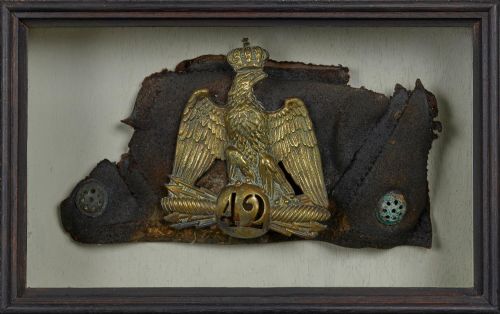
- A cylindrical military cap worn by infantry regiments, sometimes represented in surviving partial items or associated military antiques.
French Leather Box: Frequently Asked Questions
How were these leather boxes used originally?
These boxes served various domestic and travel purposes, from housing personal jewellery and letters to transporting hats and decanters.
Larger trunks and crates catered to journeys by train or steamer, while smaller caskets stayed on dressing tables.
How do I date a french leather box?
Dating relies on stylistic clues, materials, and any stamped maker marks or signatures found on the hardware or leather.
Victorian and nineteenth-century pieces often display hand tooling and gilt bronze mounts, whereas twentieth-century examples shift towards Art Deco and mid-century aesthetics.
Where should I place a leather box at home?
Smaller trinket boxes and cheroot cases suit placement on mantelpieces, bookshelves, or side tables.
Larger hat boxes and trunks function well as standalone display items or functional storage in a living space.
Are the interiors usually original?
Many pieces retain their original silk or velvet linings, which often show wear consistent with their age and use.
Inspecting the fabric helps determine whether the interior matches the period of the exterior leather housing.