



French Kingwood Display Cabinet
When you search for a french kingwood display cabinet, you enter a world of nineteenth-century reception rooms defined by curved glass and gleaming mounts.
French Kingwood Display Cabinet
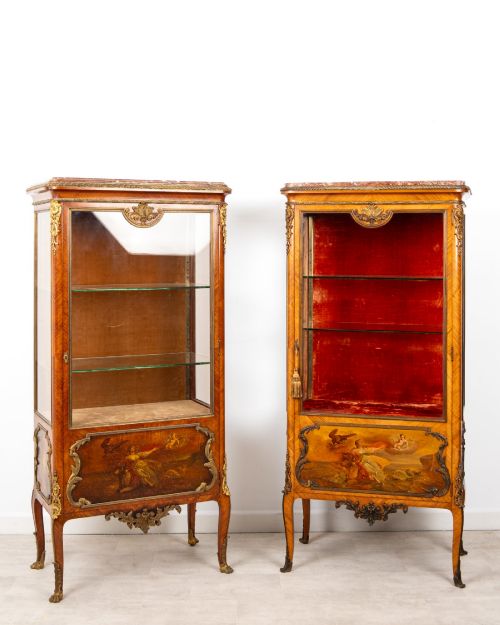
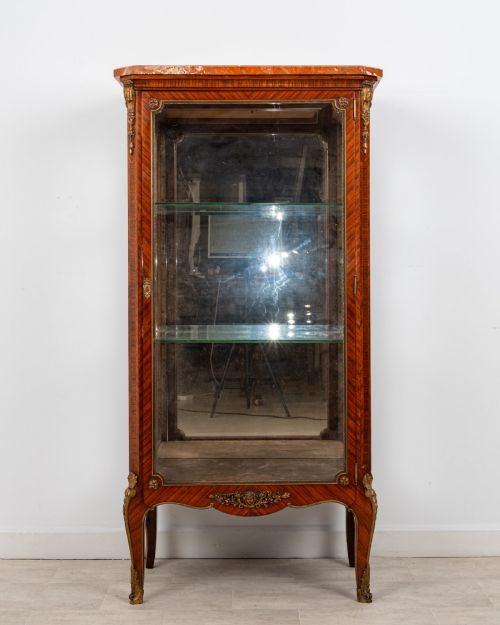
A french kingwood display cabinet brings together the fine cabinet-making traditions of the nineteenth century and the decorative ambitions of the Louis XV and Louis XVI revivals. These pieces serve to showcase porcelain, bijouterie, and precious objects behind glazed doors or glass panels.
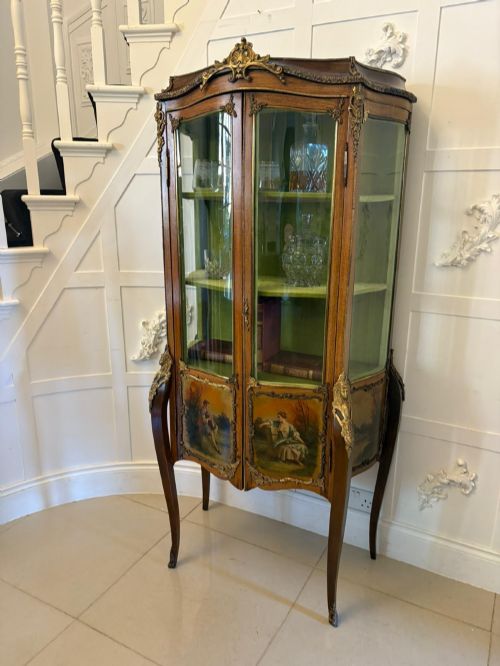
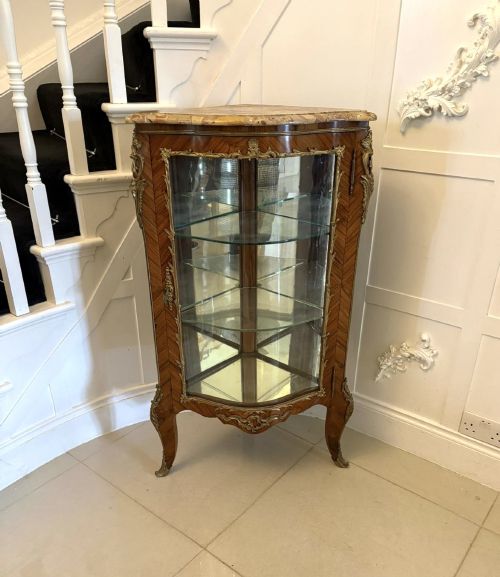
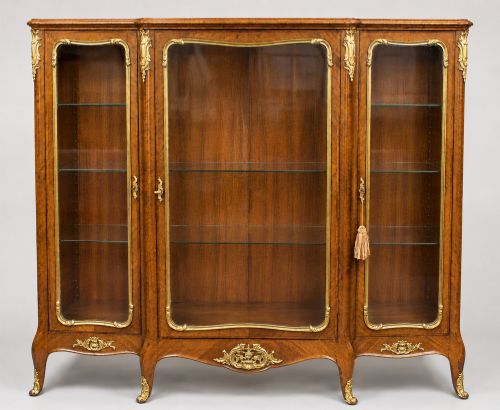
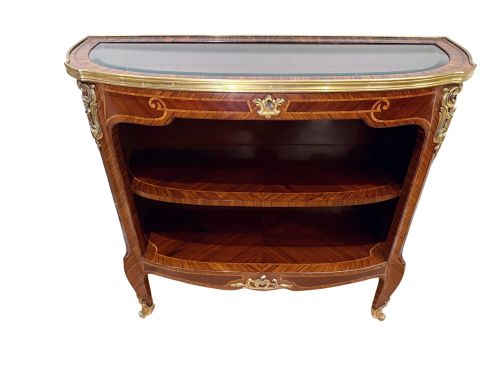
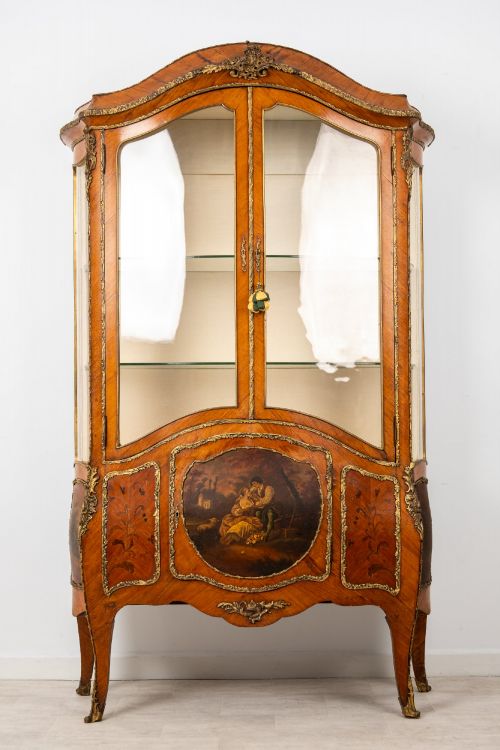
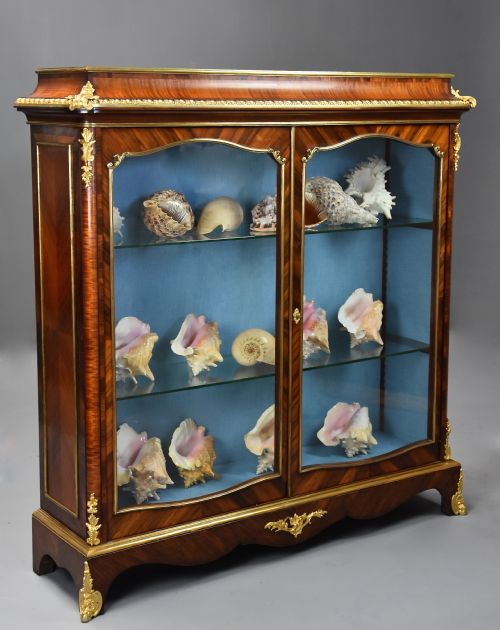
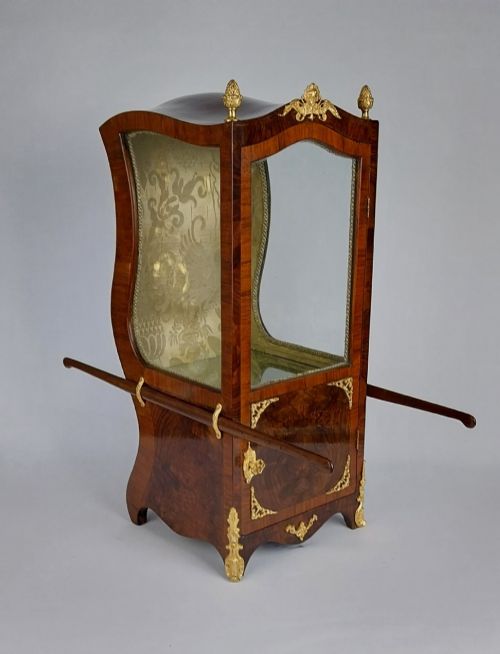
The selections available range from tall serpentine vitrines and corner cabinets to low credenzas, side cabinets, and tabletop bijouterie cases. Most examples date from the Victorian era and the late nineteenth century, reflecting the period taste for French chateau interiors.
Makers and workshops produced these forms with varied structural silhouettes, including bombe fronts, straight-sided pier cabinets, and glass-topped display tables. The overriding purpose remains the exhibition of treasured possessions within a heavily ornamented timber frame.
How They Were Made
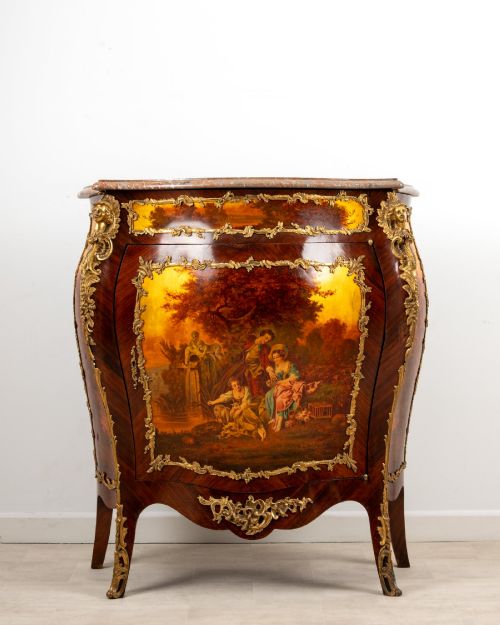
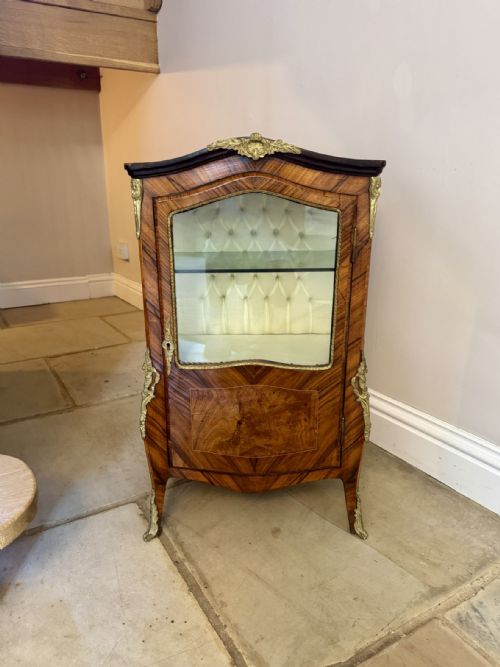
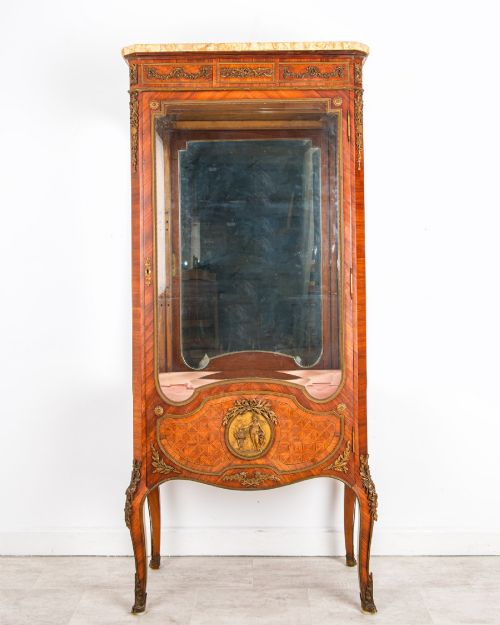
Craftsmen built these cabinets using a supportive carcass of timber, frequently walnut or oak, overlaid with distinctive kingwood veneers arranged in intricate marquetry patterns. Gilt bronze and ormolu mounts were cast and chased to edge the glass panels, crown the cornices, and accentuate the serpentine contours.
Marble tops, often shaped to match the curves of the timber body, provide a heavy and luxurious upper surface. Painted panels in the Vernis Martin style and inset Sevres porcelain plaques are integrated directly into the facades alongside glazed sections of curved or flat glass.
Listings feature pieces spanning the Victorian era through the early twentieth century, utilising kingwood, ormolu, marble, and fabric linings.
What Varies in Quality
The distinction between standard production and exhibition quality rests on the crispness of the gilt bronze mounts and the intricacy of the timber marquetry. Heavier, more deeply chased ormolu and finely detailed painted panels elevate a piece beyond basic commercial output.
Structural harmony also dictates value, particularly where serpentine or bombe curves demand exact carpentry so that doors and glass fit without strain. The inclusion of named maker signatures or specific regional provenances further separates standard Victorian revival items from elite workshop commissions.
François Linke·G. Durand·Paul Sormani
The French Kingwood Display Cabinet Glossary
- Kingwood
- A dense, richly figured timber native to Brazil, prized for its contrasting dark violet-brown stripes used extensively in decorative veneers during the eighteenth and nineteenth centuries.
- Ormolu
- A technique of applying finely ground high-carat gold to a bronze base, creating gilded mounts that decorate the corners, feet, and friezes of cabinet furniture.
- Vitrine
- A glass-fronted cabinet designed specifically for the display of curiosities, porcelain, and small decorative art objects.
- Vernis Martin
- A simulated Japanese lacquer technique developed in France, featuring painted pastoral or romantic scenes on a polished ground.
- Marquetry
- The art of applying small pieces of veneer to a structure to form decorative patterns, pictures, or floral designs.
- Bijouterie
- A low display table or cabinet with a glazed compartment, originally used for holding jewellery and personal ornaments.
French Kingwood Display Cabinet: Frequently Asked Questions
What is a french kingwood display cabinet?
A french kingwood display cabinet is a nineteenth-century decorative storage piece veneered in exotic kingwood and mounted with gilt bronze. These cabinets use glass panels and shelves to exhibit collections of porcelain and small artefacts.
Such furniture draws heavily on Louis XV and Louis XVI revival styles, incorporating curved silhouettes, marble tops, and marquetry inlay. They were designed to project elegance and sophistication in period drawing rooms and salons.
How do you style a vitrine cabinet?
Styling a vitrine involves curating the interior space to balance colour and scale among your displayed objects. Placing similar ceramics or glassware together allows the glazed doors and mirrored or fabric-lined backs to reflect light effectively.
Keep the arrangement uncluttered so that the surrounding ormolu mounts and kingwood grain remain visible. The cabinet itself functions as a primary visual focus, meaning the internal contents should complement rather than overwhelm the woodwork.
How do you date nineteenth century cabinets?
Dating these cabinets relies on examining the construction methods, timber choices, and revival style markers characteristic of the 1800s. Mid-century pieces often favour simpler architectural lines, whereas later decades embrace exuberant rococo curves and elaborate bronze mounts.
Makers' signatures, stamps on the bronze work, and the specific composition of the internal hardware offer further clues. Comparing the piece to documented exhibition archives helps narrow down the decade of production.
What distinguishes vernis martin panels?
Vernis Martin panels feature delicate painted scenes rendered in translucent varnishes that mimic Oriental lacquerwork. They typically depict figures in garden settings or pastoral landscapes surrounded by gilded scrollwork.
These panels are set directly into the cabinet doors or lower friezes, providing a colourful contrast to the dark kingwood veneer. Their presence indicates a higher tier of decorative ambition in French nineteenth-century furniture.