


French Iron Fixture
These french iron fixture selections bring industrial weight and decorative grace into a room, offering enduring illumination.
French Iron Fixture
A french iron fixture is a structural lighting piece or display item drawing on historical aesthetics from chateaux and provincial workshops. Buyers examining this page encounter hanging chandeliers, hall lanterns, wall lights, and ceiling lamps spanning the nineteenth and twentieth centuries.
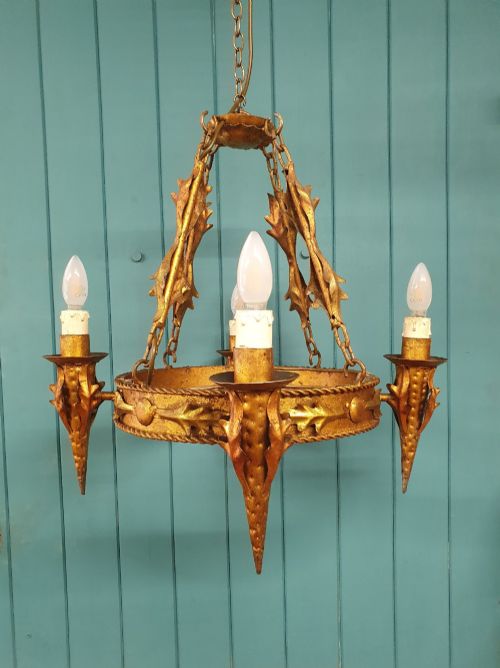
The objects combine heavy structural metal with delicate glass elements, presenting forms that range from rustic wrought iron to ornate gilded frames. Pieces reflect specific design movements including Art Nouveau, Gothic Revival, and Arts and Crafts, alongside more rustic country styles.
Most examples originate from French workshops and provincial centres, though related Italian and Victorian interpretations also appear. The selection balances functional illumination with decorative metalwork, utilising branches and scrolling arms to support multiple lights.
Materials and Construction
Makers shaped structural components from wrought and cast iron, often combining the dark metal with brass, gilt metal, or toleware finishes. Blacksmiths heated and hammered the iron into scrolling arms, branches, and lanterns while maintaining structural integrity for suspension.
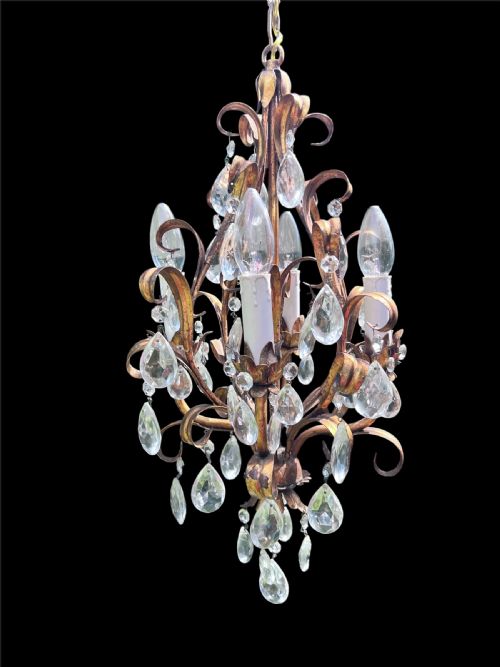
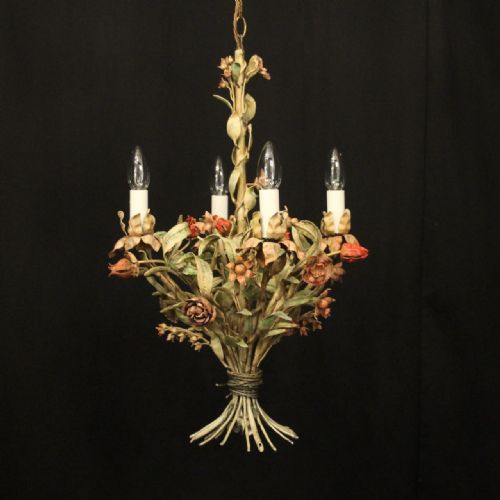
Lighting elements incorporate blown glass, frosted glass, coloured crystal fruits, and pate de verre shades produced by specialised glasshouses. Metal components were frequently gilded, painted in polychrome schemes, or left with a natural dark patina to contrast against transparent or coloured glass pendants.
Listings feature iron fixtures spanning the nineteenth century through the nineteen-forties, including styles from French Chateaux to Art Deco.
Distinctions in Quality
Quality rests in the fluidity of the hand-forged ironwork and the precision with which decorative motifs are executed. Superior examples display carefully tapered scrolls, balanced proportions across multiple branches, and integrated mounting hardware that looks deliberate rather than utilitarian.
The integration of auxiliary materials defines the upper tier of pieces, particularly where hand-formed glass grapes, pears, or pate de verre shades complement the iron armature. The treatment of the surface finish, whether through fine gilding or controlled polychrome painting, separates workshop pieces from standard commercial production.
Schneider·Verrerie Des Vosge·Muller Freres
The French Iron Fixture Glossary
- Wrought iron
- Iron beaten and shaped by hand while hot, yielding fibrous structures and visible hammer marks. It provides the tensile strength necessary for large hanging chandeliers and wall sconces.
- Pate de verre
- A glass-making technique where crushed glass is packed into a mould and fused in a kiln. This process creates thick, textured shades with subtle colour variations popular in Art Nouveau lighting.
- Toleware
- Painted and lacquered metalware used for decorative components on light fixtures. It provides colourful polychrome surfaces that contrast with dark iron frames.
- Hall lantern
- An enclosed hanging light designed for corridors or entrance spaces. These fixtures protect the candle or bulb within glass panels secured by an iron framework.
- Coronet chandelier
- A crown-shaped lighting fixture featuring an upper metal ring from which glass drops or chains are suspended. This form references royal regalia adapted for domestic interiors.
French Iron Fixture: Frequently Asked Questions
How do I hang a heavy iron chandelier safely?
Heavy iron fixtures require direct attachment to ceiling joists using rated steel hooks rather than standard plaster fixings. A qualified electrician should assess the load-bearing capacity before installation.
Ensuring proper anchoring protects both the historic metalwork and the surrounding ceiling structure from strain.
Can these antique fixtures use modern electrical bulbs?
Most antique fixtures accept modern candelabra-base bulbs after professional rewiring to meet contemporary safety standards. Rewiring preserves the original metal frame while updating internal wiring.
Consulting a specialist ensures the voltage and heat output match the historic sockets and glass shades.
How do I clean wrought iron and crystal components?
Dust wrought iron gently with a dry microfiber cloth to preserve the underlying patina and finish. Crystal drops and glass shades can be removed and washed in warm soapy water.
Avoid harsh chemical cleaners on gilded or painted iron surfaces to prevent stripping the historic finishes.
What distinguishes Art Nouveau ironwork from earlier styles?
Art Nouveau fixtures feature organic, asymmetrical curves inspired by natural plant forms and fluid lines. Earlier Victorian and Gothic Revival pieces rely on symmetrical geometry and architectural tracery.
Examining the silhouette and decorative motifs helps identify the design period of the metalwork.