

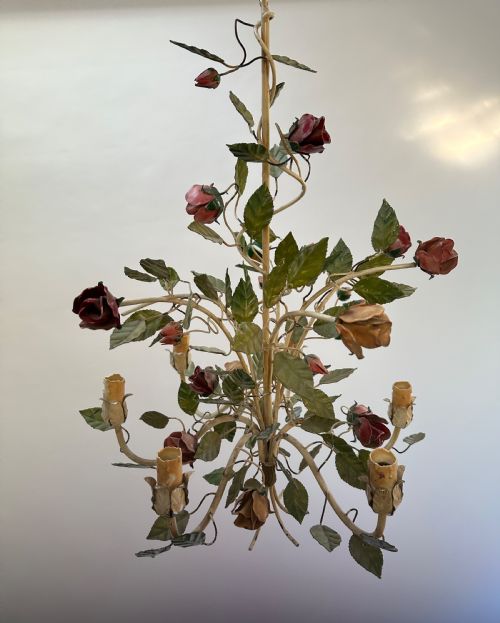


French Iron Ceiling Light
These French iron ceiling light pieces bring industrial strength and continental elegance into a room, offering both robust structure and decorative illumination.
French Iron Ceiling Light
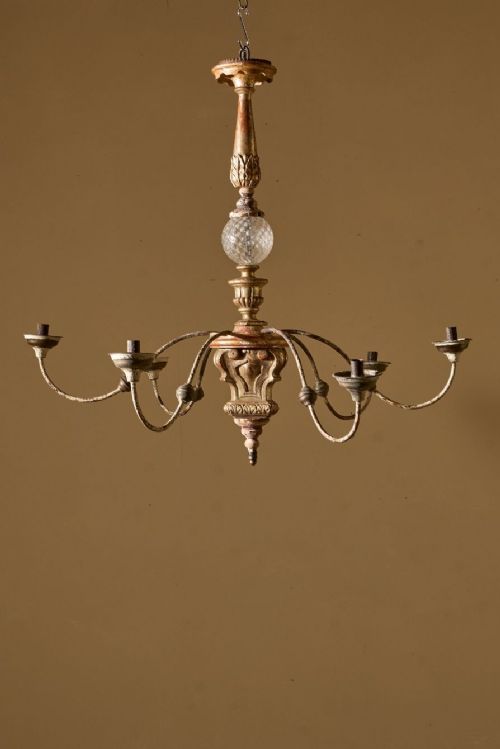
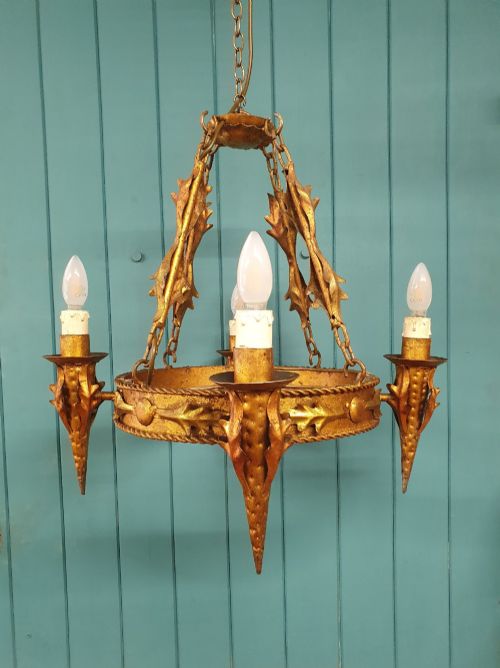
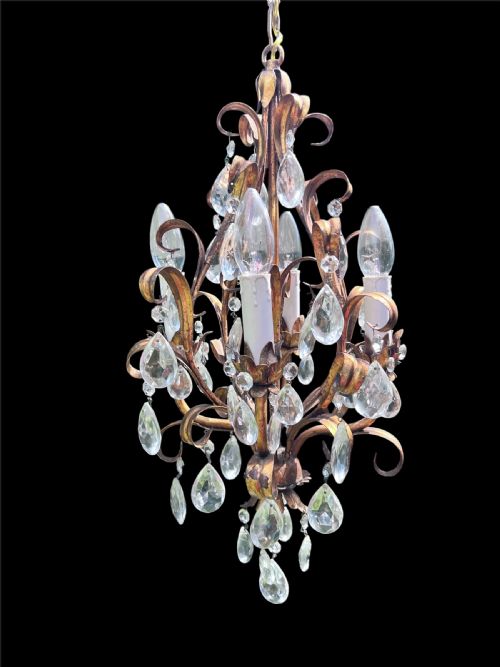
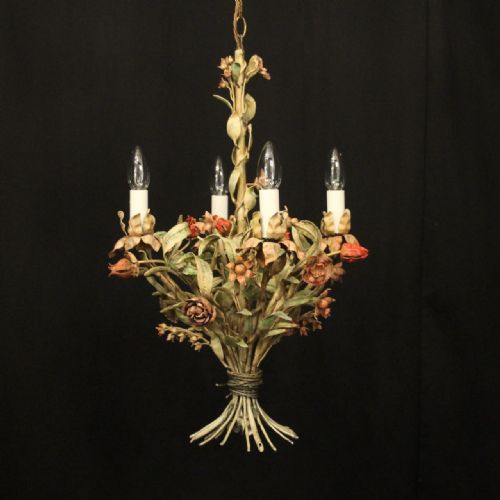
When searching for a french iron ceiling light, buyers encounter substantial wrought iron chandeliers, hallway lanterns, and porch pendants dating from the nineteenth century through the 1940s. These pieces frequently merge robust iron frameworks with delicate glass elements, drawing on French provincial, Gothic revival, and Art Nouveau design traditions.
The selection ranges from multi-branched candelabra fixtures adorned with crystal fruit to streamlined Art Deco frosted glass lamps and copper lanterns. Wrought iron forms dominate the selection, often accompanied by gilt metal, polychrome paint, or stained glass panels characteristic of early twentieth-century French workshops.
Materials and construction methods
The construction relies heavily on hand-forged wrought iron and steel, shaped into scrolling branches, strapwork cages, and rigid suspension stems. Artisans secured glass components - ranging from leaded panes and frosted shades to coloured crystal fruits - directly into the metal armatures.
Surface finishes involve applied gilding, polychrome paintwork, and patinated metal treatments that protect the underlying iron while providing decorative contrast. Workshops employed leaded joining techniques for stained glass lanterns and specialised mouth-blowing methods for pate de verre shades.
Certain nineteenth-century branch chandeliers come heavily laden with coloured crystal fruits, bringing permanent glass grapes, apples, and pears into the dining room.
Determinants of quality
Quality separates through the refinement of the ironwork itself, distinguishing rigid machine stamping from fluid, hand-forged scrollwork and detailed hammer marks. The sophistication of the accompanying glass - such as signed pate de verre bowls or precision-cut crystal drops - further elevates a piece above standard production.
Integration between the metal armature and the decorative glass dictates structural integrity, where superior mountings ensure secure balance across multi-branch chandeliers and hanging lanterns. The preservation of original surface treatments, including authentic gilding and period polychrome pigments, determines the historical fidelity of the lighting fixture.
Schneider·Verrerie Des Vosge·Muller Freres
The French Iron Ceiling Light Glossary
- Wrought iron
- Tough, malleable iron that is heated and hammered into shape by hand. This material allows artisans to create fluid scrolls and sturdy structural frames for hanging light fixtures.
- Pate de verre
- A glass-making technique involving crushed glass melted in a mould to produce rich colouration and textured translucency. This method appears frequently in decorative shades from the early twentieth century.
- Pricket
- A sharp metal spike on a candle chandelier designed to hold a wax taper securely in place. Older lighting forms often retain this feature even after conversion to electrical wiring.
- Toleware
- Painted or lacquered metalware manufactured to imitate decorative oriental goods. These pieces bring colourful polychrome finishes to French ceiling fixtures.
- Coronet
- A small, crown-shaped decorative framework surmounting a chandelier body. This upper tier directs the visual weight of the hanging light upward toward the ceiling suspension.
French Iron Ceiling Light: Frequently Asked Questions
How do I wire an antique iron light?
Most antique fixtures require professional rewiring to meet modern safety standards while preserving the original metal channels and suspension loops. Electricians can thread modern flex through hollow stems or discreetly along wrought iron branches.
Original lamp holders are often replaced with contemporary certified fittings, though exterior metal components and decorative candle drips remain undisturbed to maintain the historical appearance.
How do I clean wrought iron and glass?
Dust iron surfaces gently with a dry, soft cloth to preserve the underlying patina and any historic painted finishes. Avoid harsh chemical cleaners that can strip original gilt or polychrome treatments.
Crystal drops and glass shades can be detached and washed in lukewarm soapy water, then dried thoroughly before reattachment. Ensure the power is completely disconnected before undertaking any maintenance.
Are these lights suitable for low ceilings?
Flush-mounted ceiling lights, cage chandeliers, and compact hallway lanterns provide adequate clearance in rooms with restricted vertical space. Suspension chains can often be shortened by removing links to adjust the hanging height.
Downlighter forms and close-fitting porch lanterns direct illumination downward without extending far into the living space, making them practical for standard domestic environments.
How do I date a French iron light?
Stylistic indicators such as organic plant motifs point toward Art Nouveau production around the turn of the twentieth century, whereas geometric lines suggest later Art Deco periods. Construction techniques, including hand-forging marks versus machine stamping, also help establish the era of manufacture.
Maker signatures etched into glass shades or stamped onto metal plates provide definitive chronological markers when present. Period wiring remnants and material choices like leaded stained glass further narrow the production window.