





French Harbour Scene
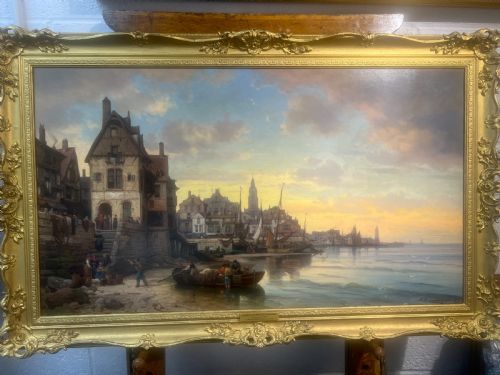
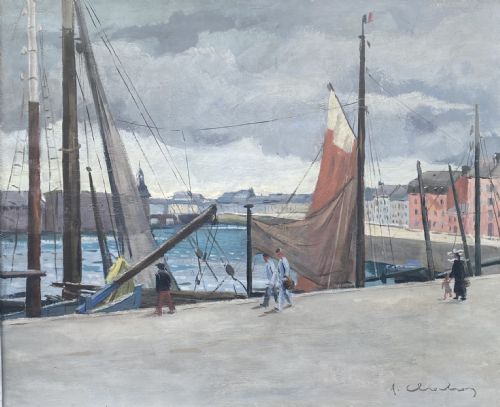
A french harbour scene captures the salty light and working tides of coastal life through the brush of an observant painter.
French Harbour Scene
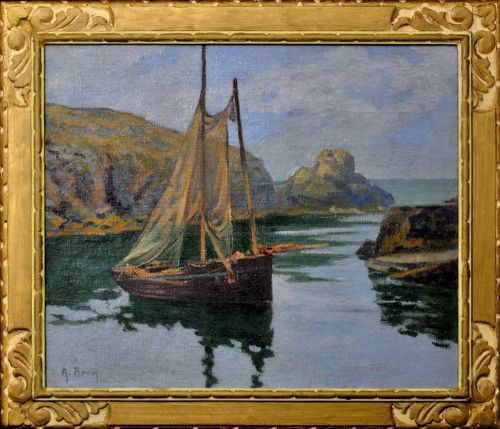
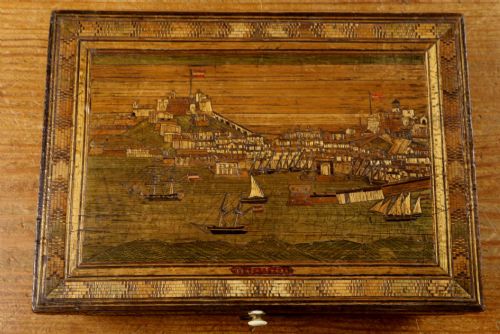
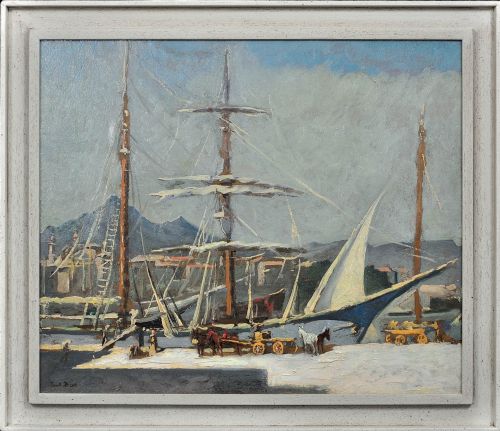
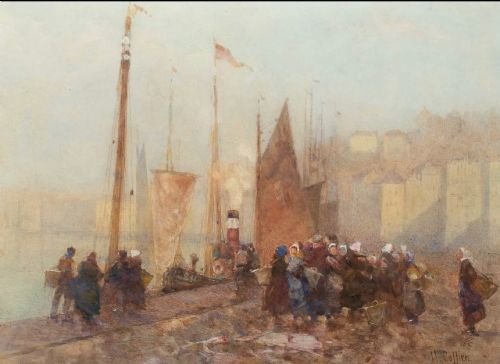
A french harbour scene brings together coastal topography and maritime activity, recorded by artists working from the nineteenth century into the mid-twentieth century. These works range from bright watercolours of the Côte d'Azur to moody post-impressionist canvases of northern fishing ports in Normandy and Brittany.
You are most likely to encounter framed oil paintings and watercolours depicting southern Riviera ports or northern quaysides. The selection spans academic realism, post-impressionism and mid-century abstraction, reflecting the enduring pull of French maritime commerce and leisure for visiting and native artists alike.
Materials and construction
Painters relied principally on oil paint applied to stretched canvas or watercolour pigments on paper, housed within wood frames. The handling of medium shifts from tight nineteenth-century academic description to looser, modernist brushwork in later decades.
Support materials vary from heavyweight artist canvas to paper sheets suited to fluid watercolour washes. Wooden frames, often contemporaneous to the creation of the artwork, complete the physical structure of these framed pieces.
French Harbour Scene Retail Price Guide 2026
Typical asking prices for french harbour scene among the pieces listed under this phrase on Sellingantiques today, from the lower quarter to the upper quarter. They describe what is for sale here now, not the wider market.
Listings feature works executed in oil paint, watercolour, and canvas, spanning the decades from the late nineteenth century to the mid-twentieth century.
Judging quality and execution
Quality rests upon the confidence of the draughtsmanship and the artist's command of atmospheric light rather than scale or subject matter alone. Stronger works demonstrate a sure sense of tonal balance and spatial depth within the bustling quayside composition.
The sensitivity of pigment application distinguishes accomplished works from routine topographical records. Superior paintings capture the specific weight of maritime air and the particular character of regional architecture without falling into rigid formula.
Paul Bret·Hector Caffieri·Paul Delvaux·Raymond Picque·William Lee Hankey·Owen Bowen·Henri Ottman·Augustus William Enness
The French Harbour Scene Glossary
- Post-Impressionism
- A predominantly French art movement developing roughly from the late nineteenth century that rejected naturalistic depiction in favour of expressive colour and form. Painters built upon impressionist foundations while exploring structural permanence and emotional resonance.
- Watercolour
- A painting method in which the pigments are suspended in a water-based solution. The technique relies on the transparency of washes applied to paper to create luminosity.
- Canvas
- A closely woven heavy cloth utilised as a surface for oil painting. It is typically stretched tightly over a wooden frame before work commences.
- Seascape
- A work of art depicting the sea, coastal views or maritime scenes. These compositions often balance atmospheric sky effects with the movement of water and shoreline architecture.
French Harbour Scene: Frequently Asked Questions
What periods do these paintings cover?
The available works span from the late nineteenth century through the mid-twentieth century. This timeline captures significant shifts in European painting styles.
You will find examples representing academic traditions, post-impressionism, and mid-century modernist interpretations by various artists.
How should I care for a framed watercolour?
Watercolours are sensitive to prolonged exposure to direct sunlight and high humidity. Keep them away from damp walls and bright windows.
Ensure the framing uses conservation-grade materials to protect the paper and pigments from environmental degradation over time.
Where were these harbour scenes painted?
The locations include ports along the French Riviera such as Cannes, alongside northern sites in Normandy and Brittany like Honfleur and Boulogne. Artists travelled extensively along these coasts.
Each region offered distinct qualities of light and working maritime culture that influenced the visual approach of the painter.
Are all the artworks oil paintings?
The selection includes both oil paintings on canvas and watercolour paintings on paper. Some pieces also incorporate mixed media or drawing techniques.
Each medium provides a different textural quality, from the thick impasto of oils to the translucent washes of watercolour.