

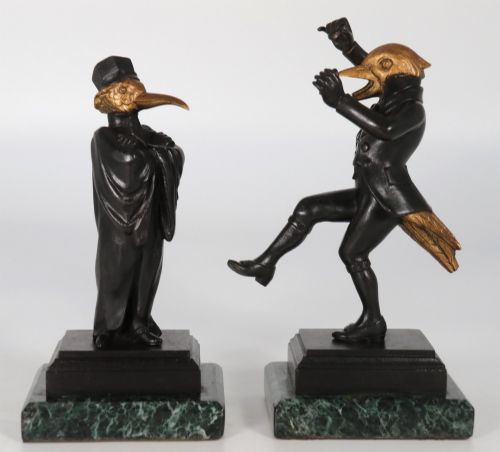
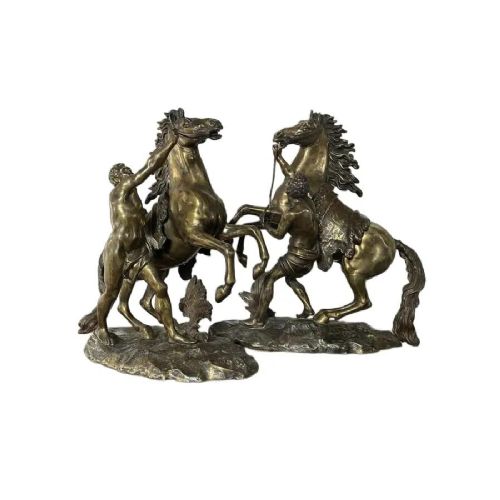

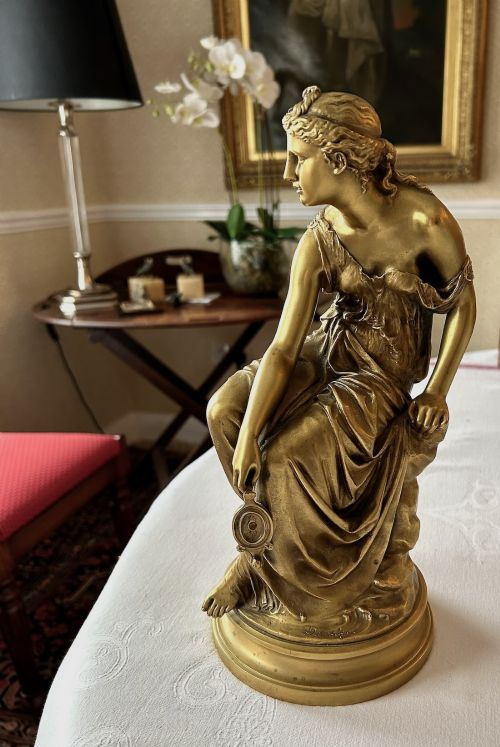
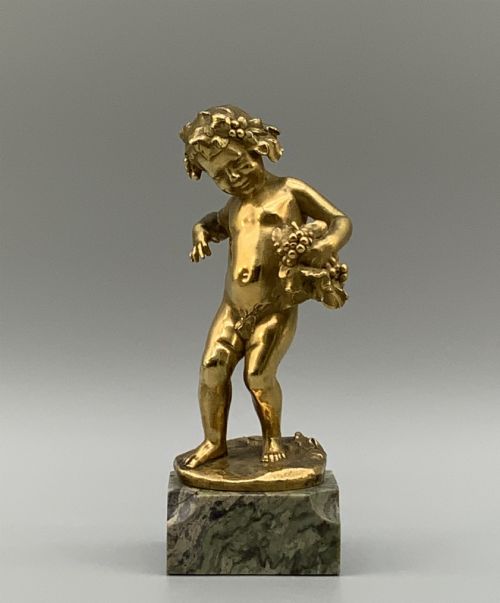




French Gilt Bronze Statue
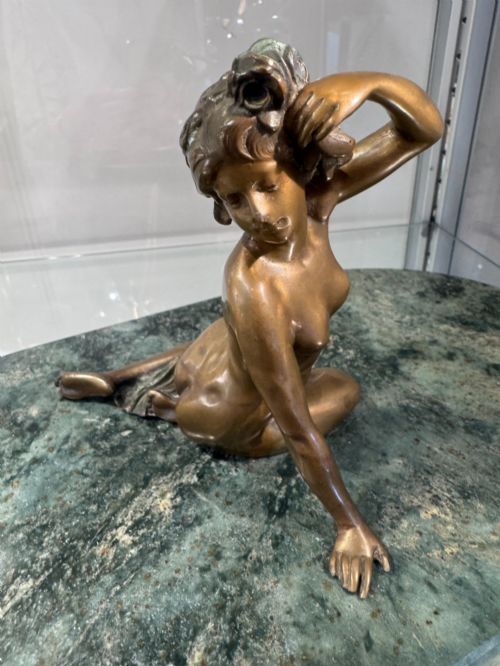
A french gilt bronze statue brings neoclassical poise, mythological figures and luminous metallic warmth into a room.
French Gilt Bronze Statue
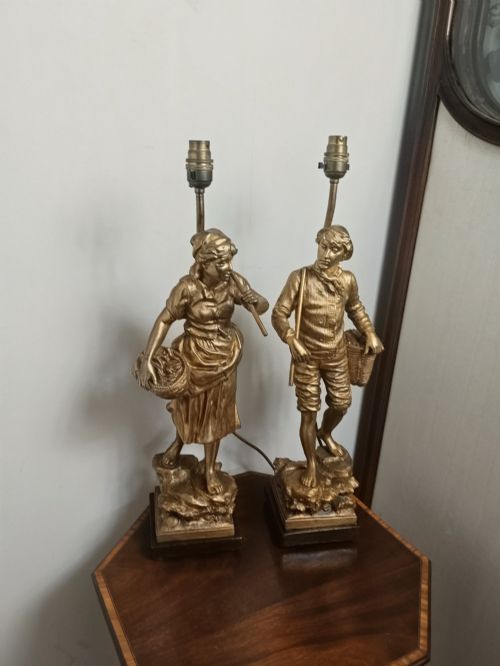
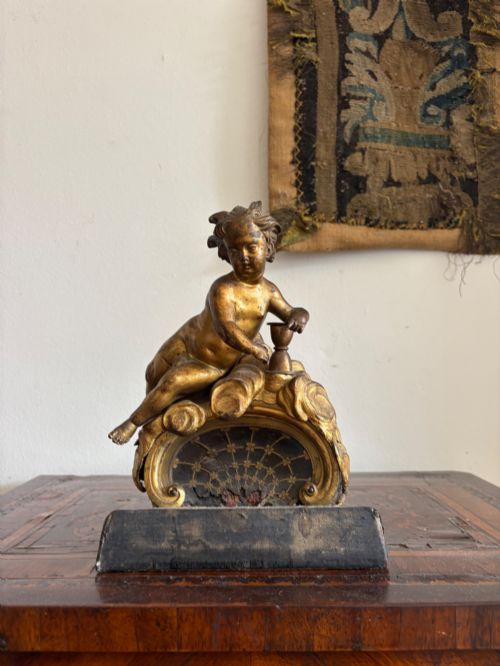
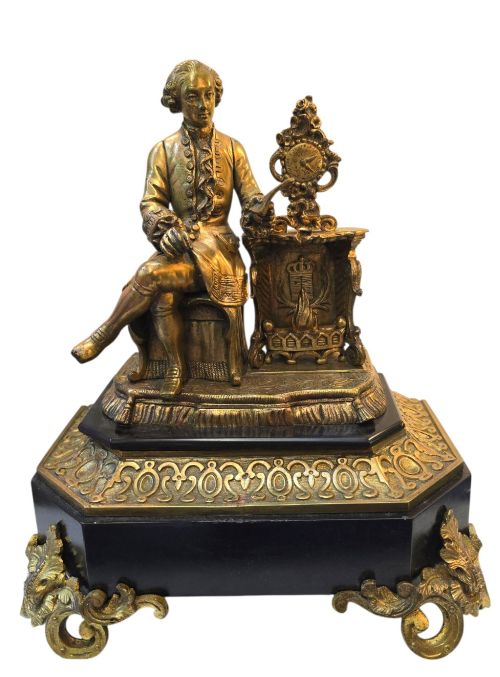
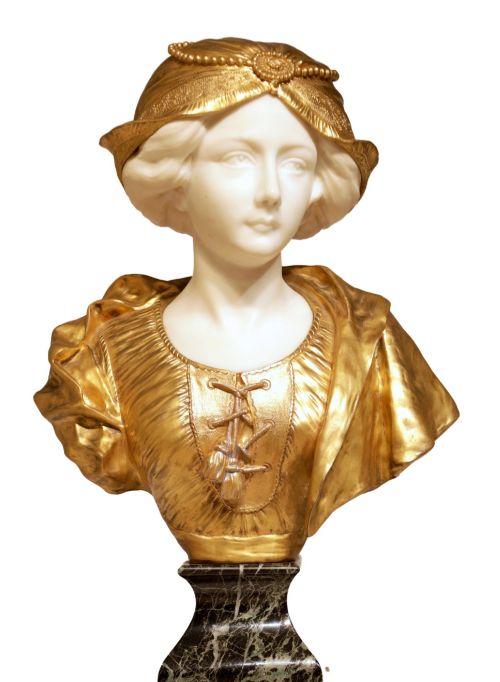
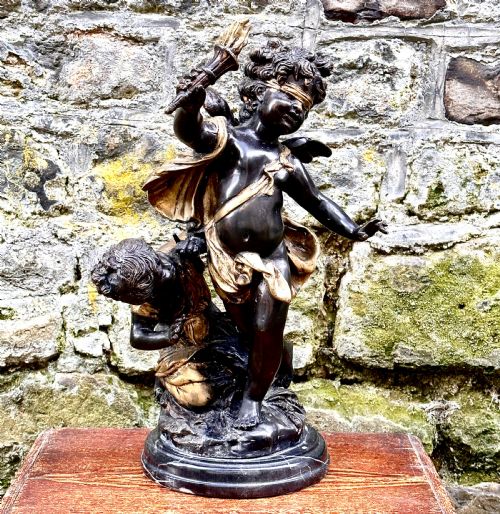
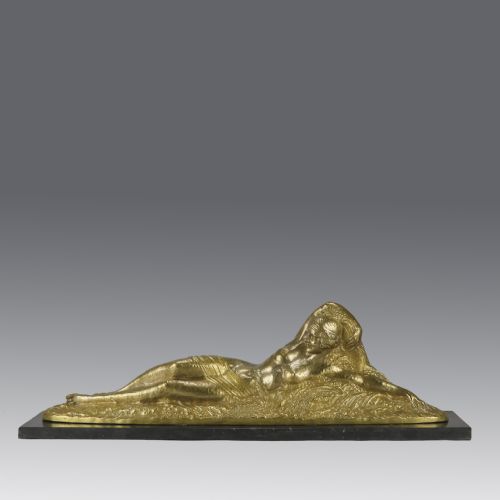
When a buyer searches for a french gilt bronze statue, they encounter figurative sculptures, mantel clocks, inkstands and architectural mounts spanning the Victorian era through the early twentieth century. Classical maidens, cherubs, dancers and animal studies dominate the selection, often mounted on contrasting stone bases.
The most common pieces on this page originate from nineteenth century foundries and workshops, adopting neoclassical, French rococo and Art Deco vocabularies. Figures range from small cabinet statuettes to substantial pairs of horses and allegorical subjects.
Materials and technique
Foundries produced these works using the lost wax casting method or sand casting, capturing fine details in bronze before applying mercury gilding or electroplating to achieve the characteristic rich surface finish. Ormolu and gilt bronze elements frequently combine with patinated bronze to create tonal contrast on garments, hair and wings.
Sculptors integrated natural stones such as marble, onyx and wood into the design, employing heavy plinths, columns and pedestals to anchor the metalwork. Bases often feature inscribed signatures, foundry stamps or cast titles corresponding to the studio origin.
French Gilt Bronze Statue Retail Price Guide 2026
Typical asking prices for french gilt bronze statue among the pieces listed under this phrase on Sellingantiques today, from the lower quarter to the upper quarter. They describe what is for sale here now, not the wider market.
Listings feature periods from the eighteenth century through the 1930s, incorporating materials such as onyx, marble, wood and patinated bronze alongside gilt metal.
Distinctions in execution
The fidelity of the chisel work after casting dictates the crispness of facial expressions, drapery folds and feather details. Master finishers spent hours hand-chasing the metal surfaces to sharpen textures that lost definition during the initial cast.
The depth and preservation of the gilding layer determine the visual brilliance of the object. Superior examples retain a warm, even lustre across complex geometries, while lesser pieces show thinning or flat metallic tones.
Etienne-Henri Dumaige·Susse Frères·Demetre Chiparus·Henri Godet·Louis Riche·Paul Philippe·Ernst Barrias·Christophe Fratin·Barbedienne
The French Gilt Bronze Statue Glossary
- Gilt Bronze
- Bronze that has been coated with a layer of gold using mercury amalgamation or modern electroplating methods. This process provides a durable, luminous surface finish that resists tarnish.
- Ormolu
- A term derived from the French for milled gold, describing finely chased gilt bronze used for decorative objects and furniture mounts. It gained widespread popularity in French decorative arts from the eighteenth century onward.
- Patinated Bronze
- Bronze treated with chemical solutions to produce a darkened or coloured surface layer rather than a gold finish. Artisans often combined patinated sections with gilt areas to create contrast.
- Chryselephantine
- A sculpture technique combining bronze with ivory or bone, frequently seen in Art Deco figures. This method allowed makers to render flesh tones in pale organic material against metallic drapery.
- Lost Wax Casting
- A historic sculptural process where a wax model is melted from a mould to create a cavity for molten metal. It permits intricate undercut details essential for expressive figurative work.
French Gilt Bronze Statue: Frequently Asked Questions
How do I clean a gilt bronze statue?
Dust the surface gently with a soft, dry brush to prevent particulate accumulation in crevices. Avoid water, abrasive cloths or chemical cleaning agents that can strip the delicate gold layer.
Professional restoration is recommended if the metal requires deeper intervention or if the protective coating has deteriorated over decades of handling.
Were these statues always mounted on marble?
Many figures were cast with integrated bronze bases, while others were specifically designed to be secured onto marble or onyx plinths, columns and architectural mounts. Stone bases added structural stability and visual weight to taller compositions.
Over time, some statues and clocks were paired with replacement stone bases during repairs or nineteenth century gallery updates.
How can I tell an older cast from a later reproduction?
Examine the underside of the piece for casting seams, hand-chasing marks and the weight characteristics typical of nineteenth century bronze alloys. Older works frequently display crisp chisel definition and patination that responds to age.
Signatures, foundry marks and registration numbers provide further clues, though lack of a signature does not preclude authenticity in unsigned studio pieces.
What is the difference between ormolu and gilt bronze?
Ormolu specifically refers to high-quality gilded bronze created with historical mercury amalgamation techniques common in French decorative arts before nineteenth century safety regulations shifted practices. Gilt bronze is a broader term encompassing any bronze finished with a gold coating.
Both terms describe a luminous golden surface, but collectors often reserve ormolu for precise decorative mounts and clock cases.