






French Gilded End Table
A French gilded end table brings undeniable elegance to a room, offering compact surface space enriched by historical craftsmanship.
French Gilded End Table
When you search for a French gilded end table, you encounter compact side tables, occasional tables, and lamp tables created to bring ornate European style into sitting rooms. These pieces originate from periods spanning the Victorian era through the early twentieth century, including pieces reflecting nineteen-hundred and nineteen-twenty aesthetics.
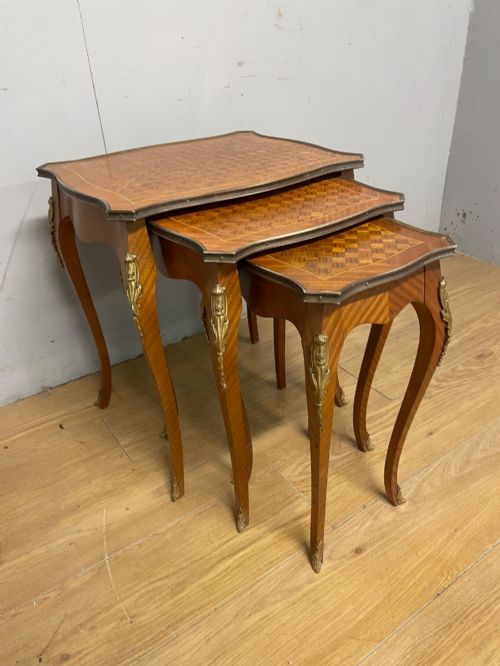
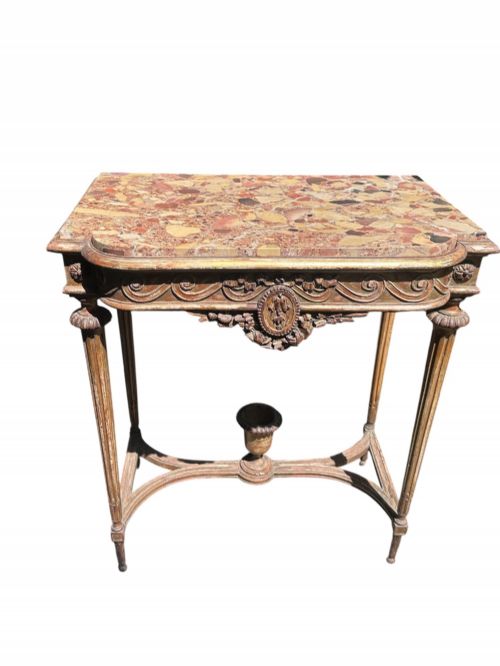
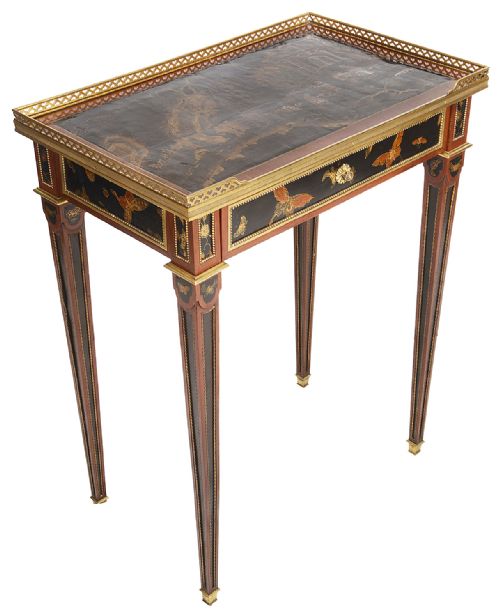
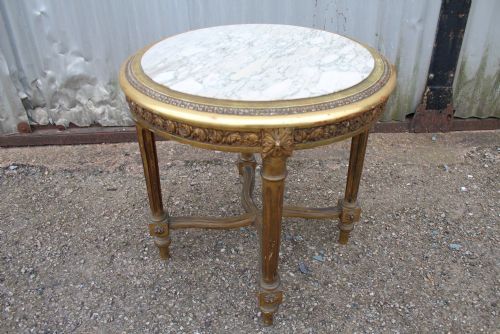
The versions most frequently met on this page include marble-topped lamp tables and giltwood occasional tables. Forms range from classical Louis XVI styles and French Rococo designs to distinctive Chinoiserie lacquer occasional tables and nest of four stacking tables.
Makers and origins bridge British and continental tastes, combining traditional French forms with the refined demands of Victorian and Edwardian interiors. Each object serves as a practical surface while displaying the decorative flourish characteristic of gilded woodwork.
Materials and construction
These tables rely on robust structural timbers such as mahogany, general wood, and painted wood, providing a stable frame for decorative surfaces. Giltwood, gesso, and applied paint deliver the characteristic metallic sheen and colourful finishes expected of French revival furniture.
Heavy stone tops in marble provide durable, cool surfaces contrasted against warm gilded brass mounts and fixtures. Techniques combine traditional cabinet making with skilled surface gilding and lacquer work, seen notably in specialised Chinoiserie and signed nest of tables.
Listings feature periods ranging from the Victorian era and Edwardian times through nineteen-twenty, utilising marble, giltwood, and mahogany.
Distinguishing quality
Quality reveals itself in the crispness of the gesso and the depth of the gilding, where hand-applied finishes retain nuance and texture. Superior examples exhibit tightly fitted marble slabs and securely joined wooden frames that withstand generations of use.
The sophistication of the carved detail separates standard production from finer pieces, particularly in Louis XV and Louis XVI revival items. Signed works, such as those bearing artisan signatures, demonstrate an elevated standard of craftsmanship.
The French Gilded End Table Glossary
- Giltwood
- Timber coated with gold leaf or a gold-coloured metallic finish. This technique creates a radiant surface that catches light brilliantly in a reception room.
- Gesso
- A plaster-like mixture applied to wood as a base for gilding or painting. It allows craftsmen to carve intricate relief decorations before applying the gold leaf.
- Louis XVI Style
- A neoclassical design movement characterised by straight lines, symmetry, and classical motifs. It provides a restrained counterpoint to the earlier curving exuberance of Rococo.
- Quartetto
- A set of four nesting tables designed to stack neatly beneath one another. This practical Victorian and Edwardian form maximises floor space while offering multiple surfaces.
French Gilded End Table: Frequently Asked Questions
What defines a French gilded end table?
These pieces are small functional tables featuring wooden frames enhanced with gold leaf, paint, or gesso, often topped with marble.
They reflect historical French design movements adapted by Victorian, Edwardian, and twentieth-century cabinet makers.
How were these tables originally used?
Owners placed them beside seating to hold lamps, drinks, or decorative ornaments during social gatherings.
Their compact scale allowed servants to move them easily around drawing rooms as requirements shifted.
How do I style one at home?
Position the table beside an armchair or sofa to provide a convenient surface for books or lighting.
The reflective gilded surfaces and marble tops work particularly well against neutral walls where the metallic details stand out.
How can I tell different periods apart?
Earlier nineteenth-century examples often lean toward heavier mahogany structures and classical giltwood carvings.
Later Edwardian and nineteen-twenty pieces frequently introduce painted surfaces, lighter woods, or practical nesting formats.