




French Floral Chest
A french floral chest brings the intricate marquetry and graceful curves of Louis XV revival design directly into a room.
French Floral Chest
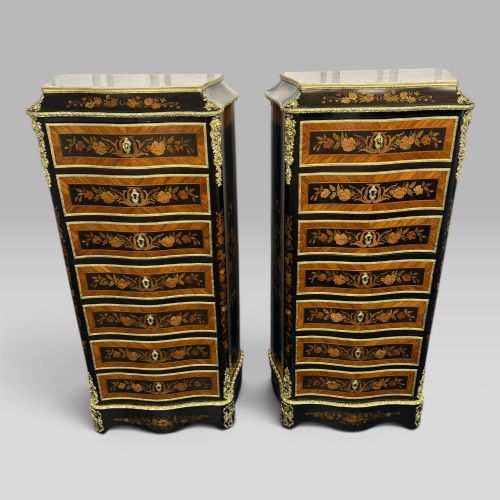
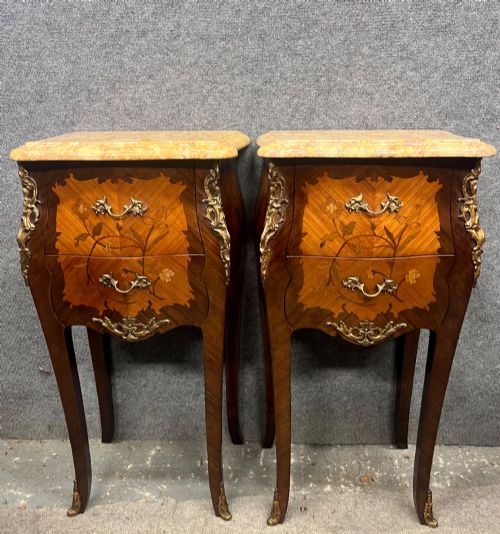
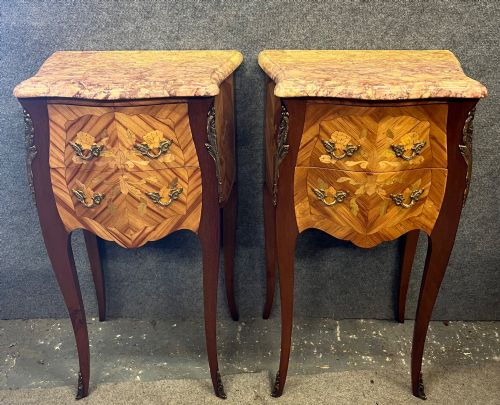
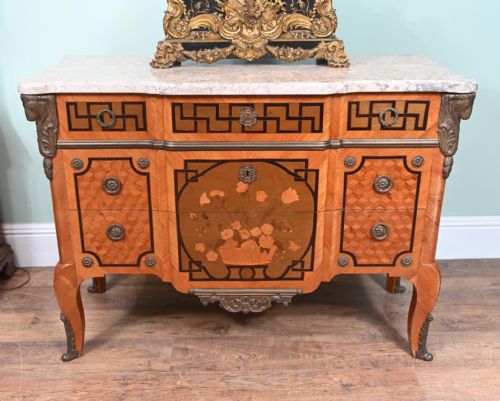
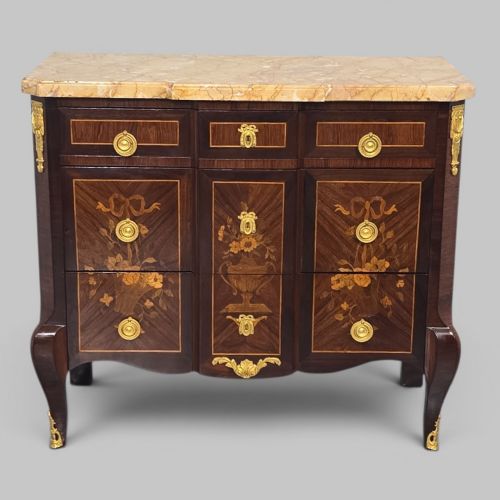
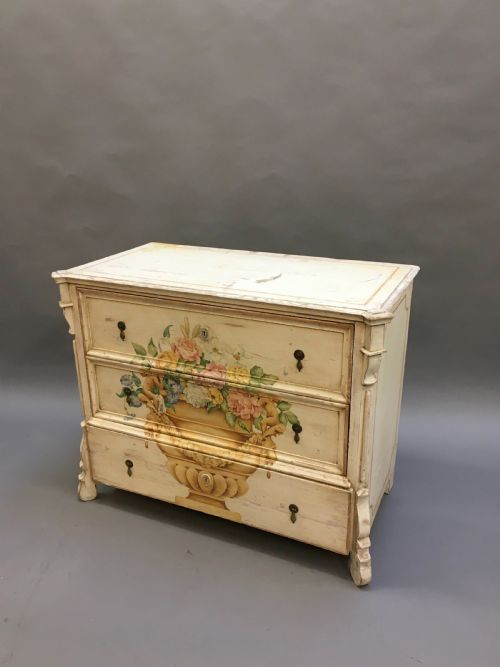
A french floral chest encompasses commodes, bedside cabinets, and secretaire chests originating from the nineteenth and early twentieth centuries. These pieces typically display floral marquetry patterns rendered in contrasting timbers across serpentine or bombe forms.
The pieces on this page mostly date from the nineteenth century through to the nineteen thirties, covering Louis XV revival and Napoleon III styles. Buyers frequently encounter marble-topped commodes and pairs of inlaid bedside chests adorned with floral motifs.
Makers and workshops utilised various fruitwoods and exotic timbers to construct these decorative storage items. The resulting furniture balances functional drawer space with ornate surface decoration characteristic of French cabinet making.
How they were made
Cabinet makers constructed these chests using carcases of walnut, oak, or mahogany overlaid with veneers of kingwood, rosewood, and tulipwood. Artisans then cut delicate floral marquetry designs into the surface veneers by hand.
Many commodes incorporate shaped marble tops fitted precisely to the wooden carcase margins. Guilders and metalworkers added ormolu mounts and brass handles to accentuate the structural contours of the drawers and corners.
French Floral Chest Retail Price Guide 2026
Typical asking prices for french floral chest among the pieces listed under this phrase on Sellingantiques today, from the lower quarter to the upper quarter. They describe what is for sale here now, not the wider market.
Listings span the nineteenth century through the nineteen thirties, featuring commodes and bedside tables constructed from walnut, kingwood, and rosewood.
What varies in quality
The distinction between standard items and superior examples lies in the precision of the marquetry cutting and the choice of timbers. Finer chests demonstrate meticulous grain matching and elaborate floral detail across the entire facade.
Structural elements such as the thickness of the marble slab and the weight of the ormolu mounts signal the tier of manufacture. Well-executed revival pieces maintain crisp carving and fluid drawer movements that reflect skilled workshop production.
Susse Freres Paris
The French Floral Chest Glossary
- Marquetry
- Decorative veneer work forming pictures or patterns such as floral sprays. Artisans inlay thin slices of coloured wood into a contrasting ground.
- Ormolu
- Gilt bronze mounts applied to furniture edges and feet. This decorative hardware defines the silhouette of nineteenth-century revival pieces.
- Commode
- A low chest of drawers originating in France. These storage units often feature marble tops and shaped serpentine fronts.
- Bombe
- A swelling, outward-curved commode or cabinet profile. This distinctive bulging shape requires expert veneer bending and joinery.
- Semainier
- A tall, slender chest designed with seven drawers, one for each day of the week. They appear in veneered rosewood and walnut.
French Floral Chest: Frequently Asked Questions
What is a french floral chest?
A french floral chest is a decorative storage piece, typically a commode or bedside cabinet, featuring intricate wood inlay depicting flowers.
These items date from the nineteenth and early twentieth centuries, embodying Louis XV and Napoleon III revival styles.
How do I style a commode?
Place a commode in a hallway or bedroom where its floral marquetry serves as a primary visual focal point.
Keep surrounding decor simple to allow the wood veneers and marble tops to stand out.
Are these chests practical for storage?
Most pieces provide functional drawer space suited for linens, clothing, or general household items depending on the specific cabinet depth.
Bedside chests and larger commodes balance traditional utility with ornamental surface design.
How do I identify the period?
Examine the underlying timber construction, the style of the ormolu mounts, and the complexity of the veneer work.
Nineteenth-century examples often display deep rosewood or kingwood grounds with classic rococo revival shaping.