


French Enamel Carriage Clock
These pieces unite solid brass frames with delicate painted or cloisonné surfaces, offering a portable timekeeper that embodies nineteenth-century craftsmanship.
French Enamel Carriage Clock
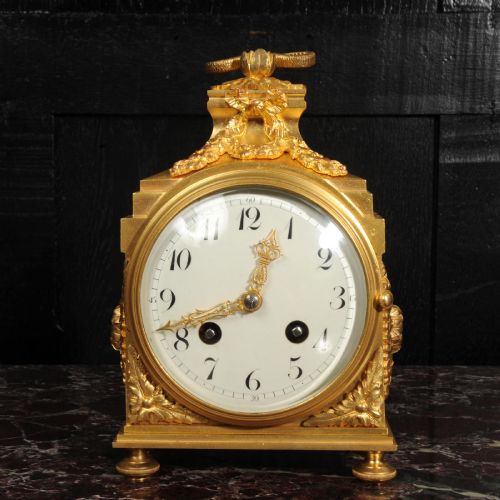
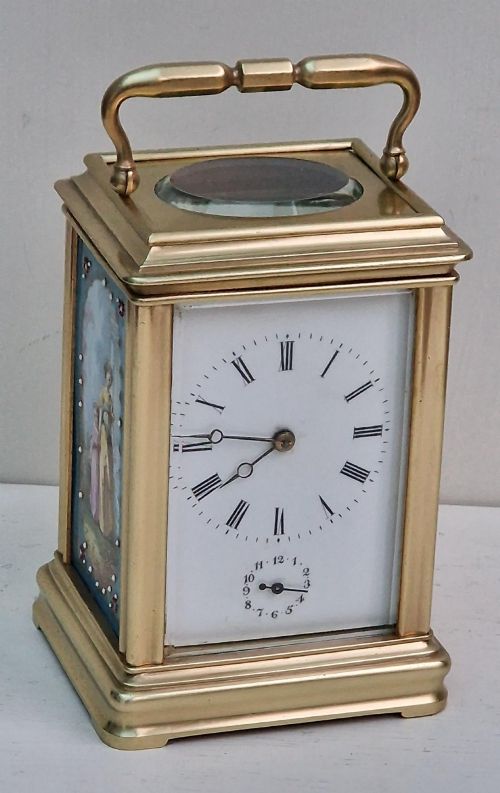
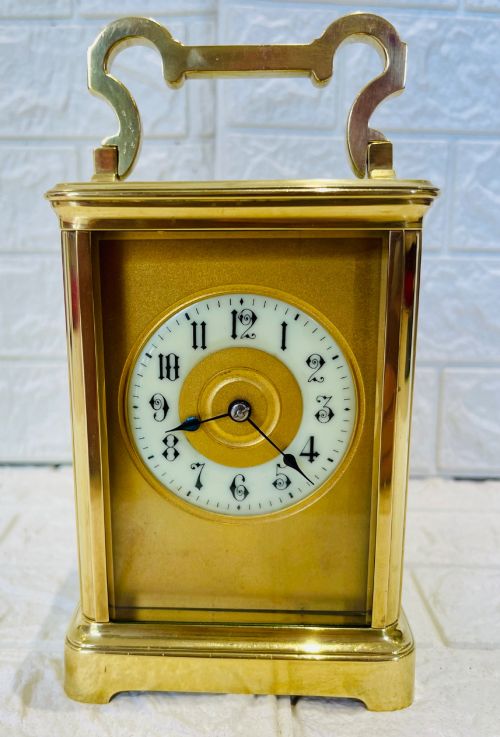
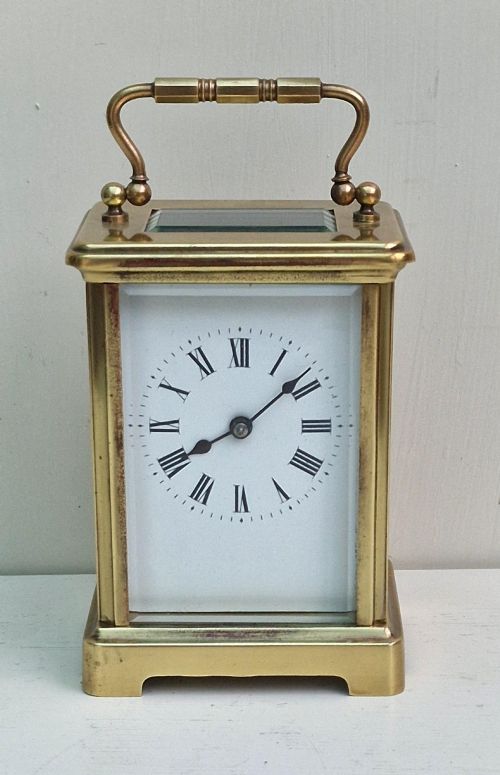
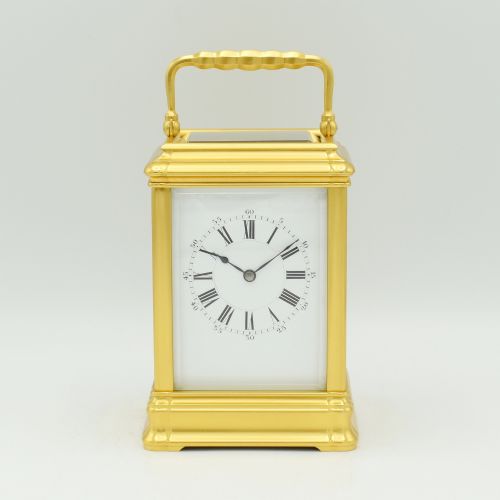
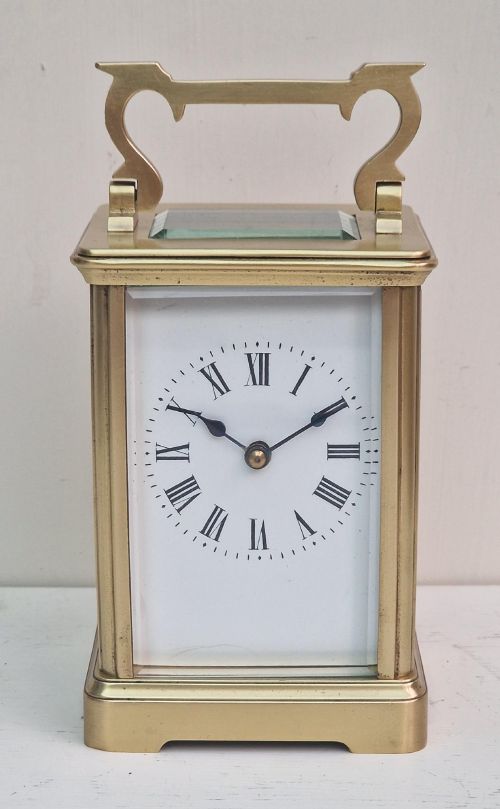
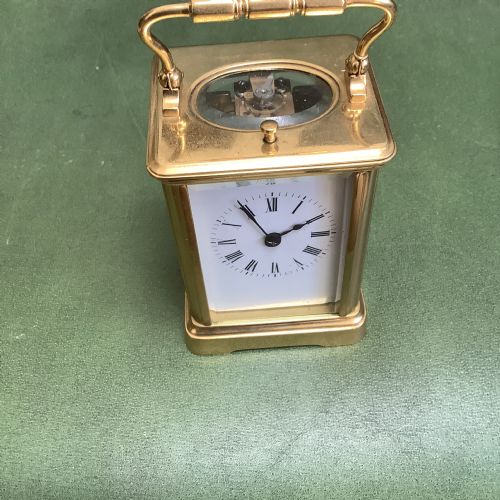
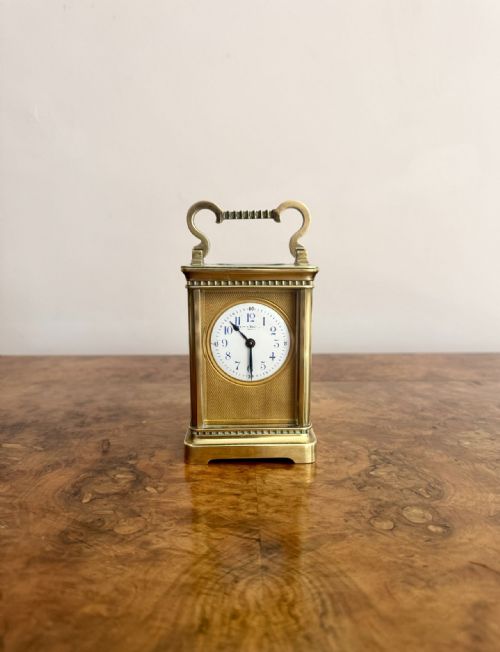
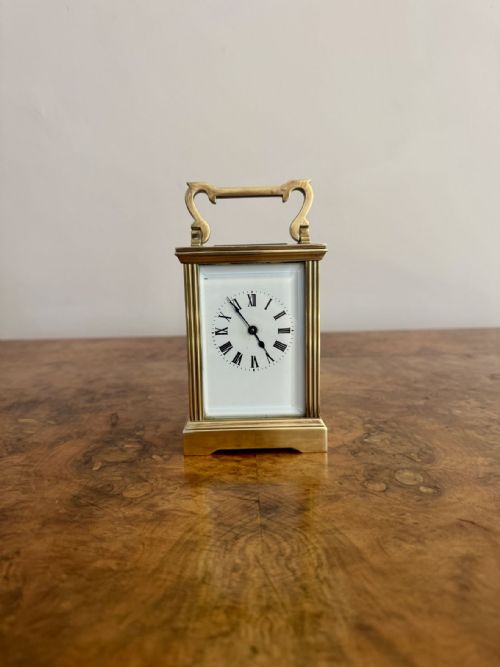
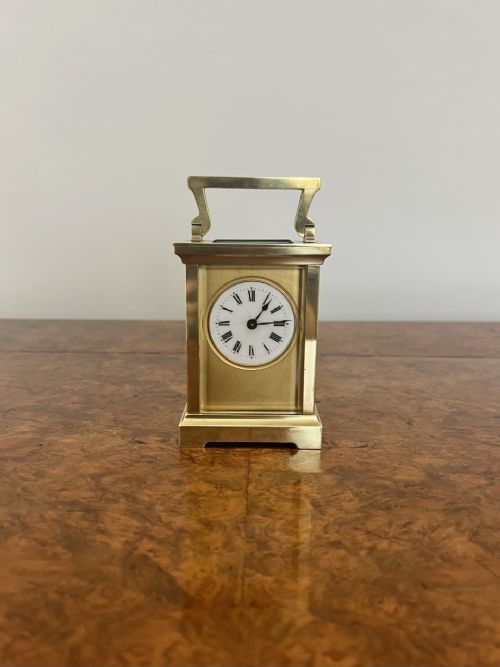
A french enamel carriage clock is a portable mechanical timekeeper housed in a glazed metal case, designed for travel during the nineteenth and early twentieth centuries. These pieces combine heavy metal framework with fragile ceramic or painted panel inserts, taking forms that range from standard corniche or gorge cases to miniature bedside travel models.
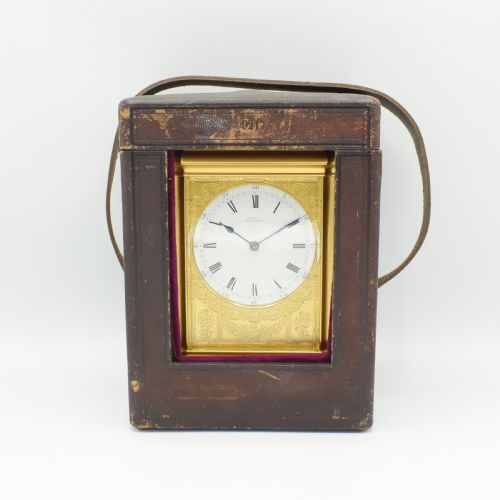
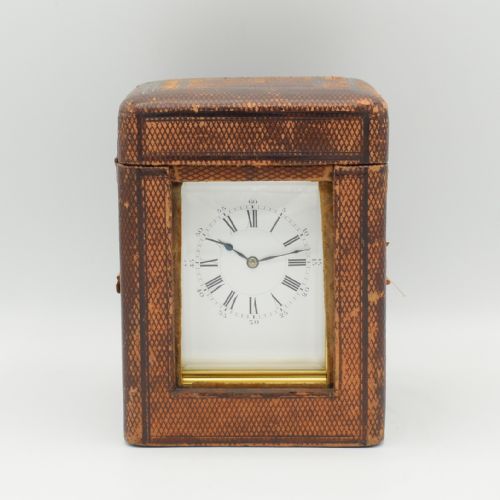
Most examples found on this page date from the Victorian and Belle Epoque eras, spanning the mid-nineteenth century up to nineteen-ten. The version met most frequently is a brass or gilt-framed timepiece featuring white enamel dials or coloured enamel banding, often retaining a fitted leather travel case.
Makers and retailers such as Henri Jacot, Drocourt, and Margaine produced these clocks in France for both domestic and international markets, including specialist pieces destined for China. Buyers encounter everything from simple timepieces to complex striking and repeating mechanisms with alarm functions.
Materials and construction
These clocks rely on brass, gilt brass, or ormolu for the structural housing, cast and finished to form glazed bezels and supportive framing. Bevelled glass panels permit visibility of the movement from multiple angles, protecting the delicate internal cogs while displaying the escapement.
Enamel provides the decorative surface, applied to dials, chapter rings, or structural side panels using techniques like cloisonné and champlevé. Skilled artisans fused powdered glass to metal substrates through high-temperature firing, creating vibrant coloured bands and floral or figurative motifs that complement the metallic sheen of the gilt cases.
Variations in quality
Quality diverges between standard production timekeepers and master-workshop pieces based on the complexity of the internal movement and the crispness of the exterior casting. Heavy gilt bronze or ormolu frames with fully engraved detailing sit above simple plain brass housings in the hierarchy of manufacture.
The sophistication of the strike and repeat mechanism dictates desirability, with five-minute repeaters and bell-strike complications requiring greater horological skill than a basic time-only movement. Similarly, hand-painted enamel panels or intricate cloisonné work elevate an example far beyond those fitted with standard plain white dials.
Henri Jacot·Drocourt·Margaine·C. Detouche·T. Martin and Co
The French Enamel Carriage Clock Glossary
- Gorge case
- A distinct rectangular brass carriage clock housing characterised by moulded stepped top and bottom sections. This style appeared frequently in nineteenth-century French production.
- Repeater
- A mechanical complication that sounds the hours and quarters on demand when a button or lever is pressed. This function aided timekeeping in darkened rooms.
- Cloisonne
- An enamel decorative technique where thin metal wires are soldered to a metal base to create compartments filled with coloured glass paste. Firing fuses the vitreous paste permanently within the wire boundaries.
- Champleve
- A method of ornamentation where troughs or cells are hollowed directly out of a metal plate and filled with enamel prior to firing. The surrounding metal remains visible as part of the final design.
- Anglaise riche
- A decorative carriage clock case form featuring ornate cast columns at the corners and richer surface engraving than standard models. These luxury housings often frame enamel or porcelain panels.
French Enamel Carriage Clock: Frequently Asked Questions
How do I wind a carriage clock?
Most models utilise a dedicated winding key inserted into arbours on the backplate, turning clockwise until gentle resistance is felt. Care must be taken not to overwind the mainspring.
Striking and repeating trains require separate winding alongside the timekeeping train to maintain full function across all operational mechanisms.
Why does the clock have a travel case?
Original leather-covered outer cases protected the delicate glass panels and polished gilt-brass frames during transit on coaches or trains. These fitted boxes often feature small viewing windows to permit reading the time without opening the lid.
Retaining the matching travel case adds historical completeness to nineteenth-century examples found on the market today.
What is a repeating carriage clock?
A repeating movement sounds the last elapsed hour and quarter-hour upon pressing a button on the top of the case. This allowed travellers to check the time at night without lighting a candle.
Standard striking models sound automatically on the hour and half-hour, whereas repeaters perform the action on demand.
How can I tell the period?
Stylistic shifts in case design, engraving depth, and dial typography help establish the era of manufacture between eighteen-fifty and nineteen-ten. Earlier nineteenth-century examples often feature heavier casting and distinct escapement placement visible through the dial.
Maker signatures stamped on the backplates provide definitive chronological markers when cross-referenced against historical workshop records.