
French Country Wooden Table
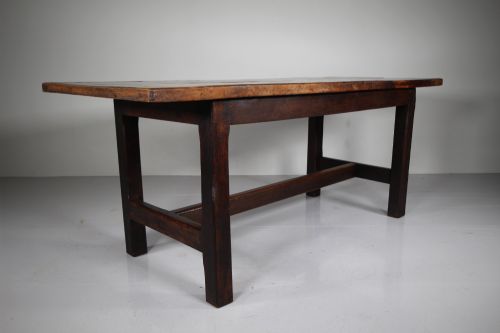
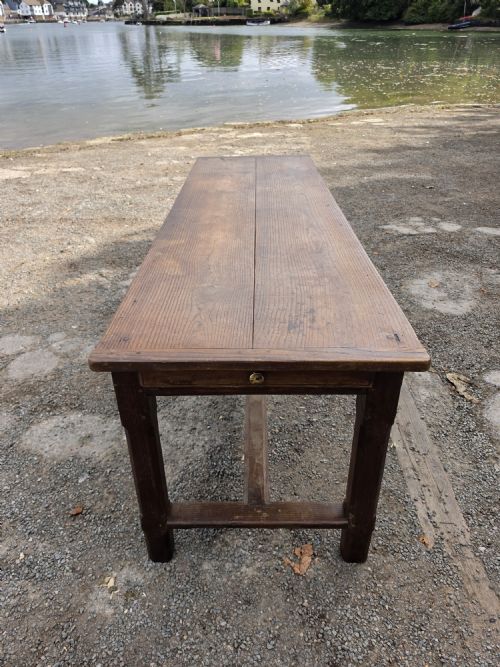
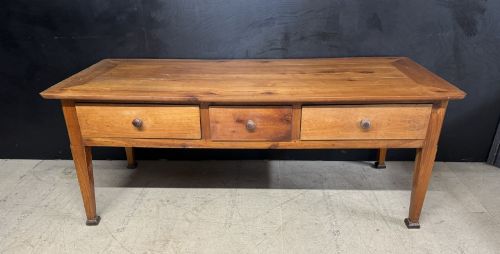
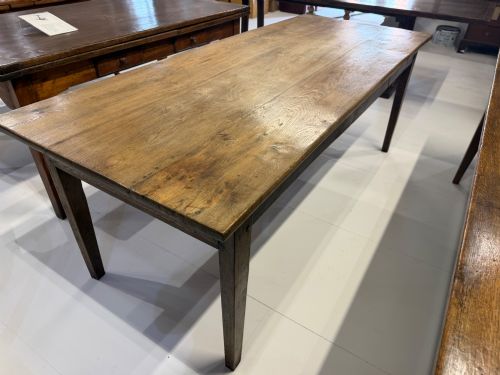
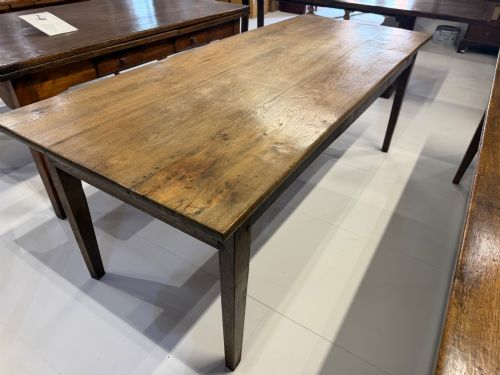
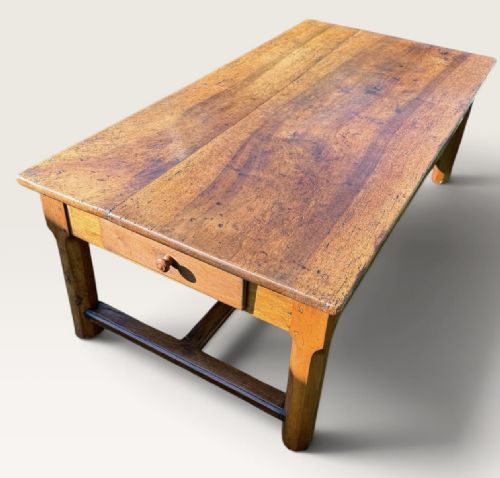
A french country wooden table brings honest utility and warmth to a room, forged from sturdy fruitwood, oak, and pine for daily gatherings.
French Country Wooden Table
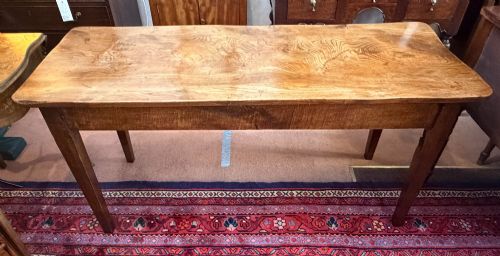
When you search for a french country wooden table, you encounter practical domestic furniture built for longevity in rural homes. These pieces range from substantial refectory and dining formats down to smaller console, coffee, and bedside tables.
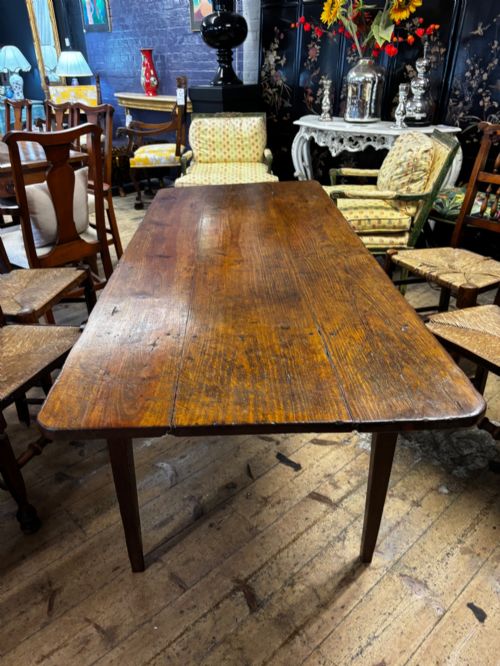
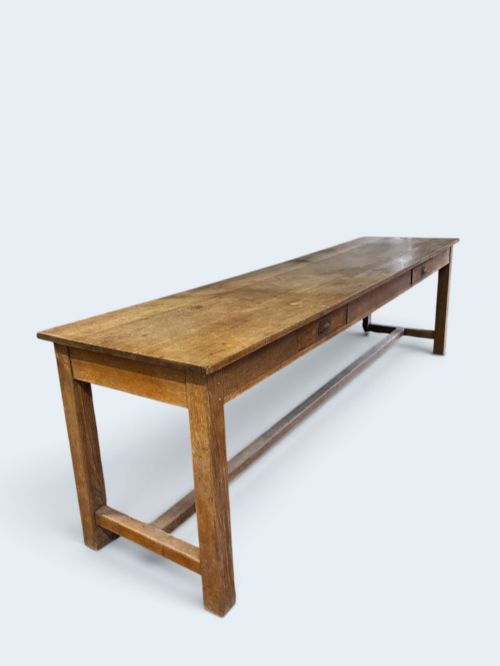
The selection here draws primarily from nineteenth-century examples alongside eighteenth-century and early twentieth-century pieces. Dining variants dominate the selection, often taking the form of heavy oak or fruitwood farm tables designed for central kitchen spaces.
Materials and construction
These tables rely on solid regional timbers such as oak, fruitwood, cherrywood, pine, elm, and walnut. Artisans joined heavy timber boards using traditional methods, occasionally incorporating iron and brass fittings for structural reinforcement.
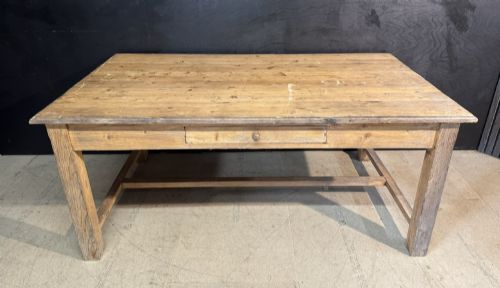
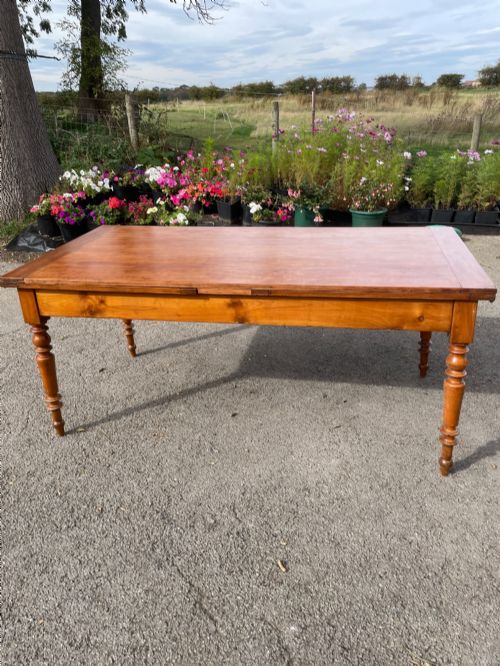
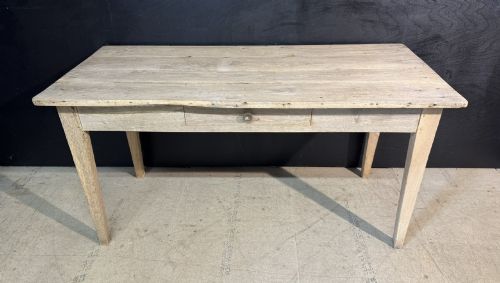
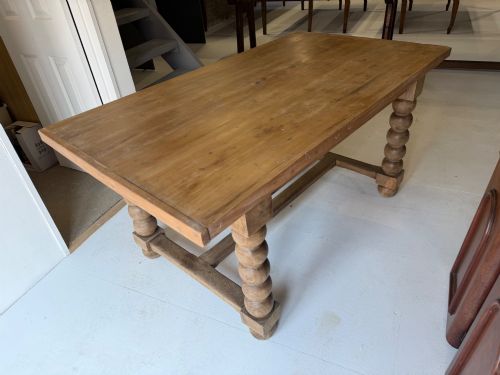
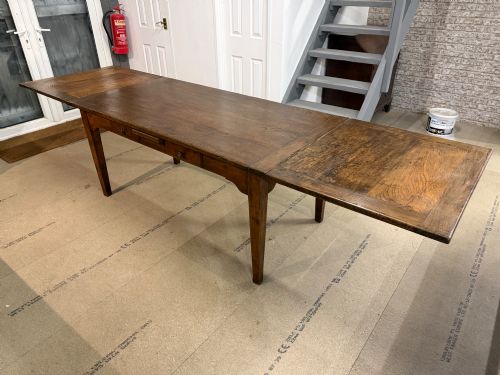
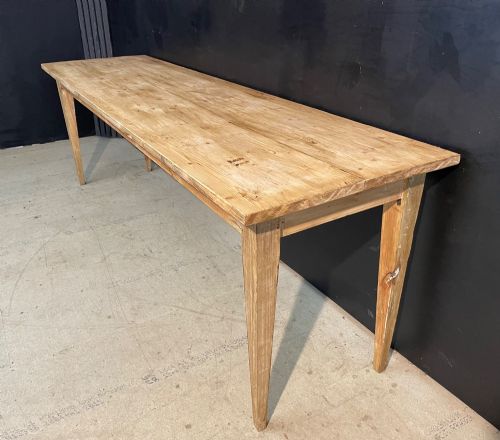
Surfaces show the marks of hand-tooling and prolonged domestic use. Some pieces feature turned legs, tapered supports, or bobbin details, while others retain plain board tops and integrated drawers for kitchen storage.
The listings span the eighteenth century, the Georgian period, the nineteenth century, and early twentieth-century dates up to nineteen-thirty.
Assessing quality and character
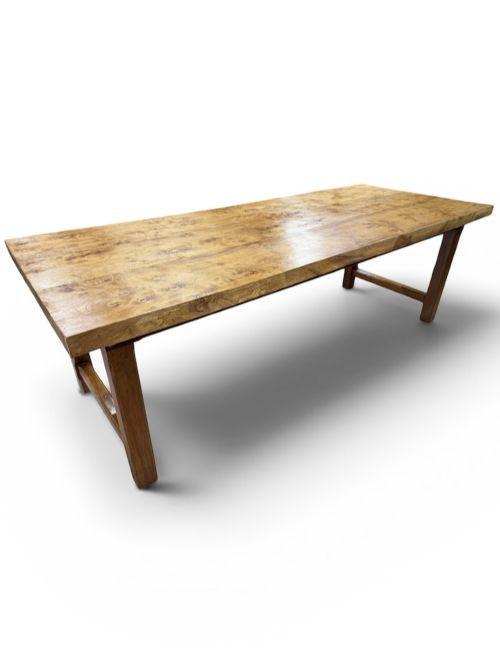
Quality rests in the selection of timber and the integrity of the original structure. Dense fruitwood, figured walnut, and thick oak boards indicate superior domestic output compared to simpler utility pine.
The degree of original surface wear and untouched patination distinguishes better examples. Tables retaining their early gnarled legs, original draw elements, or untouched timber tops carry greater historic integrity.
The French Country Wooden Table Glossary
- Refectory table
- A long narrow dining table traditionally used for communal meals. These versions make heavy use of oak and fruitwood.
- Fruitwood
- Timber sourced from fruit-bearing trees such as cherry or pear. It offers a dense grain and warm tone seen across many regional tables.
- Dough bin
- A specialised wooden container often integrated with a cupboard or table format. It served the preparation of bread dough in rural households.
- Vernacular rural style
- Furniture built by local makers using available regional materials to serve practical domestic needs rather than following formal academic design rules.
French Country Wooden Table: Frequently Asked Questions
How do I date a wooden table?
Dating relies on construction methods, timber choice, and tool marks left on the underside. Eighteenth and nineteenth-century examples display hand-sawn board widths and pegged joinery.
Later pieces from the Edwardian era or the nineteen-twenties often incorporate machine-cut elements and standardised fixings while retaining traditional forms.
What woods were used most often?
Makers utilised local hardwoods and softwoods depending on regional availability. Oak, fruitwood, cherrywood, and walnut appear frequently in formal and dining formats.
Pine and elm served well for deep farmhouse tables, sideboards, and functional kitchen work surfaces due to their resilience.
Are these tables suitable for daily dining?
These pieces were originally constructed for heavy domestic use, making them robust enough for modern dining rooms and kitchens. Solid timber construction handles regular family gatherings with ease.
Care should be taken to use appropriate protection against heat and moisture to preserve historic wood surfaces.
What defines rural French provincial style?
This style prioritizes utility and structural honesty over ornate decoration. Forms remain straightforward, focusing on sturdy legs, thick timber tops, and practical drawer storage.
Details like tapered legs or bobbin turnings provide subtle refinement without compromising the rustic character.