




French Country Shelving
French country shelving brings rustic character and practical storage to a room, ranging from robust bakers racks to refined provincial bookcases.
French Country Shelving
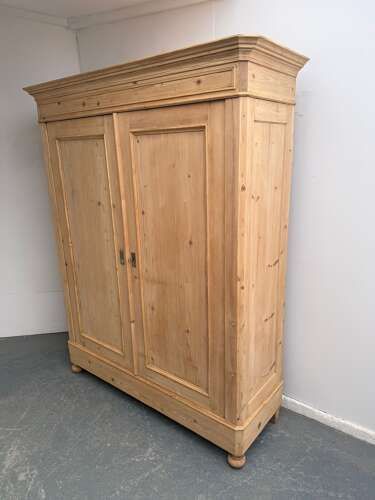
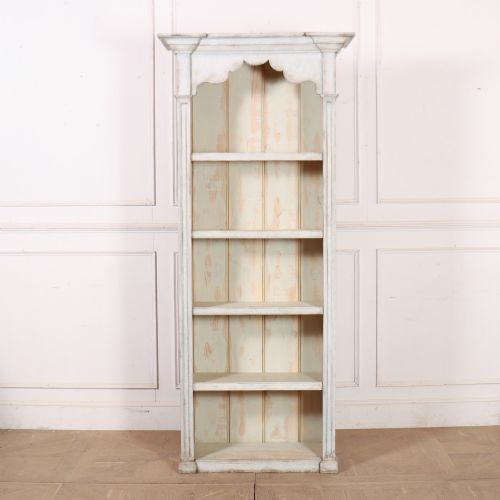
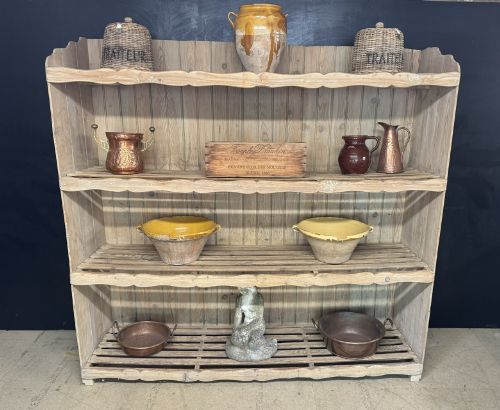
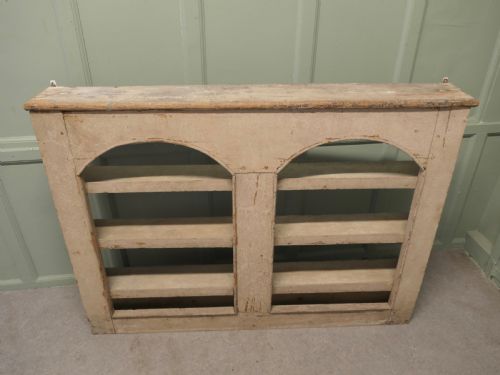
French country shelving encompasses diverse storage forms built across the eighteenth and nineteenth centuries, including open bookcases, baker's racks, wall shelves, and corner cupboards. These pieces originate from provincial workshops and Parisian settings, reflecting both domestic rural life and commercial spaces like patisseries.
The aesthetic bridges utilitarian function and decorative display, featuring styles such as French provincial, French country, and French industrial. Pieces often display painted finishes, bleached oak surfaces, or sturdy iron frameworks designed for everyday utility.
Materials and construction
Makers utilised solid timbers including pine, oak, cherry wood, and walnut, frequently selecting local woods suited to provincial cabinetmaking. Carpenters built bookcases and cupboards with pegged joints and hand-carved details, while others applied painted finishes directly to the wood.
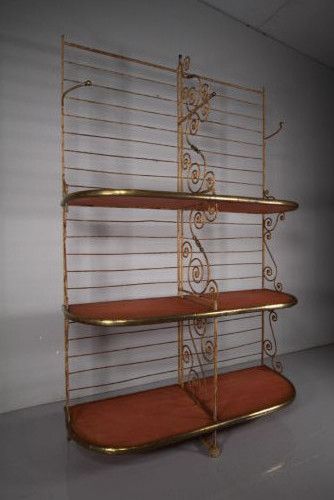
Metal elements like wrought iron, brass, and steel formed the robust structures of baker's racks and patisserie racks. These industrial pieces combined heavy metal frames with open shelving to support heavy loads in commercial or domestic environments.
French Country Shelving Retail Price Guide 2026
Typical asking prices for french country shelving among the pieces listed under this phrase on Sellingantiques today, from the lower quarter to the upper quarter. They describe what is for sale here now, not the wider market.
Current listings feature pieces spanning the eighteenth century through to nineteen hundred, constructed in pine, oak, walnut, wrought iron, and painted wood.
Assessing quality
Quality in these pieces rests upon the integrity of the timber selection and the skill of the hand-carved or forged elements. Superior examples exhibit well-proportioned architecture, such as shaped shelves within corner cupboards and balanced proportions in dwarf bookcases.
The character of the surface finish plays a significant role, distinguishing items with original painted patination or naturally bleached oak from those with later alterations. Robust construction in iron racks, including stamped metalwork, indicates higher workshop standards.
The French Country Shelving Glossary
- Baker's rack
- A heavy metal shelving unit originally used by bakers for cooling bread, constructed from wrought iron or steel with open wire or slatted shelves.
- Alcove shelving
- Fitted storage units designed to fit into architectural wall recesses, maximising awkward spaces with custom-built cabinetry.
- Provincial
- A term denoting items originating from the regions outside Paris, typically characterised by sturdy construction and local timber use.
- Bobbin shelves
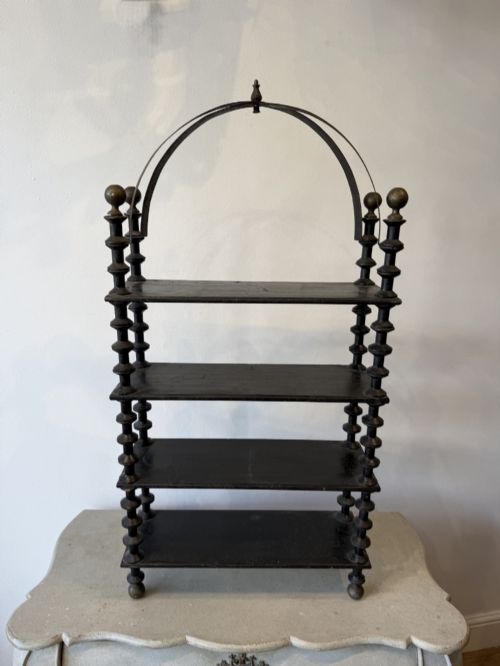
- Small wall shelving featuring turned wooden bobbins as structural supports or decorative spindle details.
- Patisserie rack
- A commercial metal shelving unit originating from French pastry shops, designed to display baked goods in a retail or kitchen setting.
French Country Shelving: Frequently Asked Questions
What is a baker's rack used for?
These robust metal units provide sturdy open storage for kitchenware, cookbooks, or plants. Originally designed for cooling bread in French bakeries, they suit modern utility rooms and kitchens.
Their open iron framework adds industrial character while offering practical space for heavy items.
How do I date a wooden bookcase?
Dating relies on examining the timber species, construction methods, and hardware used in the piece. Eighteenth-century examples often feature bleached oak and hand-cut joinery.
Nineteenth-century variants frequently utilise pine, walnut, or cherry wood with machine-sawn elements alongside traditional handcrafting.
Where should I place wall shelves?
Hanging shelves suit kitchens, hallways, or living spaces where floor area is limited. They create vertical display space for ceramics, books, or decorative objects.
Ensure wall fixings can support the weight of solid timber or metal structures.
What distinguishes provincial furniture?
Provincial pieces reflect regional French craftsmanship outside major urban centres. They prioritise functional design and local materials over courtly ornamentation.
This results in honest construction using solid woods like oak and pine, often finished with simple paint or natural wax.