


French Cluster Ring
A french cluster ring brings together vibrant gemstones and central diamonds within disciplined geometric or floral settings.
French Cluster Ring
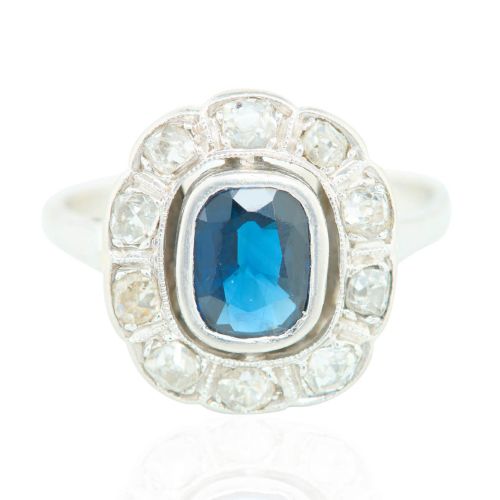
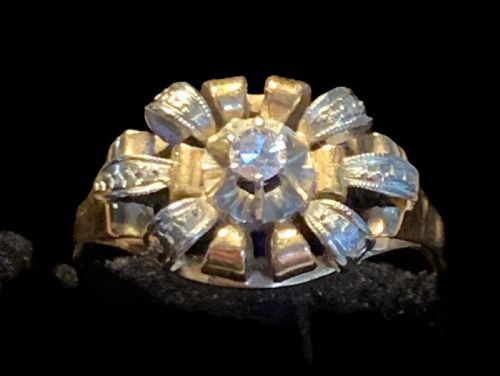
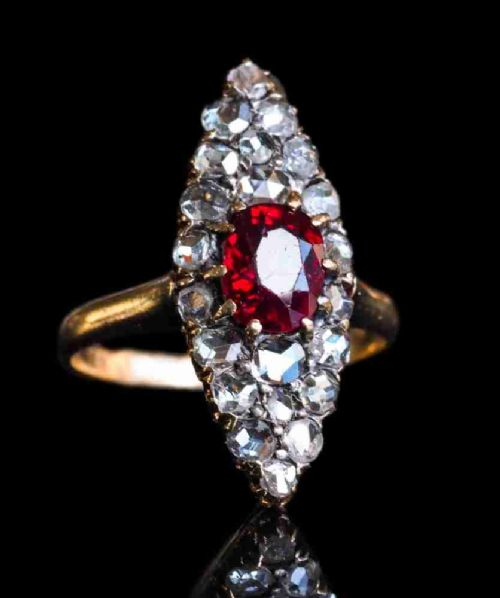
A french cluster ring brings together a central stone surrounded by smaller gems, defining the aesthetic of historic jewellery from this region. These rings appear frequently from the Edwardian era through the Art Deco period and into mid-century designs.
The selection ranges from delicate target clusters and navette shapes to substantial cocktail rings. Central stones include diamonds, sapphires, emeralds, rubies, aquamarines, pearls, and jade, framed by intricate outer arrangements.
Originating across distinct historical movements, these pieces reflect the shifting tastes of Victorian, Edwardian, Art Deco, and mid-century makers. Buyers encounter platinum and gold structures holding stones cut by hand in older styles.
How They Were Made
Goldsmiths utilised 18ct yellow gold, 18ct white gold, 18k gold, and platinum to build durable settings for fragile gems. Platinum gained favour during the Art Deco period for its strength in supporting intricate openwork and pave designs.
Gemstones feature traditional cutting styles such as old cut, rose cut, and transitional cuts shaped entirely by hand. Master jewellers set diamonds alongside sapphires, rubies, and emeralds using precise claw and bezel techniques.
Listings feature 18ct white gold, 18ct yellow gold, and platinum across Edwardian, Art Deco, and mid-century periods.
What Varies in Quality
The standard of a french cluster ring depends heavily on the match and saturation of the central gemstone, particularly in natural sapphires and emeralds. Uniformity in the surrounding smaller diamonds elevates the overall harmony of the face.
Artistic execution in the metalwork distinguishes finer examples, visible in crisp millegrain edges and balanced proportions. The integration of platinum with gold requires advanced skill to maintain structural integrity without heavy bezels.
Boucheron
The French Cluster Ring Glossary
- Cluster ring
- A ring featuring a prominent central gemstone encircled by a group of smaller stones. This layout maximises visual impact and light reflection.
- Old cut
- A vintage diamond cutting style characterised by a small table, high crown, and deep pavilion. These stones were shaped by hand before modern machinery.
- Navette
- A boat-shaped ring setting that tapers to pointed ends at the top and bottom. The elongated form flatters the finger.
- Target ring
- A circular cluster design featuring concentric rings of contrasting coloured stones and diamonds. The geometric pattern mimics a target.
- Millegrain
- A decorative technique involving a row of tiny raised metal beads along the edges of a setting. It provides a refined texture to platinum and gold.
French Cluster Ring: Frequently Asked Questions
What periods do these rings come from?
These pieces date from the Victorian era, through Edwardian and Art Deco movements, up to the mid-century decades. Each period introduces distinct design shifts in metal choice and stone arrangement.
Victorian and Edwardian examples often feature yellow gold and delicate platinum details, while Art Deco pieces showcase bold geometry and stark white metals.
Are the central gemstones natural?
Many listings specify natural unheated sapphires, emeralds, rubies, and diamonds set within the original mountings. Gemological descriptions often note untreated origins for coloured stones.
Buyers find both precious gems and pearls secured alongside hand-cut diamonds in these historical configurations.
How do I care for antique cluster rings?
Gentle cleaning with warm soapy water and a soft brush maintains the sparkle of the diamonds and coloured stones. Avoid harsh ultrasonic cleaners, particularly with pearls, emeralds, and older settings.
Regular inspection by a jeweller ensures the claws holding the central and surrounding stones remain secure.
What is the difference between platinum and white gold here?
Platinum offers high durability and a bright white finish that allows for very fine wirework and secure claw settings. White gold provides a similar silvery tone while utilising a gold alloy base.
Art Deco makers frequently combined platinum with yellow gold to contrast the mounting metals against the gemstones.