



French Cage Lighting
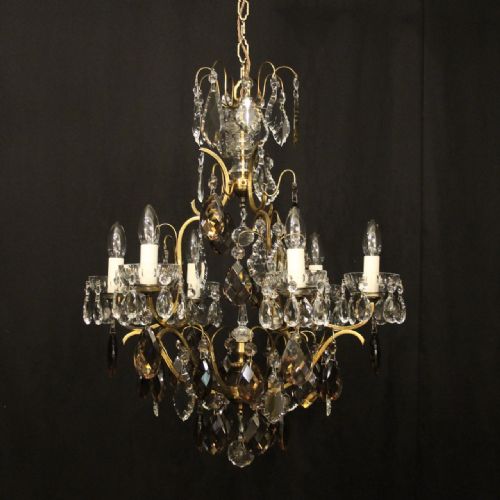
French cage lighting brings open metal frameworks and crystal drops together to illuminate rooms with classical proportion and sparkling refraction.
French Cage Lighting
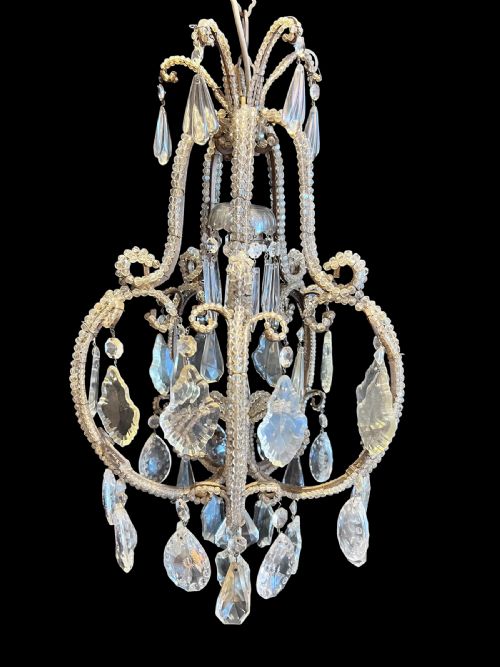
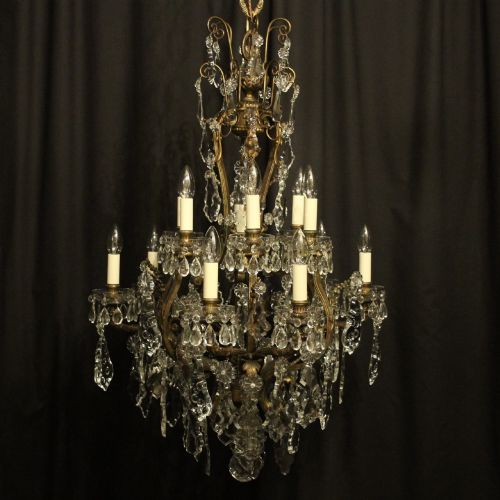
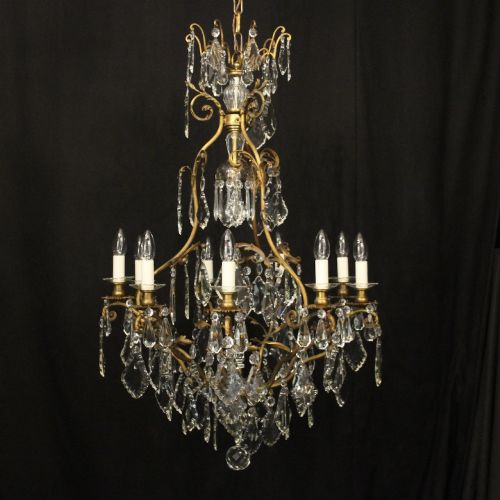
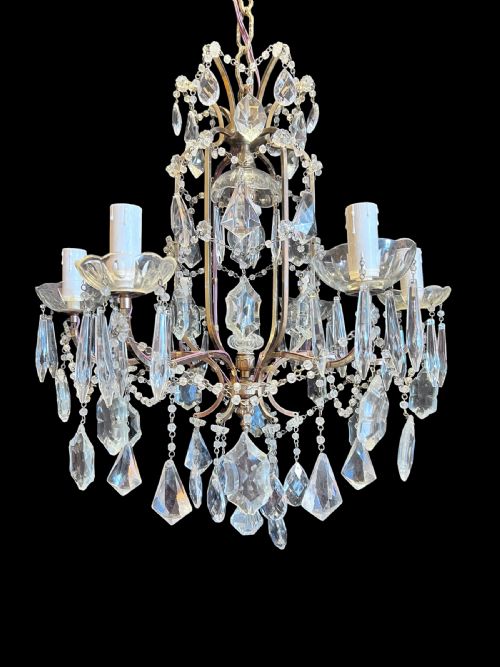
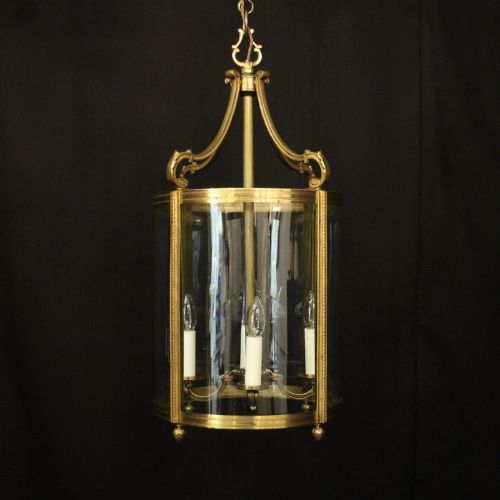
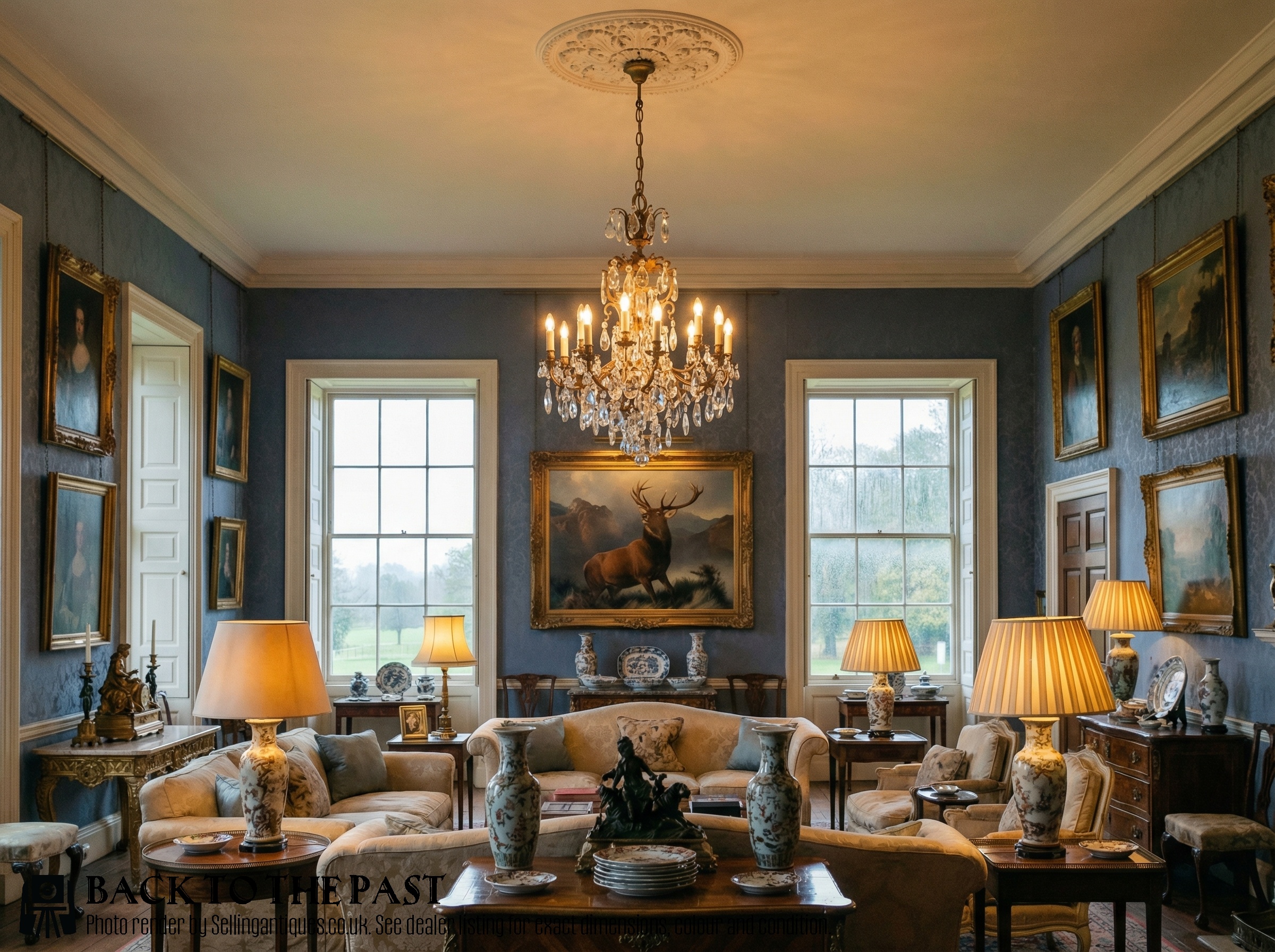
French cage lighting consists of chandeliers and lanterns constructed with an open metal framework, often resembling a birdcage, which supports arrays of glass and crystal elements. These fixtures appear in forms ranging from multi-light ceiling chandeliers to hanging lanterns and wall lights, spanning periods from the nineteenth century through the early twentieth century.
The aesthetic draws heavily on traditional decorative vocabularies, including French Rococo, Neoclassical, and Chateau styles, alongside Italian Florentine influences. Buyers frequently encounter designs featuring brass, bronze, and gilt metal armatures outfitted with varying numbers of light points.
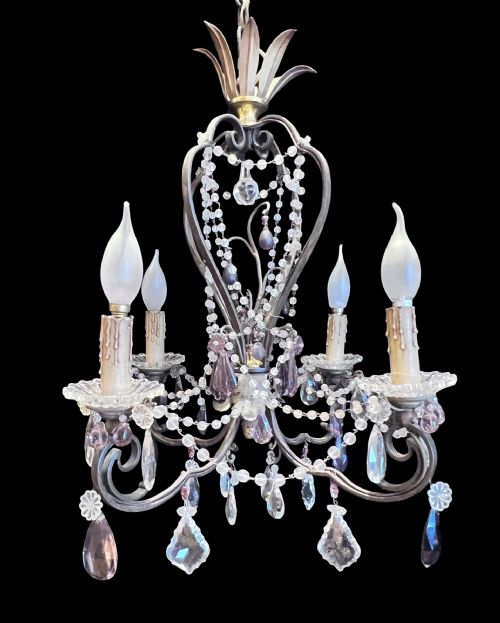
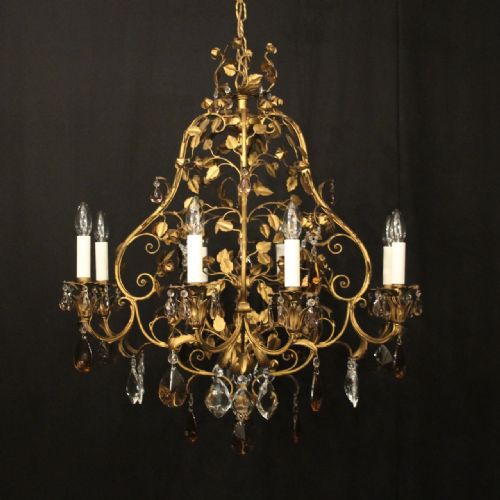
Examples on this page showcase diverse configurations, from single-light pendant lanterns to substantial twelve-light fixtures hung with cut-glass drops, amethyst crystals, and coloured fruits. The overarching style prioritises vertical presence and intricate metalwork frames enclosing central light clusters.
Materials and construction methods
Makers constructed these fixtures using structural metals such as brass, bronze, iron, and gilt metal, often applying gilding or toleware finishes to the exterior framework. These sturdy skeletons support intricate configurations of cut crystal, glass beads, and bevelled glass panels.
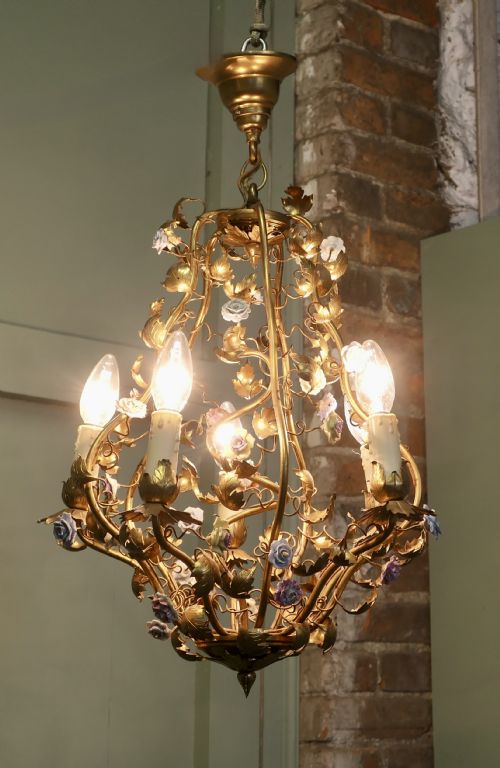
Artisans wired the internal branches to hold multiple light bulbs or candles, surrounding the central stem with cascading drops, prisms, and floral ceramic elements. The integration of metal casting with hand-cut crystal yields durable luminaires designed to refract light across multiple surfaces.
Some nineteenth-century makers hid tiny brass birds inside the cage frames, waiting quietly among the crystal drops for an observant buyer.
Factors determining quality
The distinction between tiers rests upon the complexity of the metal casting and the purity of the crystal components. Finely chased gilded bronze and heavy hand-cut crystal drops elevate a piece above standard brass and pressed glass assemblies.
Proportion and integrity of the original metal cage define the structural distinction. Pieces exhibiting detailed toleware floral work, matched amethyst or coloured crystal elements, and substantial cast or ormolu mounts demonstrate superior workshop execution.
La Mason Bagues
The French Cage Lighting Glossary
- Birdcage
- A structural frame style for chandeliers where metal straps curve upward to form an enclosure resembling a birdcage, supporting rows of crystal drops. This open skeleton design distributes weight evenly while maximising light refraction.
- Toleware
- Painted or lacquered metalware, frequently utilised in floral motifs and decorative branches on period light fittings. This technique introduces colour and organic shapes to the metal armature.
- Ormolu
- Gilt bronze mounted onto furniture and light fittings, providing a rich, golden surface finish through mercury gilding or modern electroplating. It is prized for its warm, reflective sheen.
- Bevelled glass
- Glass panels featuring angled edges set into lantern frames, designed to catch and refract light from interior bulbs. This treatment adds depth and geometric precision to hanging lanterns.
- Prism
- A cut-glass pendant suspended from the arms or frame to disperse light into spectral colours. These elements hang in profusion across nineteenth and early twentieth-century examples.
French Cage Lighting: Frequently Asked Questions
How do I clean a cage chandelier?
Maintenance involves dusting the metal frame and individual crystal drops with a soft cloth while the fixture remains suspended. Many owners prefer using a specialised spray cleaner designed for crystal to dissolve grime without damaging the wiring or gilt finish.
For thorough cleaning, delicate crystal elements can be removed individually, washed in lukewarm soapy water, dried completely, and rehung on the metal armature.
What ceiling height do I need?
These hanging fixtures require sufficient vertical clearance to allow passage underneath, making high ceilings ideal for larger multi-tier designs. Pendant lanterns and compact versions suit standard domestic spaces when positioned centrally over furniture.
Evaluating the drop length helps determine whether a fixture fits a hallway, dining table, or living room without obstructing daily movement through the space.
How are these lights wired today?
Period pieces frequently require rewiring to meet modern electrical safety standards before installation in contemporary homes. Professional electricians can adapt the internal sockets to accept standard bulbs while preserving the vintage metal body.
Original brass and bronze frames accommodate modern wiring channels discreetly, ensuring the structural integrity of the cage remains unaltered during the conversion process.