

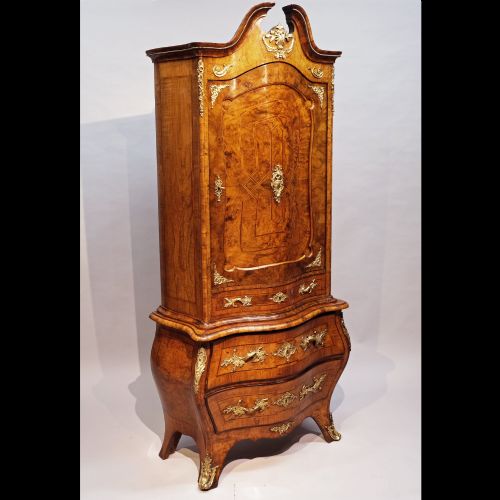

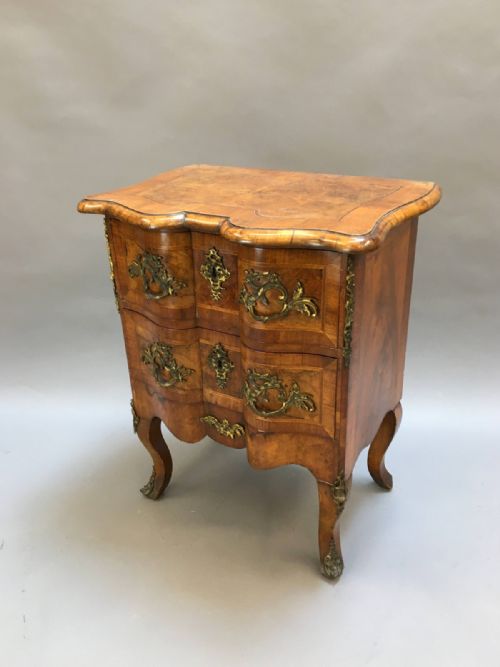


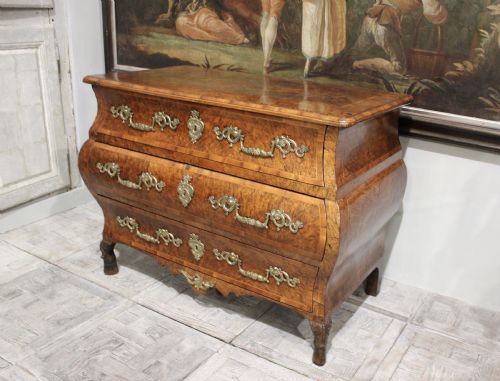
French Burr Walnut Chest of Drawers
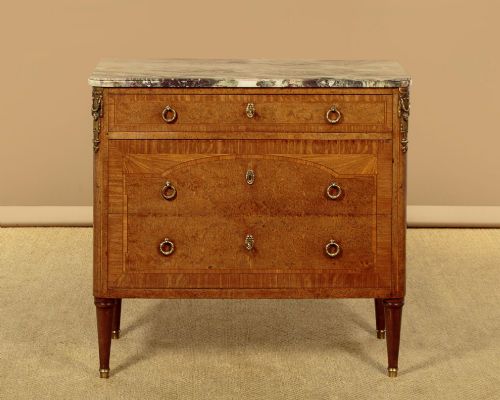
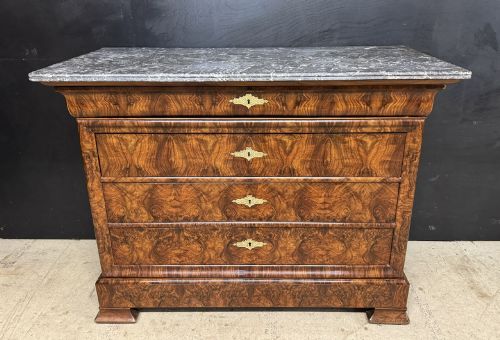
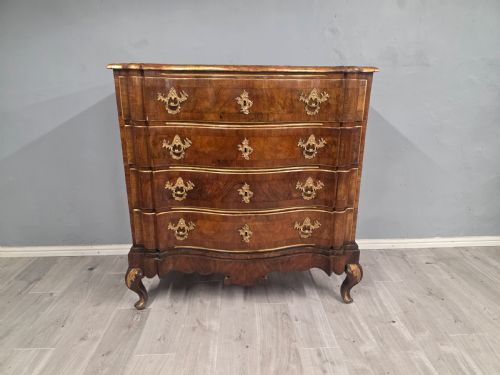
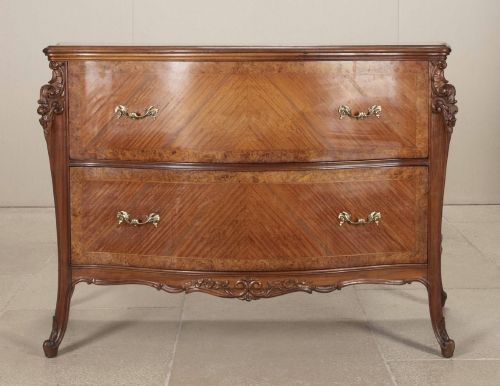
A french burr walnut chest of drawers brings rich timber figure and continental elegance into a room.
French Burr Walnut Chest of Drawers
A french burr walnut chest of drawers spans various continental forms, from traditional commodes to tall chests and bedside cabinets. Buyers encounter nineteenth-century examples most frequently on this page, alongside eighteenth-century prototypes.
Makers utilised figured veneers on carcases ranging from Louis Philippe to Victorian styles. Many items incorporate marble tops and ormolu mounts alongside the primary walnut timber.
Materials and construction
Cabinetmakers selected burr walnut veneer for its swirling grain patterns, applying it carefully to stable underlying timbers. Ormolu mounts and contrasting brass hardware provide decorative accents on these continental carcases.
Marble slabs appear frequently as protective and ornamental top surfaces on nineteenth-century commodes. Marquetry inlay work occasionally embellishes drawer fronts and cabinet sides alongside the figured wood.
French Burr Walnut Chest of Drawers Retail Price Guide 2026
Typical asking prices for french burr walnut chest of drawers among the pieces listed under this phrase on Sellingantiques today, from the lower quarter to the upper quarter. They describe what is for sale here now, not the wider market.
Some tall chests were built with seven drawers so owners could allocate one compartment for each day of the week.
Judging quality
The choice and matching of veneer grain patterns dictate much of the visual impact across these pieces. Bookmatched panels show deliberate planning by the cabinetmaker to create symmetrical patterns.
The precision of bronze ormolu mounts and the thickness of applied marble tops distinguish finer examples. Drawer construction details, such as traditional dovetailing and smooth internal movement, reflect workshop standards.
The French Burr Walnut Chest of Drawers Glossary
- Burr walnut
- Timber taken from the growth excrescences of walnut trees, yielding highly figured veneer with complex knot patterns. Cabinetmakers prize this wood for its decorative surface movement.
- Commode
- A continental drawer unit, typically low and wide, functioning as a decorative storage chest. French commodes often feature marble tops and gilt-bronze mounts.
- Ormolu
- Gilded bronze ornamentation applied to furniture corners, drawer pulls, and feet. This decorative technique characterises many nineteenth-century French pieces.
- Semainier
- A tall seven-drawer chest designed originally to hold a week of linen. These slender upright storage pieces save floor space while offering multiple drawers.
- Louis Philippe
- A mid-nineteenth-century French style favouring restrained curves and minimal ornamentation over heavy carving. Pieces from this era rely on the beauty of plain or figured timber surfaces.
French Burr Walnut Chest of Drawers: Frequently Asked Questions
How do I identify a true french commode?
Continental proportions, characteristic timber selection, and construction methods separate French commodes from British equivalents. Look for specific continental drawer configurations and regional hardware.
Many examples feature distinct marble surfaces and gilt-metal mounts typical of nineteenth-century French workshops.
Where should I place a burr walnut chest?
These decorative chests suit reception rooms, bedrooms, or hallways where the figured grain can catch ambient light. Keep timber furniture away from direct heat sources and strong sunlight to protect the polish.
Ensure marble-topped pieces rest on level flooring to prevent structural stress across the carcase joints.
What is a semainier chest?
A semainier is a tall, narrow chest traditionally containing seven drawers for daily storage. This vertical format provides generous capacity without demanding excessive floor space.
Most surviving examples date from the nineteenth century and utilise walnut veneers on tall carcases.
How do I care for walnut veneer?
Dust surfaces regularly with a soft, dry cloth to prevent particle buildup on the polished finish. Avoid silicone-based sprays and excess moisture which can damage delicate timber veneers.
Maintain stable room humidity to prevent the underlying wood and veneer layers from expanding or contracting excessively.