

French Bronze Mounts
French bronze mounts elevate nineteenth-century furniture and decorative objects with gilded weight and cast detail.
French Bronze Mounts
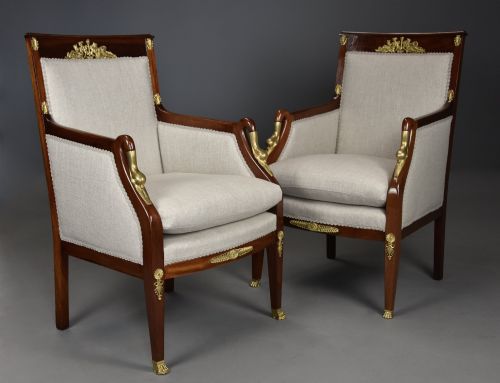
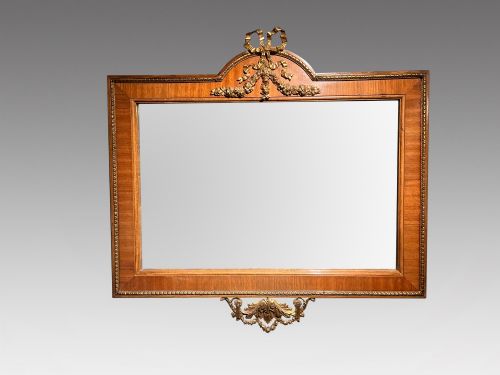
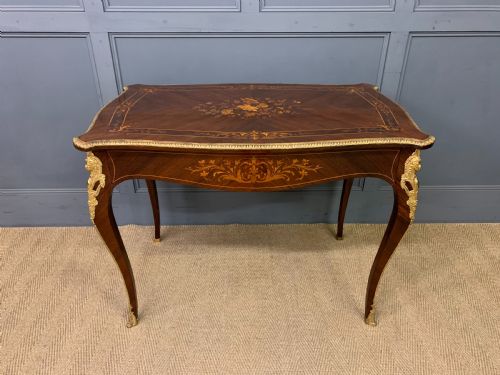
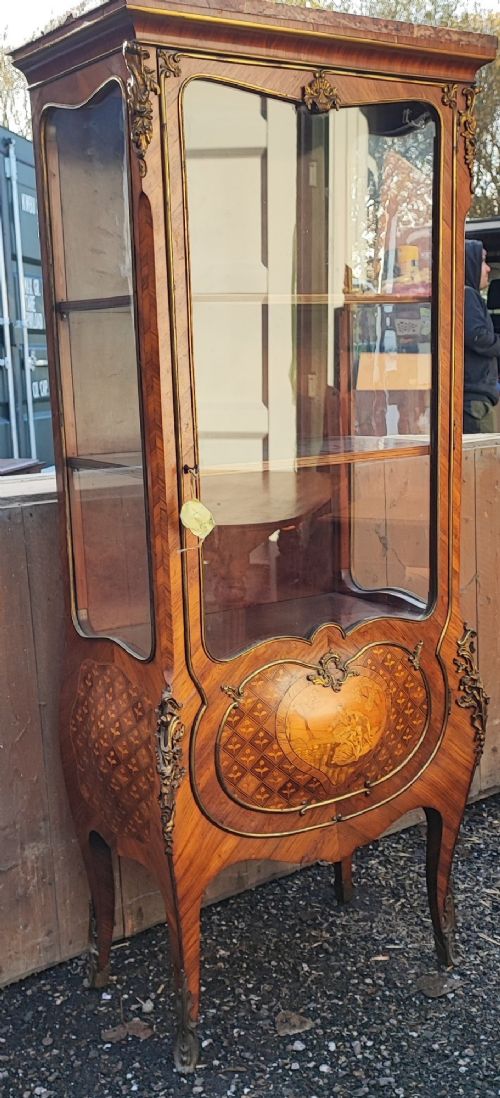
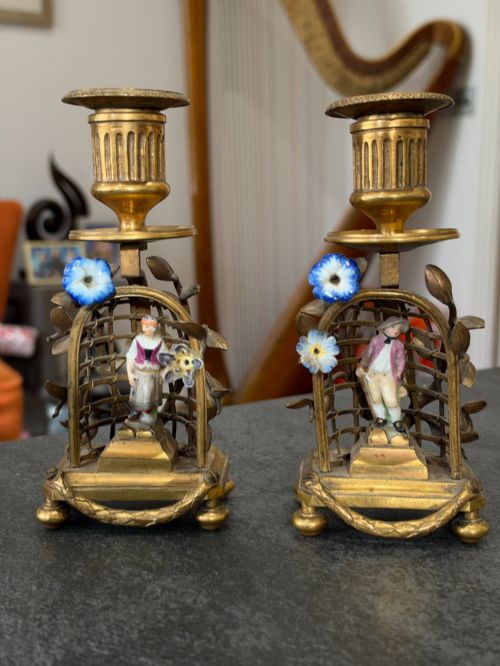
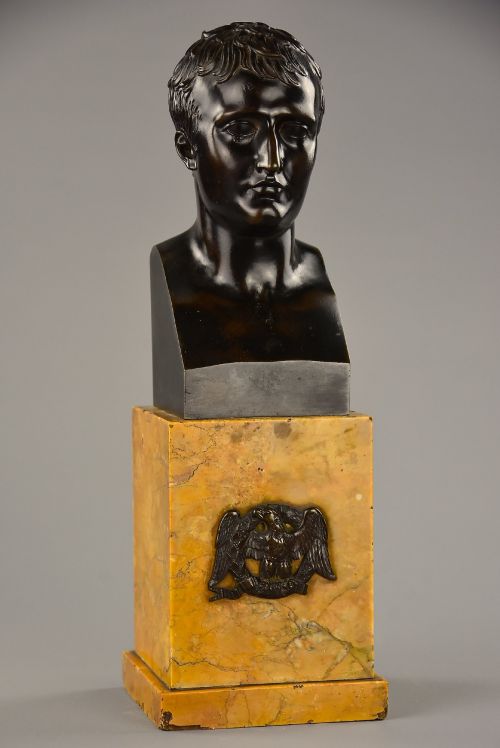
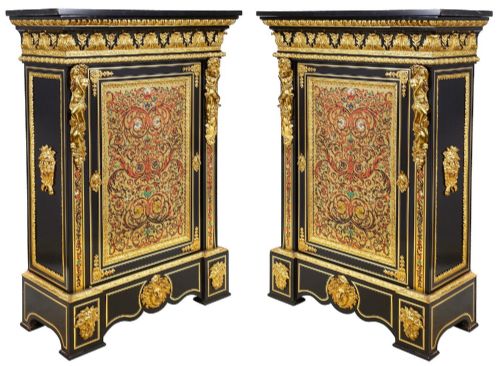
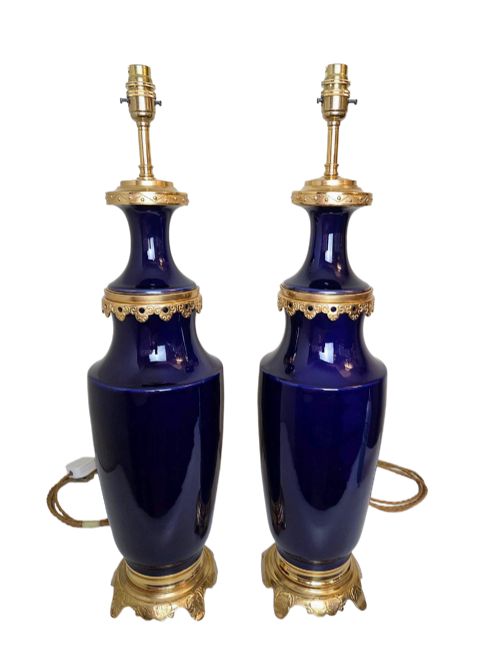
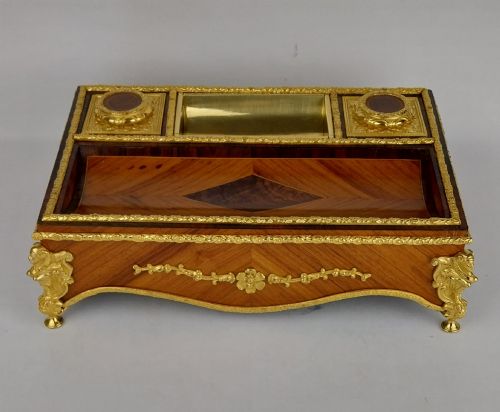
French bronze mounts transform practical wooden furniture and ceramic vessels into decorative centerpieces through applied metalwork. Buyers seeking French bronze mounts encounter decorative hardware applied to nineteenth-century writing desks, commodes, tables, and cabinets.
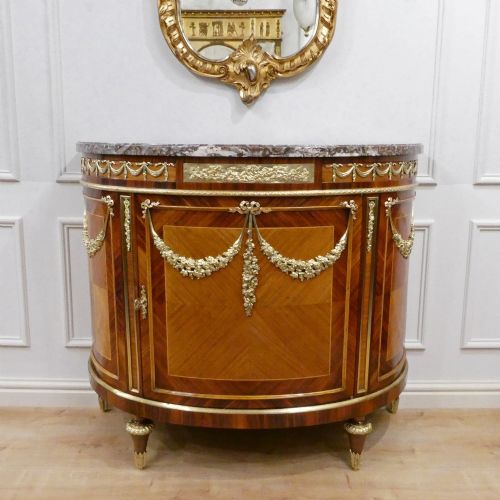
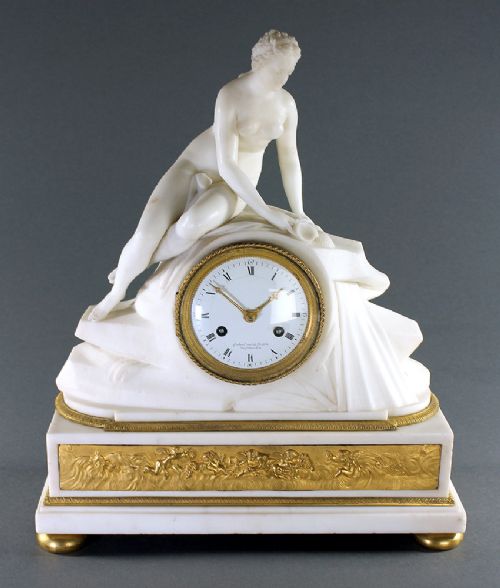
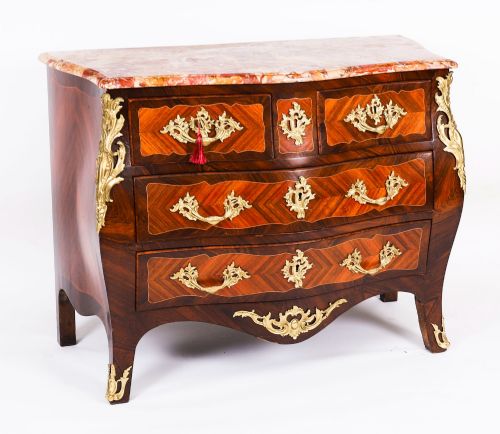
The objects utilising these mounts span the nineteenth century, incorporating revivals of Louis XV and Louis XVI styles alongside Empire designs. Common forms include writing desks, display cabinets, centre tables, and mantel clocks embellished with cast metal.
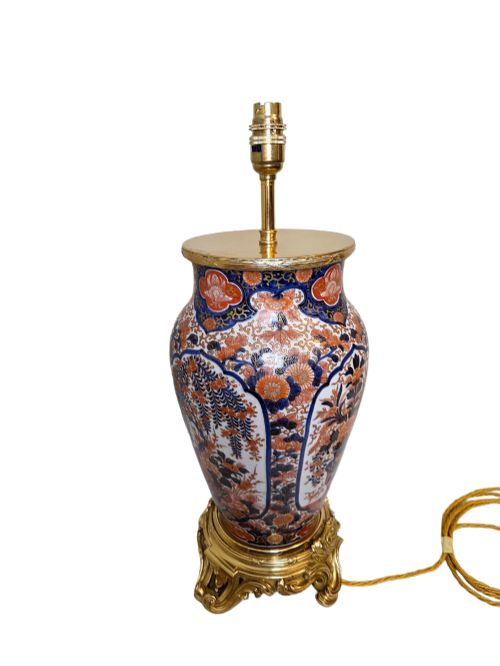
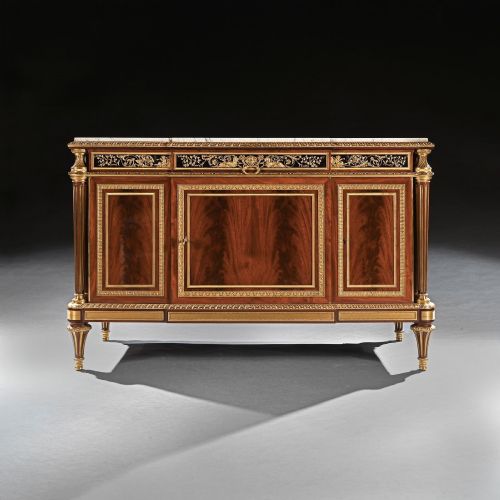
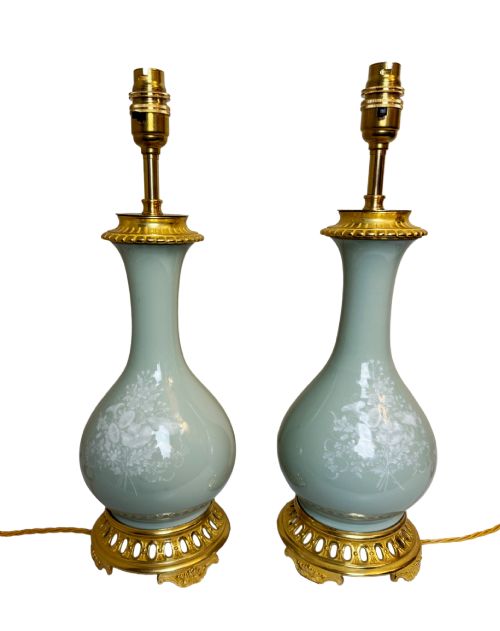
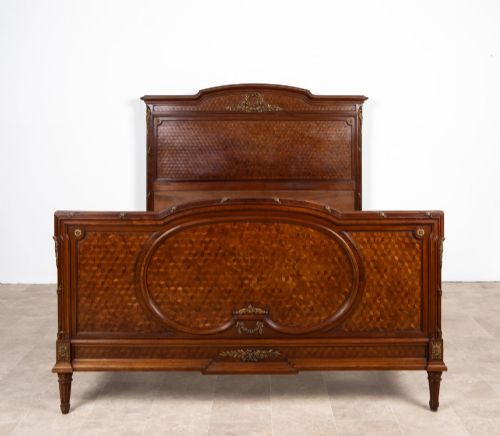
Many pieces combine these bronze elements with hardwoods like kingwood and walnut, or complement ceramic bodies such as Sevres porcelain and celadon vases. The metalwork functions both structurally as corners, feet, and handles, and purely as decorative appliques.
How they were made
Makers cast the bronze components using traditional foundry methods before applying finishes such as mercury gilding to create ormolu. These metal sections are then fitted precisely to the contours of wooden carcases, marble tops, and porcelain panels.
The underlying furniture relies on marquetry, parquetry, and veneer work using species like kingwood, mahogany, and walnut. Craftsmen assembled these pieces with structural mounts screwed or pinned directly into the wood substrate.
French Bronze Mounts Retail Price Guide 2026
Typical asking prices for french bronze mounts among the pieces listed under this phrase on Sellingantiques today, from the lower quarter to the upper quarter. They describe what is for sale here now, not the wider market.
Listings feature eighteenth and nineteenth-century periods, incorporating kingwood, walnut, mahogany, marble, porcelain, and ormolu across tables, cabinets, and clocks.
What varies in quality
The sharpness of the cast detail separates superior bronze mounts from ordinary examples, as finer pieces retain crisp chasing work after casting. Lesser mounts exhibit softened edges and shallow surface definition where the mould has worn.
Integration between the metal mount and the supporting material indicates the maker's skill, with top-tier pieces showing flush alignment against marble, porcelain, or timber. The weight and depth of the gilding further distinguish the upper tier of production.
François Linke·Thomas Hache·Edward Holmes Baldock·Poix Blin·Gillows
The French Bronze Mounts Glossary
- Ormolu
- Gilt bronze produced by applying a mercury and gold amalgam to cast bronze before heating. This technique creates a durable golden finish characteristic of luxury nineteenth-century French furnishings.
- Kingwood
- A dense South American hardwood featuring rich brown and violet-brown figuring. Cabinetmakers utilised it extensively for veneering serpentine and flat surfaces beneath bronze mounts.
- Cartonnier
- A desktop cabinet designed to hold papers and documents, often fitted with pigeonholes and drawers. These pieces frequently display elaborate gilt bronze mounts and marquetry inlay.
- Boulle
- A marquetry technique combining tortoiseshell and brass inlay developed during the seventeenth century and revived later. Pieces utilising this method often incorporate cast bronze mounts along the edges and feet.
- Vernis Martin
- A type of decorative lacquer finish developed in France to imitate Asian lacquerware. It appears on cabinets and desks alongside gilt bronze appliques.
French Bronze Mounts: Frequently Asked Questions
How do I clean French bronze mounts?
Dust the metal gently with a soft dry brush to prevent accumulation in the cast recesses. Avoid abrasive metal polishes that strip the original gilding.
Maintain the surrounding wood or marble using appropriate conservation waxes recommended for antique furniture. Keep pieces away from direct sunlight to preserve both the metal finish and the timber veneers.
What periods use French bronze mounts?
These mounts appear predominantly on nineteenth-century pieces, spanning the Victorian era through the early nineteen-hundreds. Workshops frequently drew inspiration from earlier eighteenth-century reigns.
Revival movements focusing on Louis XV and Louis XVI styles dominate the production dates seen in this category. Empire style pieces also incorporate heavy cast brass and bronze elements.
Are bronze and ormolu the same thing?
Ormolu specifically refers to bronze that has received a gold amalgam coating, creating a bright metallic sheen. Ungilded bronze mounts retain a darker metallic brown or patinated surface.
Both terms describe cast copper-alloy components used for decorative and structural enhancement on furniture. The presence of mercury gilding distinguishes ormolu from plain bronze.
How are marble tops secured with mounts?
Marble inserts typically rest within wooden frames or atop commode carcases, held in place by their own weight and fitted bronze collars. The metal mounts often act as a protective border around the stone edge.
Lifting the marble requires care as it is usually independent of the wooden base structure. Ormolu galleries and mounts sometimes pin the stone directly into position.