



French Brass Tea Table
A French brass tea table brings tactile warmth and refined Parisian elegance to any room.
Materials and construction
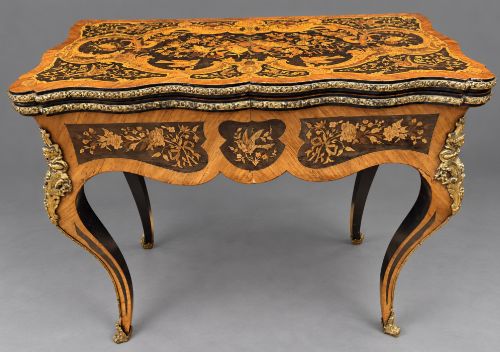
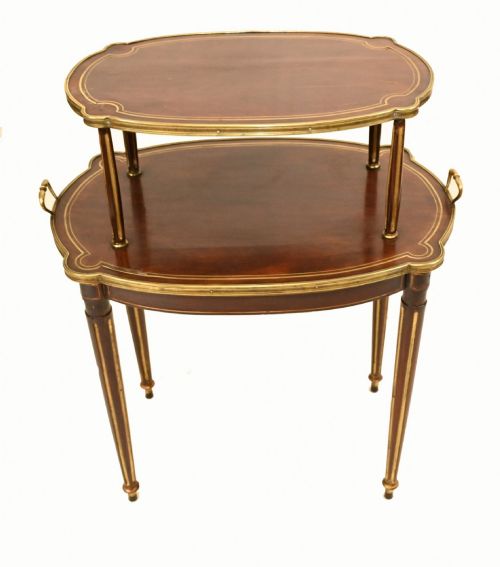
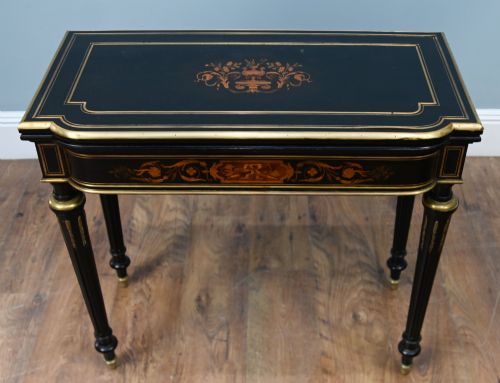
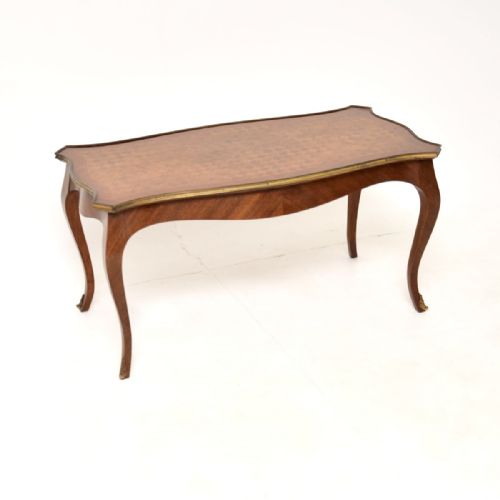
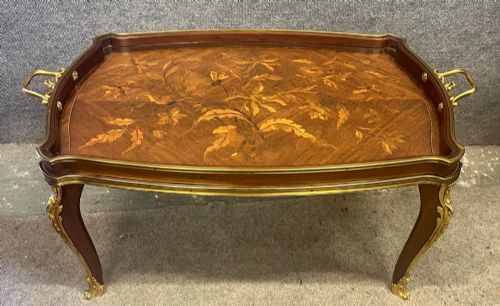
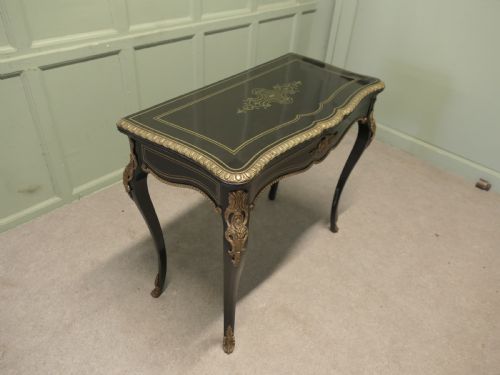
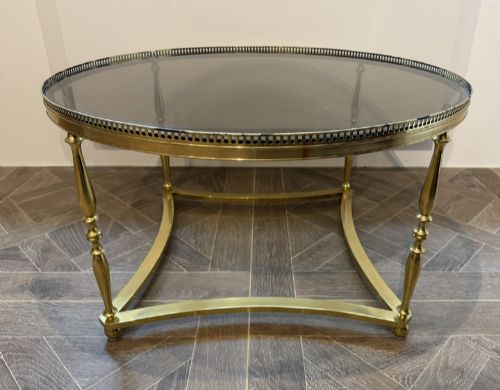
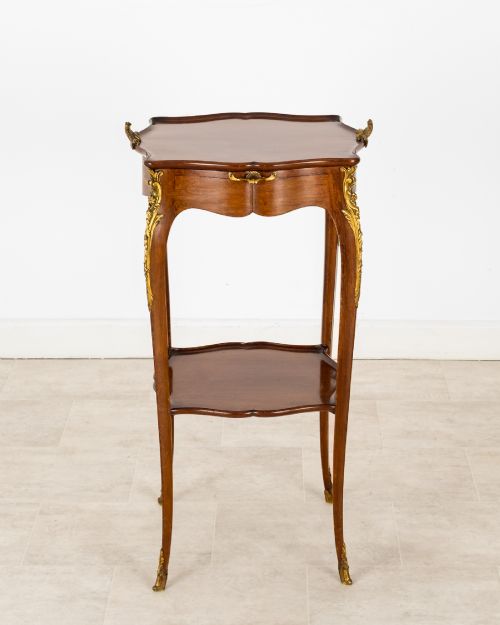
Construction relies on solid hardwood carcases veneered in exotic timbers such as kingwood, rosewood, mahogany and satinwood, frequently detailed with marquetry or parquetry. Brass and bronze ormolu mounts are cast, chased and secured to corners, legs and rims to accent the structural lines.
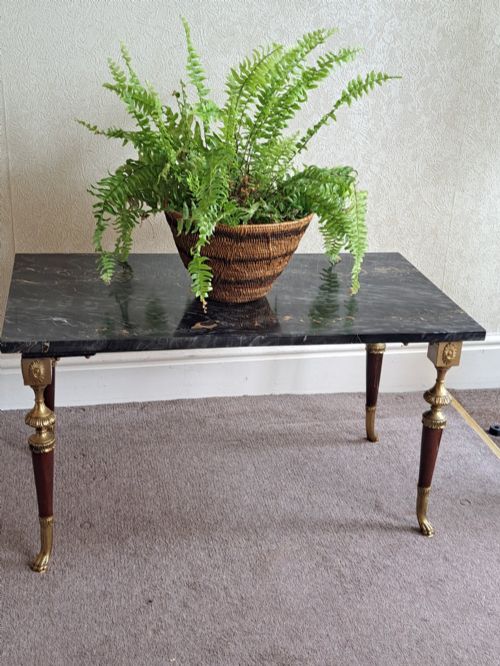
Metal components work alongside inset marble slabs, glass tiers and hand painted porcelain plaques, demanding precise cabinetmaking to join wood and metal securely. Surface finishes involve traditional French polishing or black lacquer, preserving the grain and protecting the inlaid brass stringing.
Evaluating quality and craftsmanship
Quality reveals itself in the crispness of the cast ormolu mounts and the precision of the brass inlay, where inferior examples show clumsy joints and flat chasing. Finer tables exhibit hand cut marquetry patterns using genuine exotic woods rather than painted simulations.
The underlying cabinetwork dictates stability, with superior pieces maintaining tight joinery in the aprons and leg attachments despite changes in humidity. Weight distribution and the choice of thick marble or selected hardwood tops further separate standard production from master workshop output.
French Brass Tea Table Retail Price Guide 2026
Typical asking prices for french brass tea table among the pieces listed under this phrase on Sellingantiques today, from the lower quarter to the upper quarter. They describe what is for sale here now, not the wider market.
Listings feature brass, ormolu and gilt bronze combined with walnut, mahogany, kingwood, rosewood and porcelain across Victorian, Edwardian and nineteenth century periods.
François Linke·Maison Baguès·Morison of Edinburgh
The French Brass Tea Table Glossary
- Ormolu
- Gilded bronze or brass mounts applied to furniture. This technique creates rich decorative highlights against dark timber surfaces.
- Marquetry
- Fitted wood veneers forming pictorial or geometric patterns. Artisans cut various coloured timbers together to achieve intricate surface designs.
- Parquetry
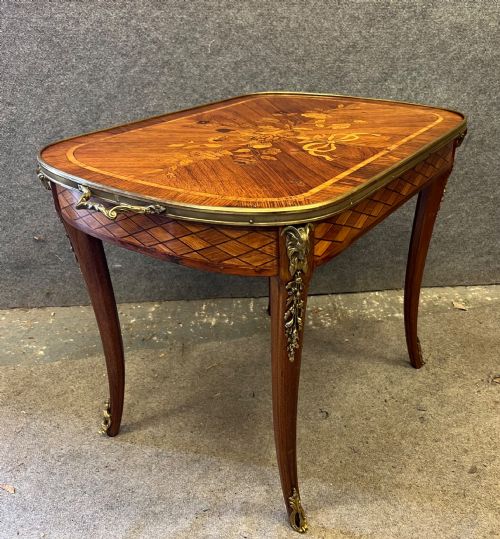
- Geometric wood veneer arrangements creating tiled patterns. Squares, triangles and diamonds feature prominently across tabletop surfaces.
- Boulle
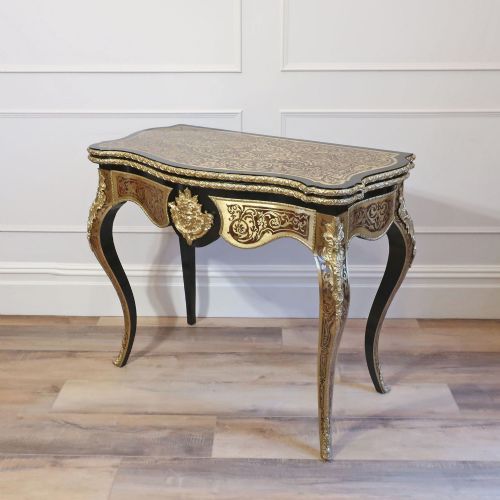
- A marquetry technique combining tortoiseshell and brass. Developed in France, it yields a distinctive shimmering metallic contrast.
- Kingwood
- A dense South American timber with rich dark violet and brown figuring. Cabinetmakers prized it for crossbanding and decorative veneers.
French Brass Tea Table: Frequently Asked Questions
How were these tables used originally?
These tables served primarily for afternoon tea service, card games and social gatherings in formal drawing rooms. Their portable tray tops and folding leaves allowed servants to move refreshments and gaming equipment easily between rooms.
Over time, many adapted into permanent display surfaces for porcelain, lamps and decorative objects. Their versatile proportions made them suitable for placement beside seating or in the centre of a room.
Can I use a antique tea table daily?
Daily use is entirely possible provided you treat the antique timber and brass surfaces with appropriate care. Using coasters and avoiding excessive moisture protects the French polish and veneer.
Regular dusting with a soft cloth maintains the finish without harsh chemical cleaners. Placing protective felt underneath heavy objects prevents scratching on delicate marble or wood tops.
What indicates a nineteenth century piece?
Nineteenth century pieces often display hand cut dovetails, distinct tool marks on secondary timbers and patination accumulated over decades of use. Materials like solid mahogany, rosewood and fire gilded bronze confirm period manufacturing methods.
Stylistic revivals such as Napoleon III and French Rococo Revival also point directly to nineteenth century workshop production. Construction details beneath the tabletop reveal traditional joinery practices distinct from modern mass manufacturing.