


French Brass Hall Lantern
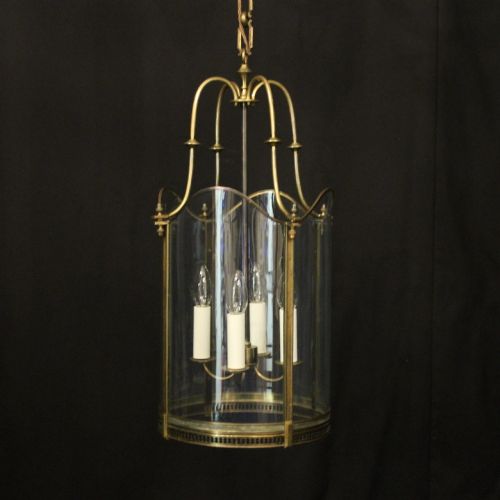
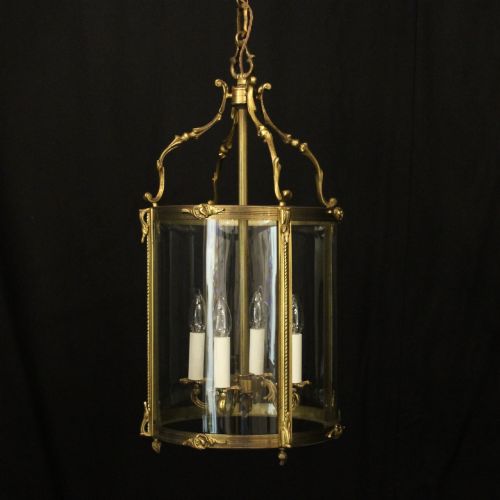
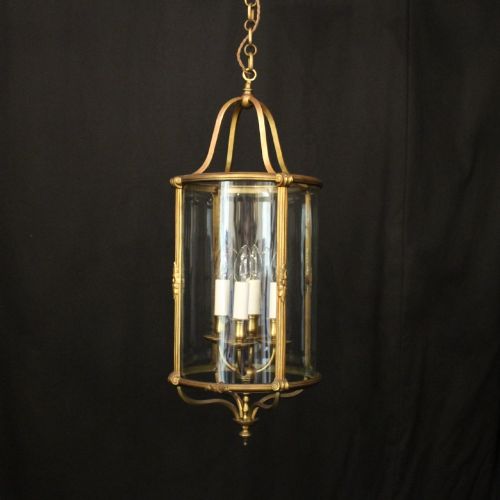
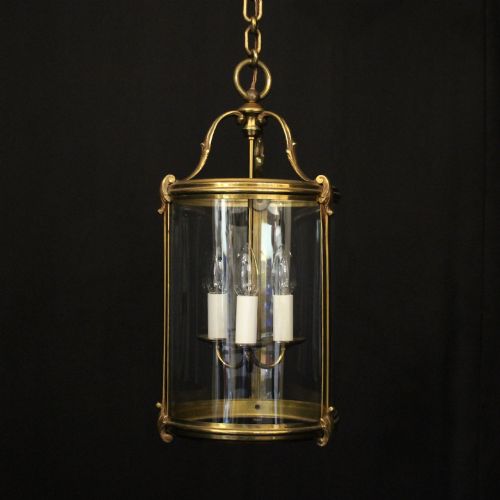
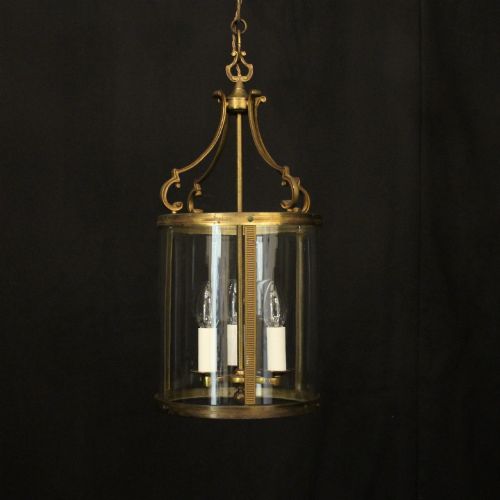
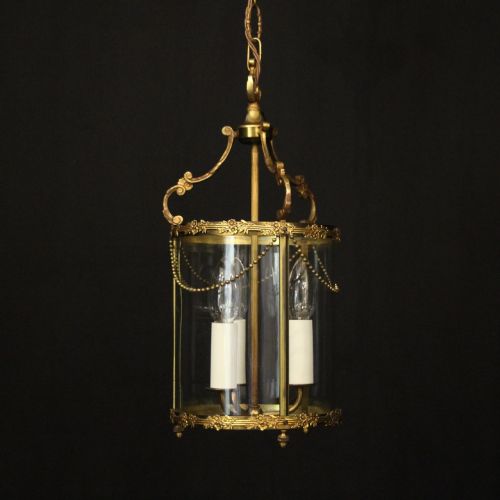
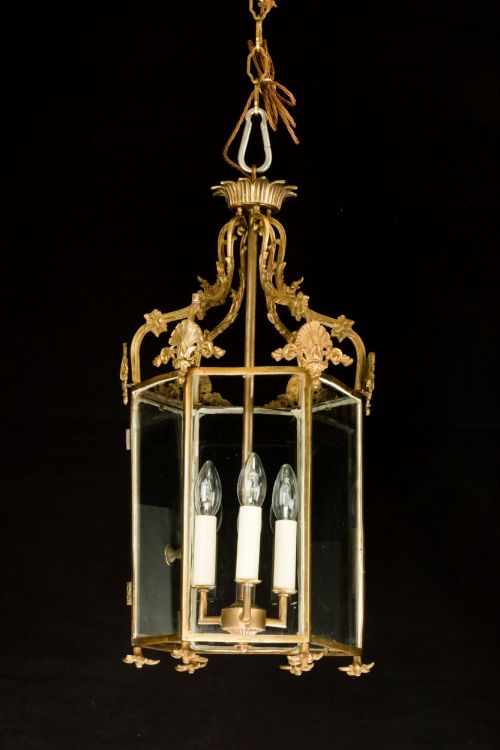
A french brass hall lantern brings a warm architectural glow and historic character to an entranceway.
French Brass Hall Lantern
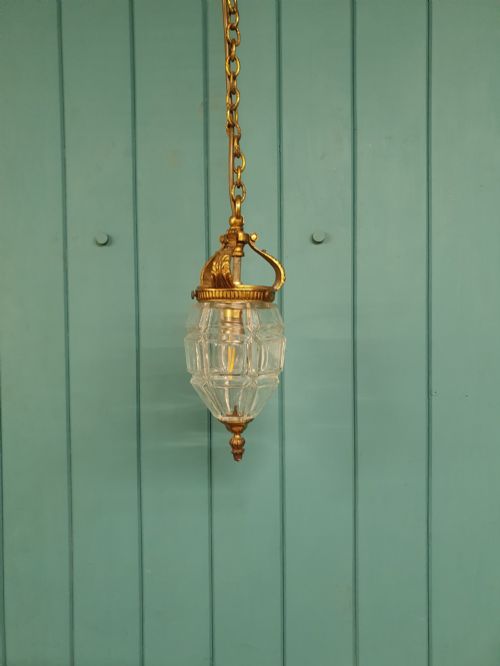
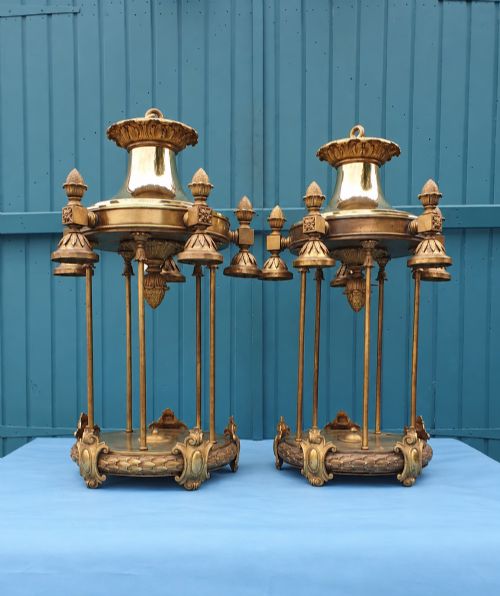
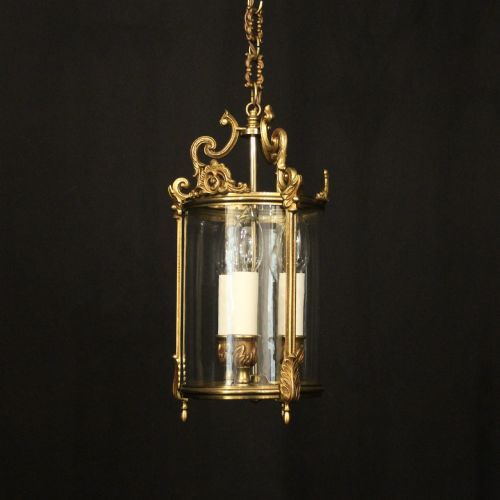
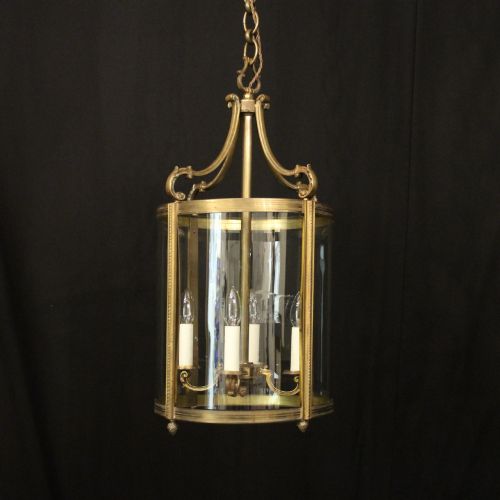
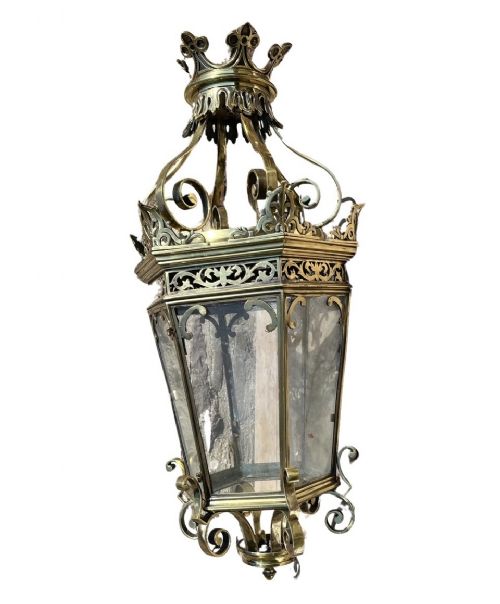
When looking for a french brass hall lantern, you encounter ceiling and hanging lights designed to illuminate narrow passageways and entrance halls with refined decorative presence. These pieces emerge predominantly from nineteenth-century and early twentieth-century periods, spanning styles from French Neoclassical and Louis XVI to Gothic Revival and Edwardian.
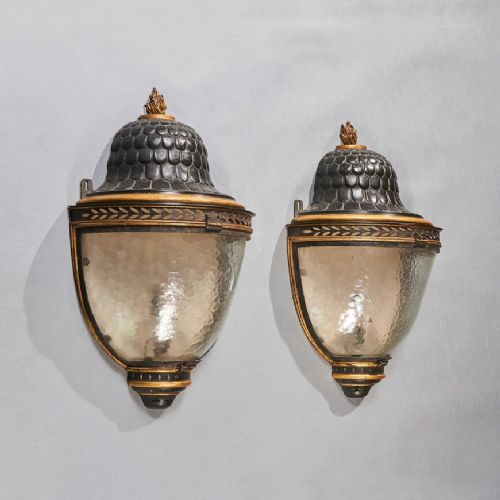
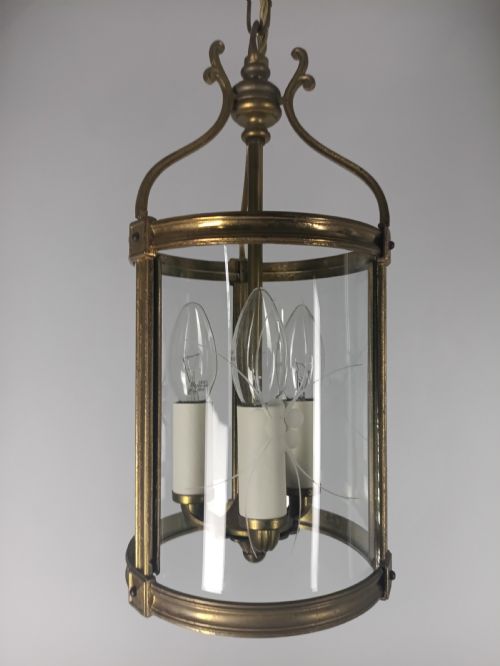
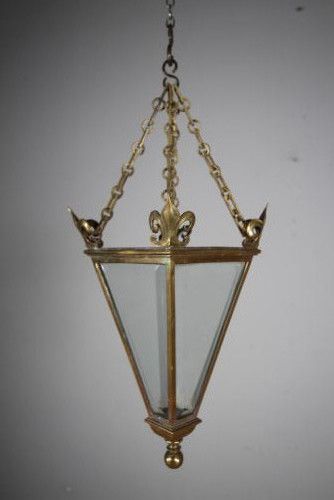
The selection on this page shows variations in scale, from small single-light pendants to large convex fixtures holding multiple lights. Many examples incorporate glass panels, ranging from plain or etched panes to heavy bevelled and moulded glass that diffuses the internal illumination.
Originating largely from French workshops and chateau designs, these hanging lanterns utilise brass, gilt bronze, and gilded brass frameworks. The forms combine structural metalwork with transparent or opaline glazing to create a focused downward beam suited for vestibules and stairwells.
Materials and Construction Techniques
The construction relies heavily on cast and fabricated metal frames using brass, bronze, and gilt bronze. Metalworkers formed intricate borders and suspension mounts, often applying fire gilding or parcel gilding to enrich the surface metal.
Glazing techniques define the visual weight of these fixtures, with craftsmen fitting flat, convex, or moulded glass panes into the metal armatures. Many pieces incorporate hinged doors for internal access, secured by small latches within the brass framework.
Wiring and electrical adaptations arrived later in the lifespan of these objects, though the primary housing remains anchored in traditional metalworking methods of nineteenth and twentieth-century foundries.
French Brass Hall Lantern Retail Price Guide 2026
Typical asking prices for french brass hall lantern among the pieces listed under this phrase on Sellingantiques today, from the lower quarter to the upper quarter. They describe what is for sale here now, not the wider market.
Listings feature pieces spanning from the Victorian era through the 1930s, utilising brass, gilt bronze, and opaline glass.
Distinctions in Execution and Finish
The distinction between standard production and superior execution rests on the crispness of the metal casting and the depth of the gilding. Heavier gauge brass and thick gilt bronze frameworks retain sharper architectural details and support complex convex or bevelled glass panels more securely.
The treatment of the glass itself separates ordinary examples from finer pieces. Etched detailing, heavy moulded profiles, and accurately fitted bevels demonstrate superior workshop standards during the initial manufacture of the lantern.
Perry Co
The French Brass Hall Lantern Glossary
- Gilt Bronze
- Bronze metal treated with a thin layer of gold or gold-coloured alloy to create a bright, enduring metallic surface finish. This technique appears frequently on nineteenth-century French lighting.
- Convex Glass
- Curved glass panes used in lantern construction to diffuse light outward and soften internal bulb reflections. These curved panels require precise fitting into the surrounding metal frame.
- Ormolu
- Finely chaste and gilt bronze ornamentation applied to decorative arts and light fixtures. The term derives from the French for milled gold.
- Tole Peinte
- Painted sheet metal utilised in historic decorative lighting fixtures. It provides coloured contrast within metal frameworks.
French Brass Hall Lantern: Frequently Asked Questions
Where should I hang a hall lantern?
These fixtures suit entrance halls, vestibules, and high-ceilinged stairwells where their pendant drop and glazed panels can distribute light effectively.
Ensure adequate ceiling clearance so the lantern hangs safely above walkways while remaining a visible architectural feature.
Are these lanterns wired for electricity?
Most surviving antique lanterns have been adapted for modern electrical supplies to allow standard domestic bulb usage.
Internal lampholders are typically fitted discreetly within the bronze or brass frame without altering the exterior historic appearance.
How do I date a brass lantern?
Dating relies on stylistic clues such as Neoclassical or Louis XVI motifs, alongside the method of metal casting and glass bevelling. Nineteenth-century examples often feature heavier bronze construction compared to later twentieth-century productions.
Examining assembly screws, hinges, and the composition of the metal frame helps narrow down the period of manufacture.
What is the difference between brass and gilt bronze?
Brass is an alloy of copper and zinc, offering a naturally warm yellow metallic tone that develops a patina over time. Gilt bronze consists of a bronze base coated with a gold finish for enhanced brilliance.
Gilt bronze generally possesses a heavier weight and a richer surface texture than standard brass.