

French Crystal
French antique crystal encompasses everything from grand 19th Century chandeliers to delicate Baccarat glassware, bringing brilliant light and refractive depth into a room.
French Crystal
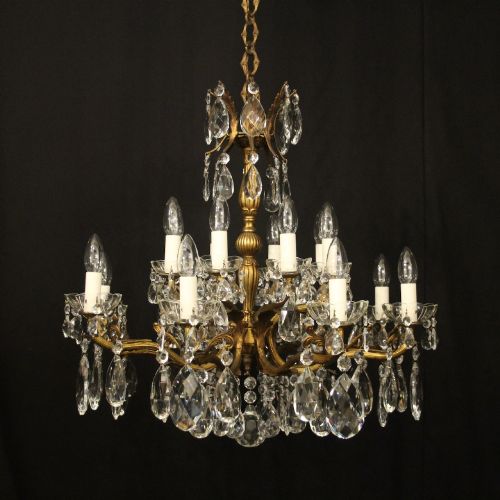
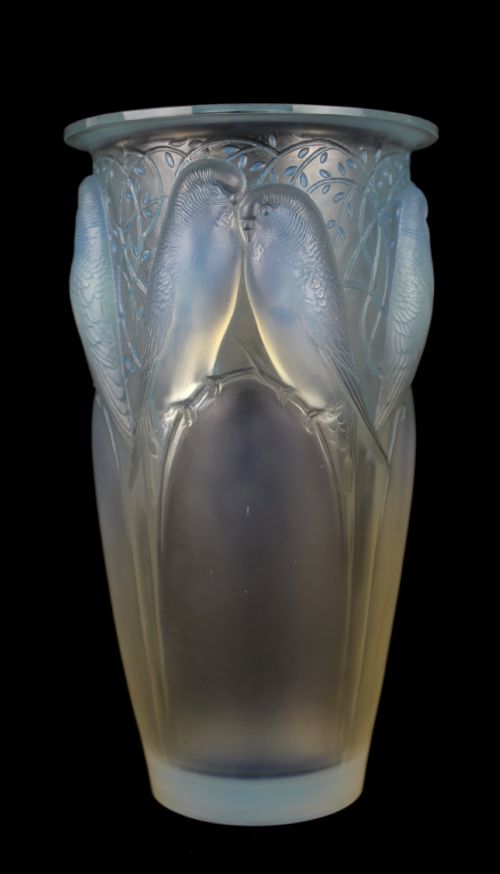
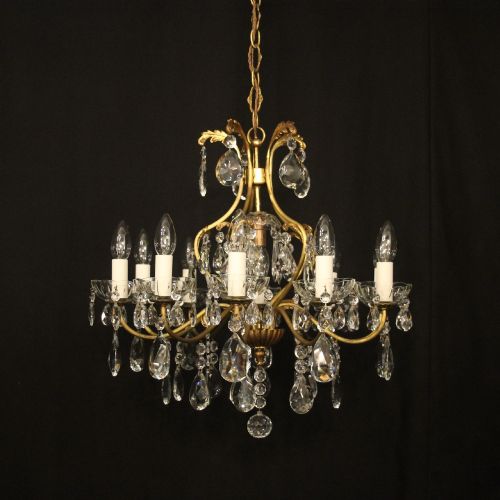
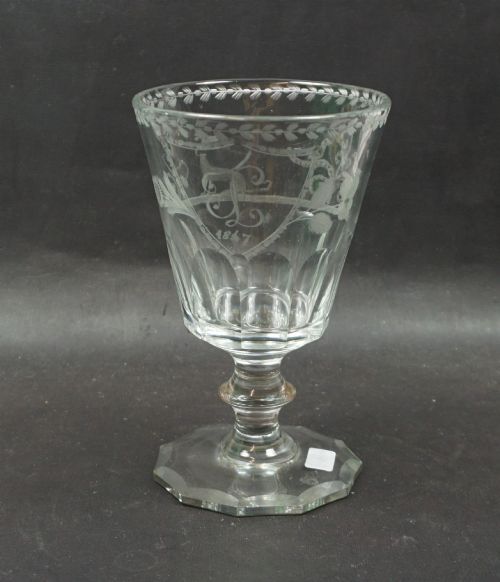
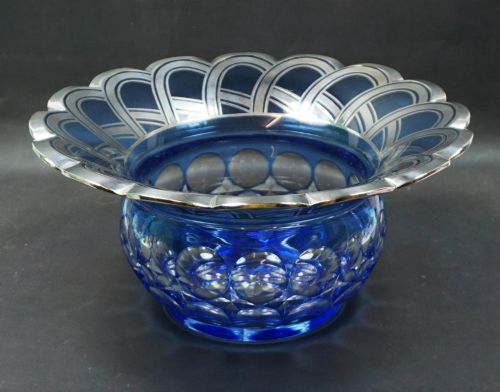
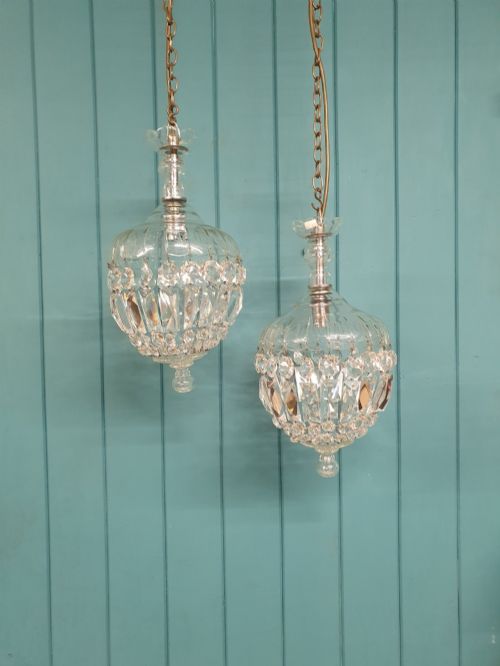
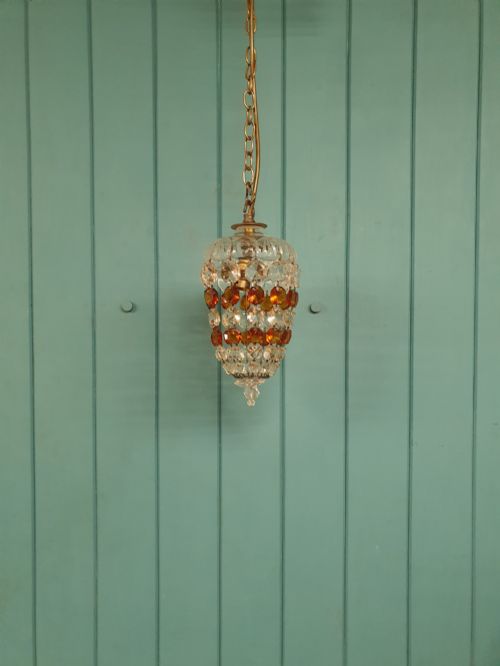
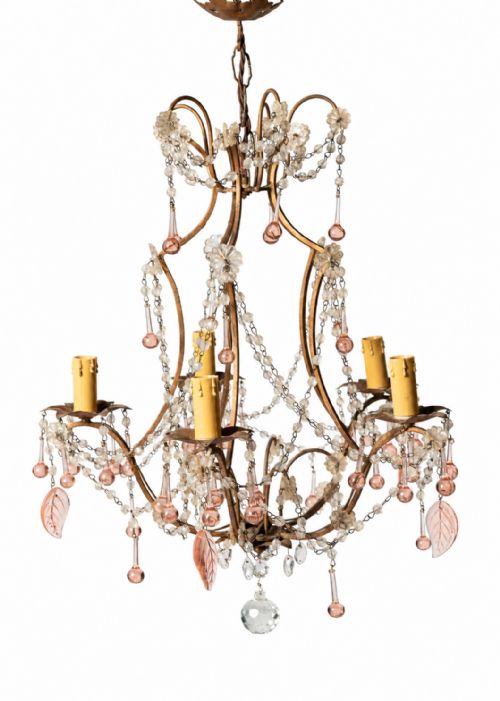
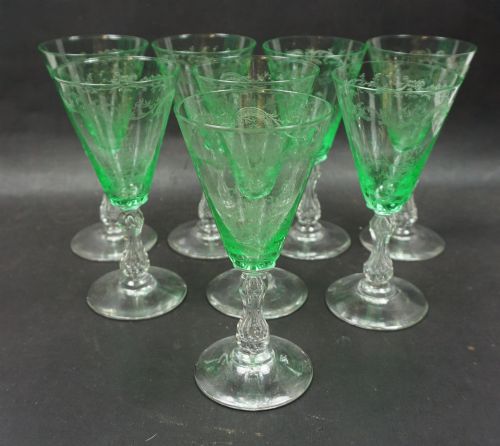
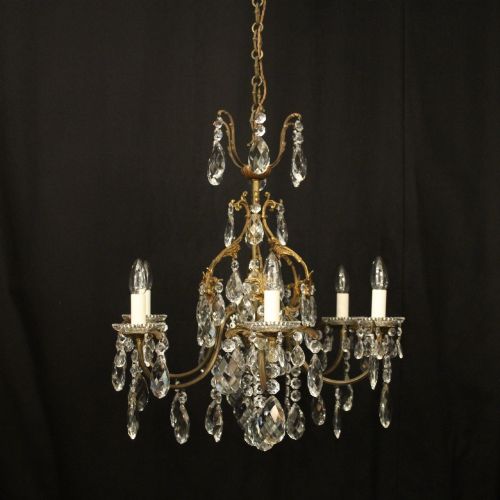
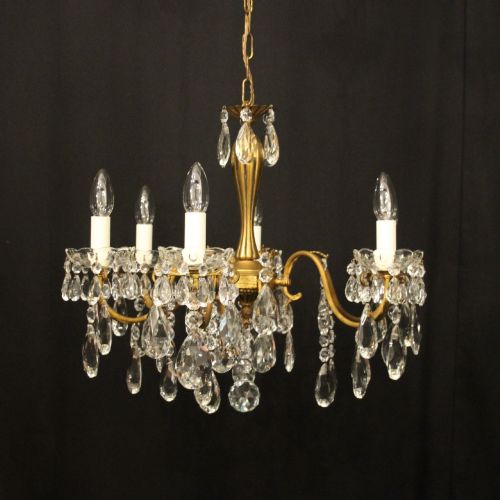
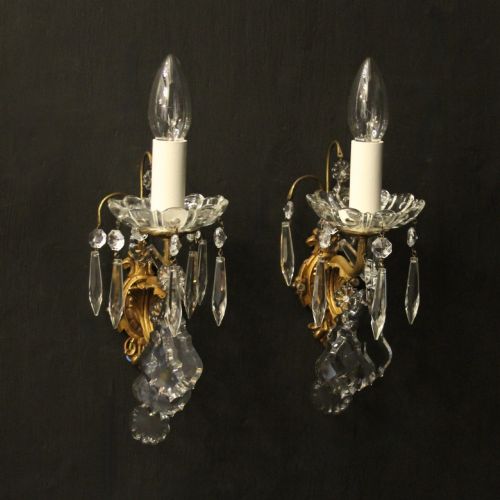
When you search for french antique crystal, you encounter a distinct variety of lighting and decorative objects spanning the 19th Century, Edwardian era, and the early decades of the twentieth century. Chandeliers dominate the selection, appearing alongside wall lights, sconces, vases, and wine glasses.
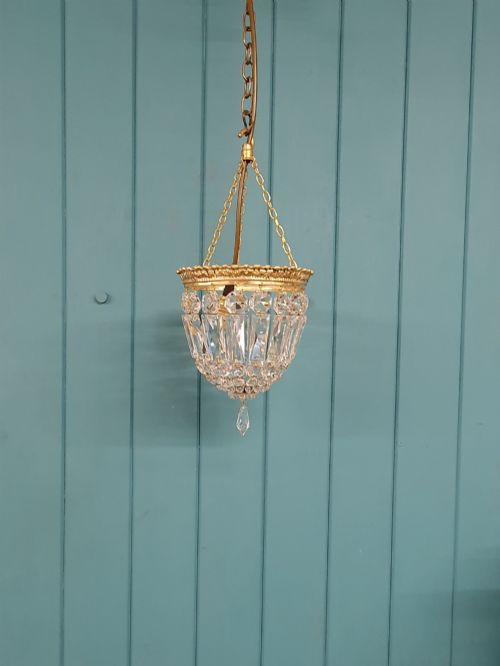
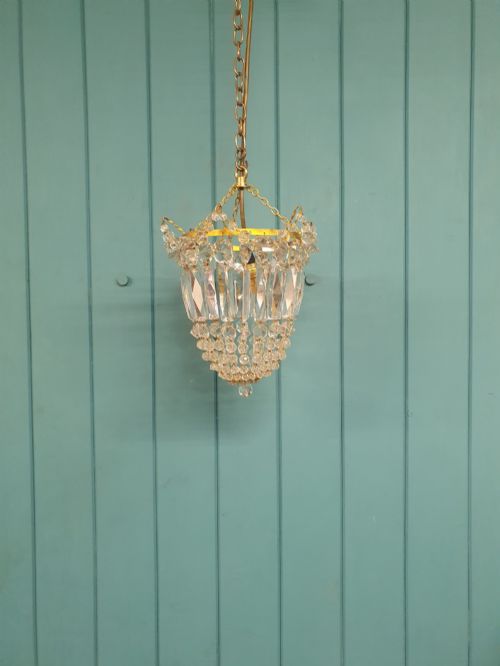
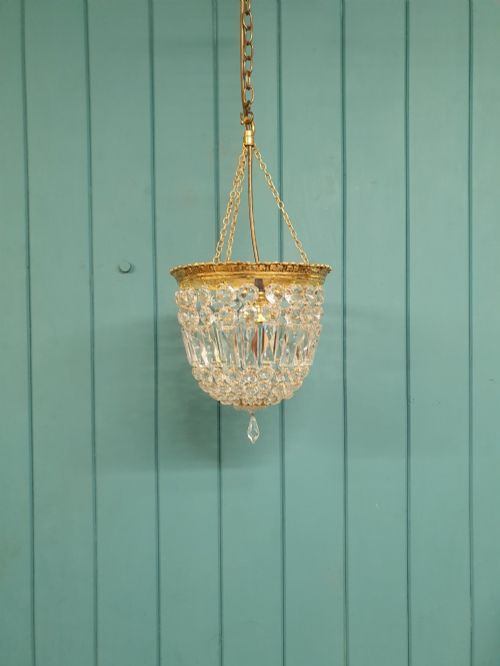
Lighting formats range from multi-tier spike and tent configurations to birdcage and waterfall designs mounted in gilt metal, bronze, and brass. Smaller decorative items include pressed paperweights and matched sets of glassware.
The aesthetic vocabulary draws heavily from classical French Empire and Rococo traditions, evolving through Art Nouveau and Art Deco movements. Pieces often combine cut glass drops with gilded metal frameworks to achieve decorative intensity.
How they were made
Makers shaped heavy lead crystal and standard glass through cutting, moulding, and acid etching, producing sharp facets that catch the ambient light. Metal structures utilise brass, gilt bronze, and ormolu, cast and chased to support the heavy hanging elements.
Frameworks integrate delicate pins and wire loops to suspend numerous glass drops, beads, and pendeloques from the central armature. Surface treatments involve gold gilding applied to bronze and brass frames to provide a warm, reflective backing for the transparent crystal.
French Crystal Retail Price Guide 2026
Typical asking prices for french crystal among the pieces listed under this phrase on Sellingantiques today, from the lower quarter to the upper quarter. They describe what is for sale here now, not the wider market.
A solitary hard-eyed sparrow paperweight sits among the chandeliers, proving that French artisans could capture nature in miniature form.
What varies in quality
The distinction between standard items and superior examples rests on the depth of the hand-cutting and the clarity of the crystal material itself. Heavier lead content yields sharper refractive properties and a more resonant ring when struck.
The supporting metalwork reveals craftsmanship through the crispness of the bronze casting and the richness of the gilding. Heavier gauge brass and chased gilt bronze frames maintain structural integrity under the substantial weight of extensive crystal drops.
René Lalique·Baccarat·Maison Bagues
The French Crystal Glossary
- Tent and waterfall
- A chandelier configuration where an upper canopy of strung crystal beads drops into a tiered cascade of pendants. This design maximises the reflective surface area of the fixture.
- Birdcage chandelier
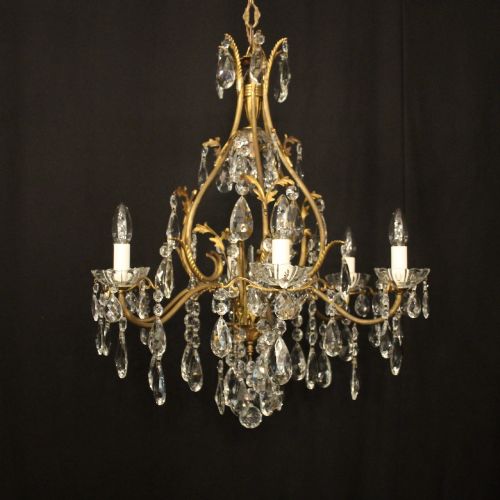
- A lighting form constructed with curved metal ribs that resemble an avian cage, typically enveloped in rows of crystal beads and drops. Central stems often house additional internal candle arms.
- Ormolu
- Finely chopped high-karat gold amalgamated with mercury and applied to a bronze base, creating a durable golden surface layer. This technique appears frequently on 19th Century French metalwork.
- Acid etching
- A decorative process using acid to eat away exposed portions of glass, leaving frosted or textured patterns. Baccarat utilised this method to create intricate surface designs on vases and glassware.
- Lead crystal
- Glass containing a significant proportion of lead oxide, which increases weight, clarity, and the dispersion of light into spectral colours. It allows for deeper, sharper facet cutting than standard soda-lime glass.
French Crystal: Frequently Asked Questions
How do I clean an antique crystal chandelier?
Maintenance requires wiping each crystal drop individually with a damp cloth using a mild solution, supporting the pendant from beneath to prevent strain on the wire pins.
Harsh chemical sprays should be avoided to protect the surrounding gilt metal or bronze surfaces from permanent damage.
What is the difference between glass and crystal?
Crystal contains lead oxide, which increases its overall weight, density, and refractive index compared to standard glass. This composition allows artisans to cut deeper, sharper facets that disperse light into brilliant prismatic colours.
Standard glass remains lighter and lacks the same resonance when tapped gently.
How do I date a French chandelier?
Dating relies on examining the structural assembly, wiring channels, and stylistic motifs such as Art Nouveau curves or Empire symmetry. Metal casting techniques and the specific cut of the glass drops provide further clues to the period of origin.
Earlier pieces from the 19th Century often feature heavier hand-chased bronze frames and distinct pin fixings.
Can these chandeliers be rewired for modern ceilings?
Most antique fixtures can be adapted by a qualified electrician to meet modern safety standards without altering the external antique components. Internal wiring channels are typically retrofitted to accommodate contemporary bulb fittings.
Professional installation is recommended due to the considerable weight of heavy bronze and crystal structures.