




French Academic Art Drawing
These pieces of french academic art drawing offer a direct window into rigorous nineteenth-century studio training.
French Academic Art Drawing
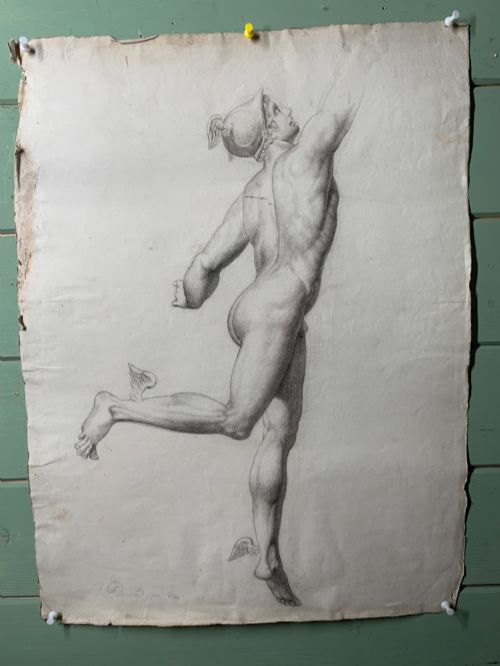
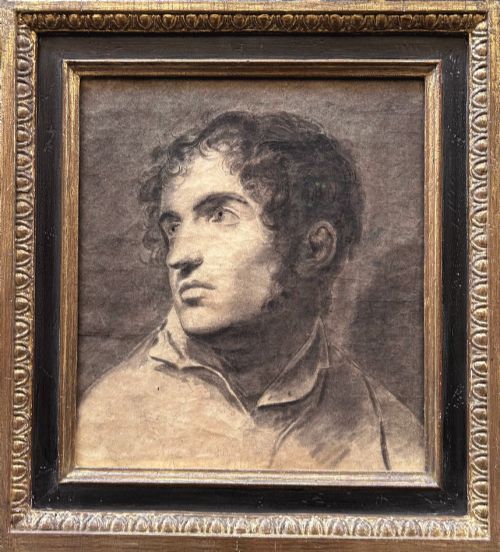
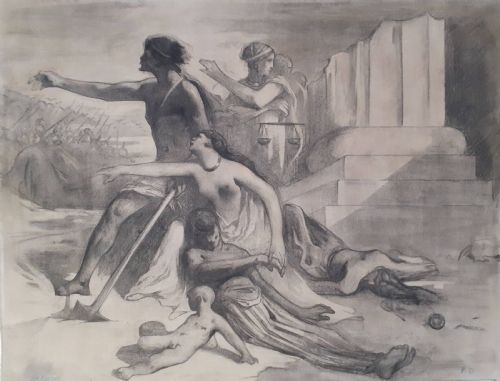
When you search for french academic art drawing, you are looking at works rooted in the formal training methods of European ateliers. The selection here spans the nineteenth century, capturing life studies, portraits, and allegorical scenes produced within structured academic traditions. You will encounter framed drawings and original works executed on paper, often showing the meticulous attention to human anatomy characteristic of the period.
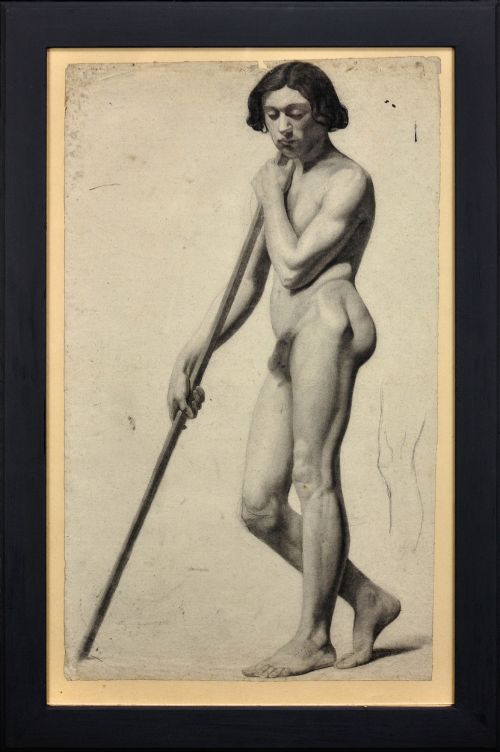
The material record on this page relies heavily on graphite, chalk, and charcoal on toned paper, housed in wood and giltwood frames. Pieces range from detailed portraits of young men and women to male nudes carrying a staff or throwing an arrow. These items reflect the rigorous draftsmanship demanded by institutions like the French school and the Grand Prix de Rome submissions.
How they were made
Artists utilised simple dry media such as graphite, charcoal, and chalk, often working directly onto toned paper to achieve subtle tonal gradations. This approach allowed draftsmen to build up highlights using white chalk while dropping shadows into deep charcoal or graphite, mapping the musculature of the human form with precision.
Finished studies were typically mounted and protected behind glass within wooden or giltwood frames. The execution prioritised strict anatomical accuracy and careful observation of light, reflecting the foundational curriculum of nineteenth-century art academies.
French Academic Art Drawing Retail Price Guide 2026
Typical asking prices for french academic art drawing among the pieces listed under this phrase on Sellingantiques today, from the lower quarter to the upper quarter. They describe what is for sale here now, not the wider market.
The physical medium frequently involves toned paper framed in wood and giltwood, preserving delicate nineteenth-century student exercises and finished academy submissions.
What varies in quality
Quality in a french academic art drawing rests on the sureness of the line and the precision of the anatomical rendering. A stronger piece demonstrates confident control over shadow and volume, capturing the underlying bone and muscle structure rather than merely outlining a subject.
The depth of expression in portraiture and the complexity of the composition also separate standard student exercises from accomplished finished works. Condition of the paper and the presence of period framing contribute further to the distinction between individual pieces.
Henry Arthur Roberts·Pierre-Paul Prud'hon·Theobald Chartran·Cecil CP Lawson
The French Academic Art Drawing Glossary
- Academic Realism
- A style of painting and drawing produced under the influence of European academies of art, prioritising strict adherence to classical standards, precise anatomy, and finished detail.
- Toned Paper
- Paper manufactured with a neutral tint or colour, such as grey or tan, which allows the artist to work efficiently with both dark mediums and white highlights.
- Grand Prix De Rome
- A prestigious French scholarship for arts students that required rigorous submissions, often involving detailed academic life studies of the male nude.
- Life Study
- A drawing executed directly from a live human model, serving as a core exercise in nineteenth-century academic training to master proportion and form.
French Academic Art Drawing: Frequently Asked Questions
What is a french academic art drawing?
These works are traditional studies and portraits created within the structured training systems of nineteenth-century European art schools. They emphasise anatomical accuracy, draughtsmanship, and classical composition.
They serve as historical records of atelier instruction, capturing the methods used to train draftsmen through rigorous life drawing and allegorical design.
How were these drawings displayed?
Period pieces are typically housed behind glass within wooden or giltwood frames designed to protect the delicate charcoal, chalk, or graphite media on paper.
Such framing preserves the fragile surface from atmospheric dust and handling while presenting the work in a manner consistent with its nineteenth-century origin.
How do I identify a life study?
Life studies usually feature a single male or female figure posed explicitly to test the artist's understanding of human anatomy, muscle tension, and proportion. They often concentrate on the nude form or specific gestures like carrying a staff.
These pieces differ from formal portraits by focusing primarily on technical draughtsmanship and shadow modelling rather than the likeness of a specific sitter.
How do I care for antique paper art?
Paper drawings require stable indoor environments away from direct sunlight to prevent the fading of graphite, chalk, and toned paper backgrounds. Maintaining moderate humidity levels protects both the paper support and the antique framing.
Keeping the works sealed behind protective glass prevents physical contact with the fragile dry media surfaces.