



Freestanding Towel Airer
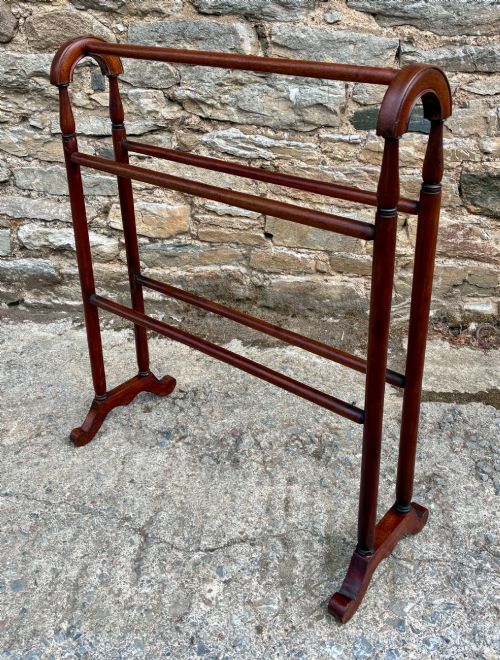
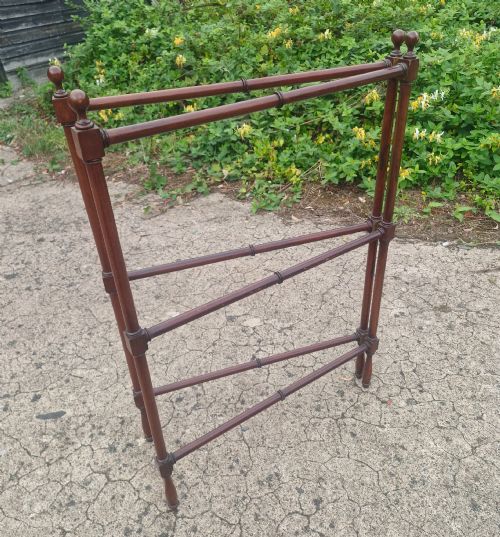
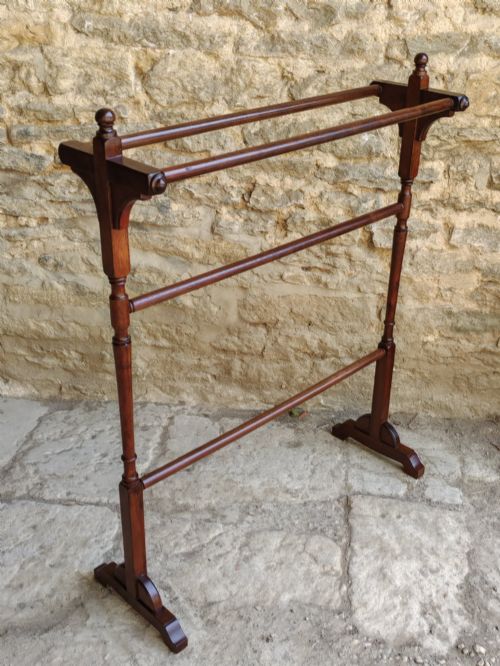
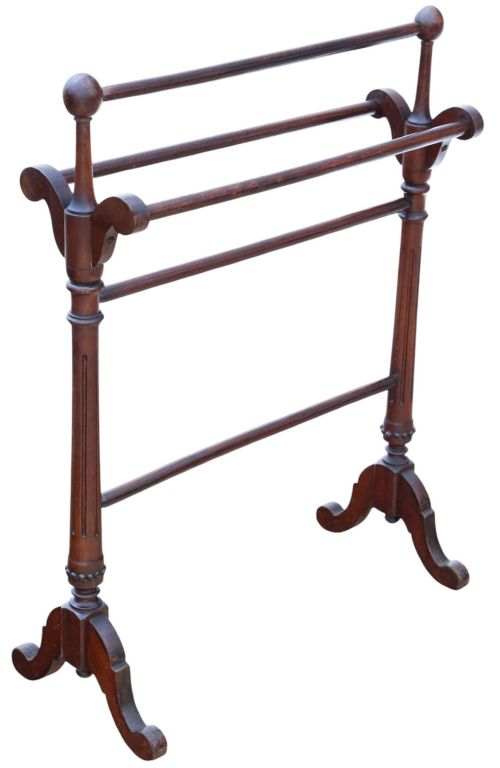
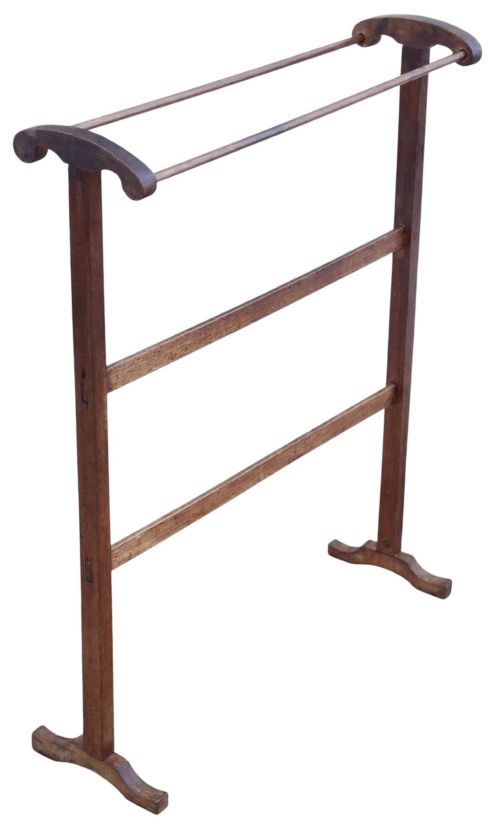
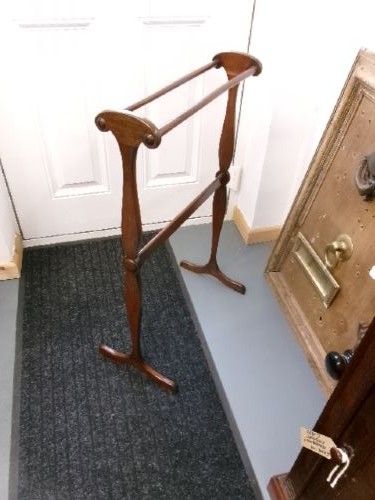
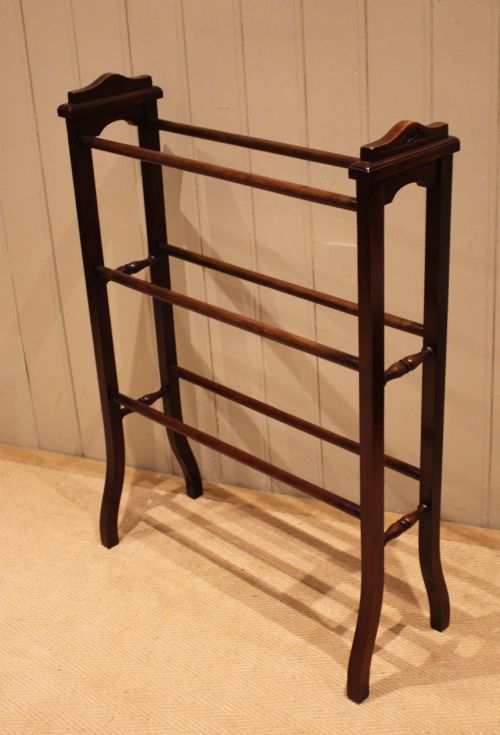
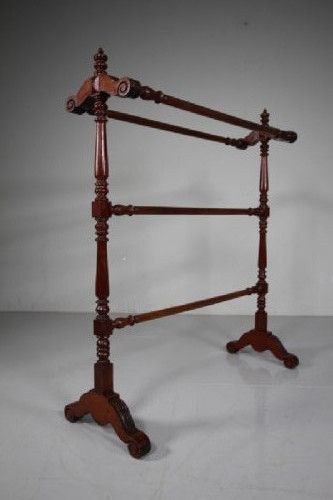
A freestanding towel airer is a practical piece of wooden furniture designed for drying textiles, appearing here in various period forms from the nineteenth and early twentieth centuries.
Freestanding Towel Airer
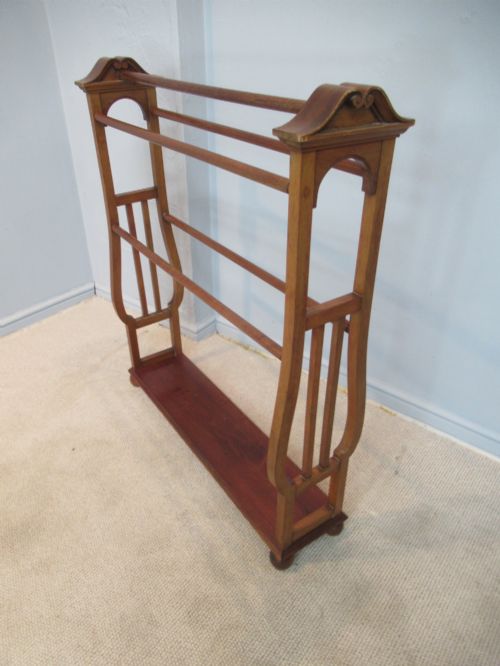
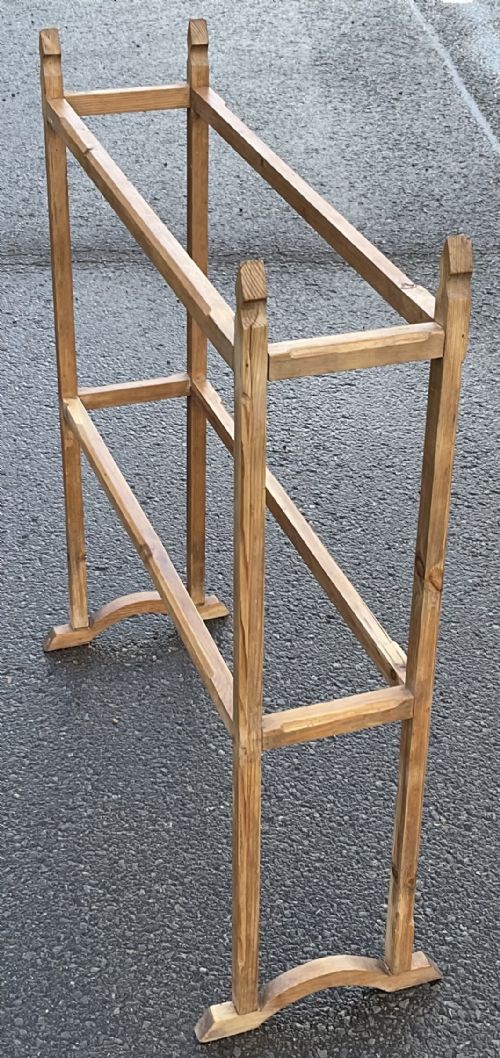
A freestanding towel airer serves as a movable stand for textiles, constructed in forms ranging from simple rails to large folding and clothes-hanging frames. When exploring a freestanding towel airer, buyers encounter items designed to stand independently in domestic spaces without wall mounting.
The pieces on this page span the Regency, Victorian, and Edwardian eras, alongside specific stylistic revivals such as Gothic Revival and Arts and Crafts. These examples demonstrate how domestic utility adapted through the nineteenth and early twentieth centuries.
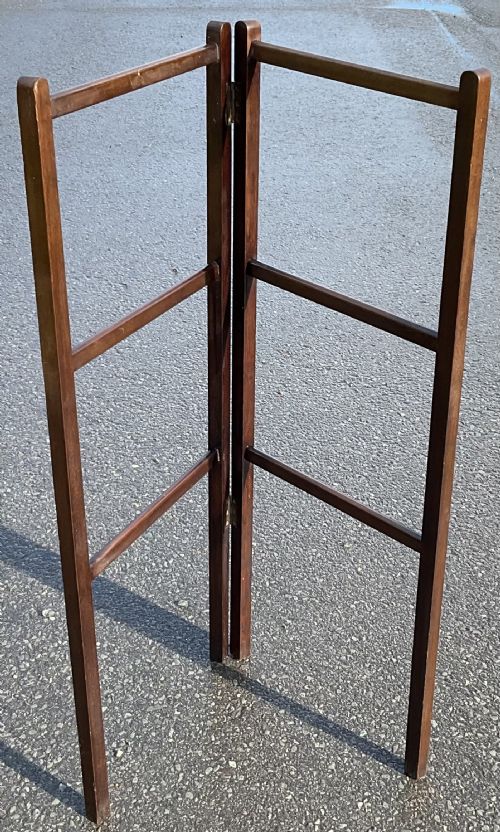
Mahogany, pine, and oak form the backbone of the selection, with walnut, ebonised wood, and boxwood appearing in specific pieces. Makers configured these woods into three-fold, five-bar, and cheval formats to accommodate varying household requirements.
What varies in quality
Proportion and scale distinguish standard utility items from more ambitious pieces, particularly in oversized William IV and Regency examples. The choice of timber grain, from figured mahogany to select oak, elevates the presence of the stand.
Refinements such as inlaid boxwood details, five-bar configurations, and sophisticated folding mechanisms separate simple utilitarian stands from finer country house furniture. Structural robustness across multiple rails remains essential to the integrity of each piece.
Listings feature woods including mahogany, pine, oak, walnut, and ebonised wood across Victorian, Edwardian, and Regency styles.
Gillows
The Freestanding Towel Airer Glossary
- Cheval towel rail
- A freestanding pivoting frame that swings on vertical supports. This format allows the rails to angle for better air circulation.
- Ebonised wood
- Timber treated to imitate ebony through staining or finishing processes. This dark surface creates a striking contrast in Victorian stands.
- Folding towel rail
- A multi-section frame joined by hinges that collapses for storage or expands for use. Such designs maximise drying space while remaining portable.
- William IV
- A British design period spanning the 1830s characterised by robust classical proportions. Pieces from this era often display generous dimensions.
Freestanding Towel Airer: Frequently Asked Questions
What is a freestanding towel airer?
A freestanding towel airer is a movable wooden stand featuring multiple horizontal rails designed for drying and airing domestic textiles.
Unlike fixed wall-mounted rails, these pieces sit independently on the floor and can be repositioned around a room as needed.
How were these airers used?
Households utilised them in bedrooms, bathrooms, and dressing rooms to dry towels, garments, and household linens near a heat source.
Folding multi-bar designs allowed textiles to be draped across several levels to maximise air circulation.
How do I date a towel airer?
Dating relies on identifying the primary timber, construction methods, and stylistic details associated with periods like the Regency, Victorian, or Edwardian eras.
Mahogany and classical proportions often point to the nineteenth century, while lighter pine and inlaid mahogany frequently indicate Edwardian manufacture.
Where should I place a towel airer?
These pieces suit traditional bathrooms, utility spaces, or bedrooms where their timber frames add functional period character.
Ensure adequate clearance around folding or cheval frames so the sections can operate freely.