

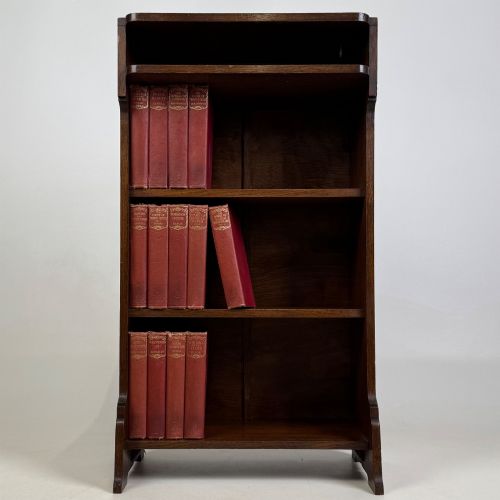
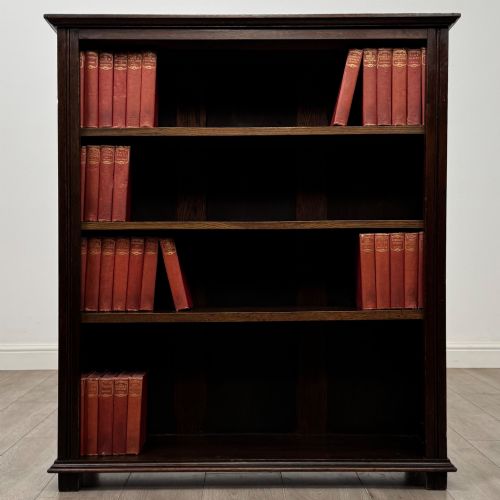
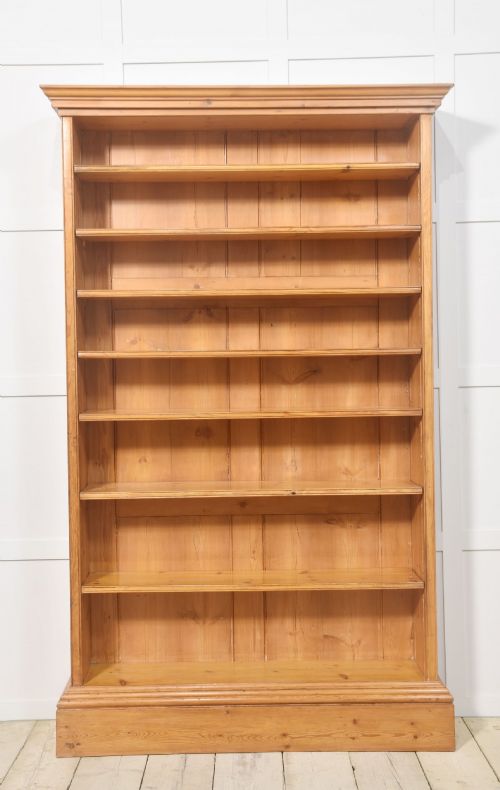
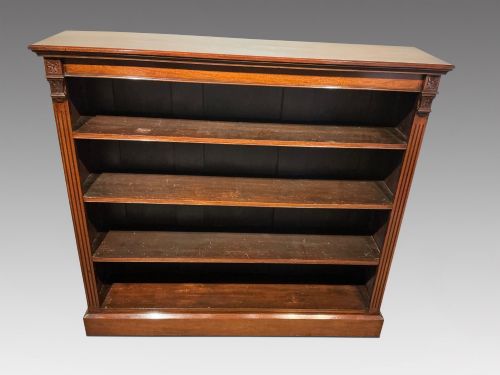


Freestanding Library Unit
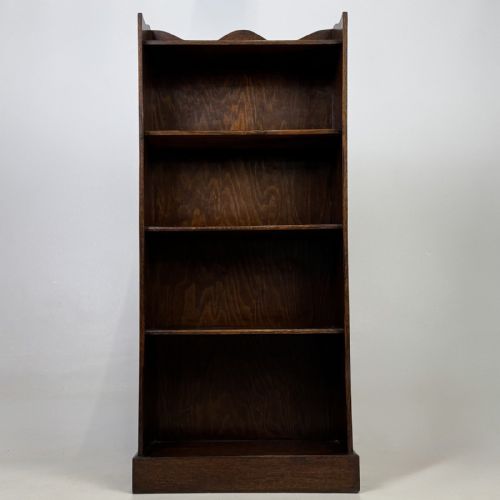
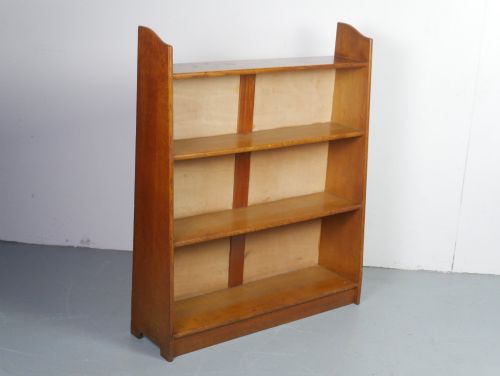
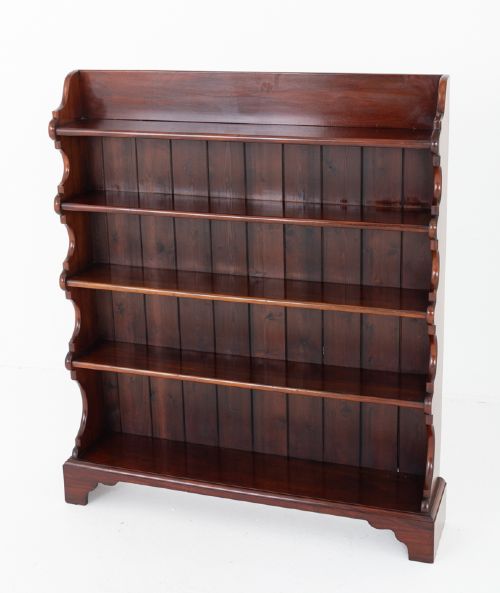
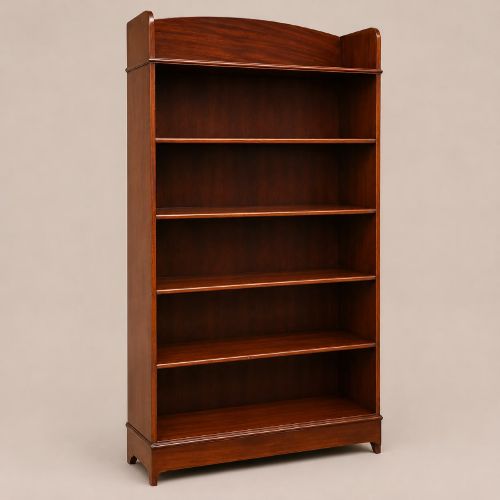
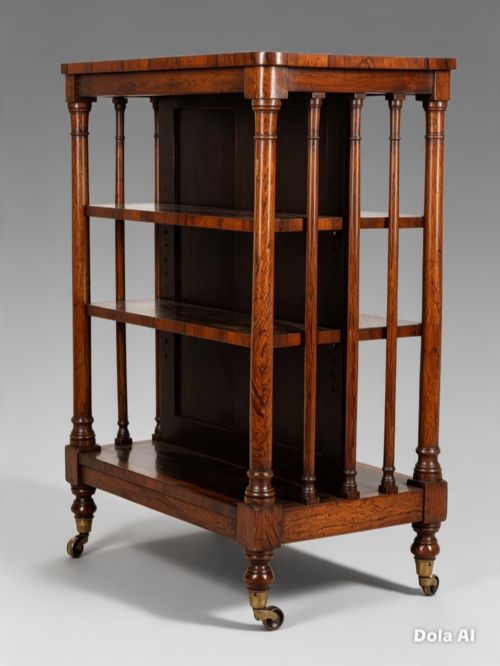
These freestanding library unit examples are versatile bookcases and whatnots designed to organise volumes without relying on permanent architectural fitting.
Freestanding Library Unit
A freestanding library unit encompasses open bookcases and whatnots spanning the Victorian, Edwardian, and 1920s periods. Buyers seeking a functional storage piece encounter items executed in styles ranging from Georgian revival to Empire and Arts and Crafts.
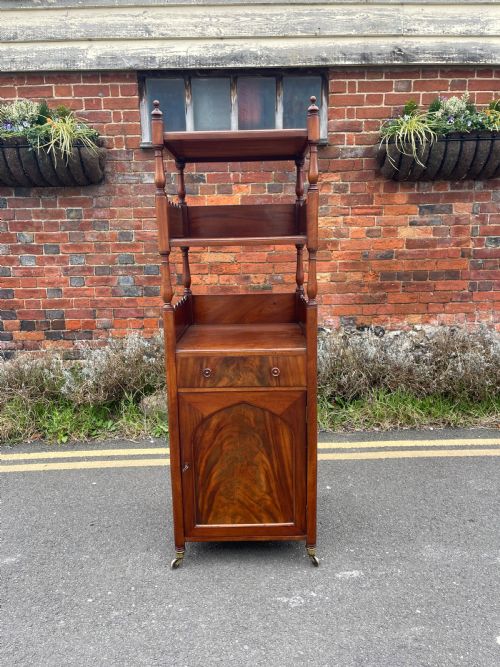
The configurations on this page include simple three-shelf open bookcases, small carved oak items, double-sided designs, and cupboard base whatnots. These pieces provide flexible book storage for domestic rooms without requiring built-in wall installation.
How they were made
Cabinetmakers utilised timber such as mahogany, oak, rosewood, and pine to construct these bookcases and whatnots. Grain direction and timber selection dictated the visual character of each piece.
Construction details include dentil cornices, raised galleries, carved edges, and adjustable shelving mechanisms. Brass hardware appears on certain items, while other surfaces feature painted finishes.
Freestanding Library Unit Retail Price Guide 2026
Typical asking prices for freestanding library unit among the pieces listed under this phrase on Sellingantiques today, from the lower quarter to the upper quarter. They describe what is for sale here now, not the wider market.
A nineteenth-century cupboard base whatnot waits quietly to hide your clutter behind closed doors.
What varies in quality
Quality differences emerge in the choice of timber veneer and solid wood selection, distinguishing standard utility items from finer decorative pieces. The crispness of carved details, such as raised galleries and dentil cornices, reveals the maker's hand.
The integration of functional elements like adjustable shelving systems and double-sided construction separates basic regional bookcases from more ambitious cabinetmaking works.
The Freestanding Library Unit Glossary
- Open bookcase
- A bookcase without doors, providing direct access to shelves. This form dominates the current selection.
- Whatnot
- A set of open shelves used for books or ornaments. Nineteenth-century examples often incorporate cupboard bases.
- Dentil cornice
- A moulding decorated with a series of small rectangular blocks resembling teeth. This architectural detail appears on Georgian style pieces.
- Raised gallery
- A low decorative railing along the top edge of a piece. It prevents items from sliding off the upper surface.
- Double-sided bookcase
- A piece finished on both the front and the back. Such items function as room dividers.
Freestanding Library Unit: Frequently Asked Questions
What is a freestanding library unit?
A freestanding library unit is a movable piece of furniture designed to hold books independently of walls. The category includes open bookcases and whatnots from the nineteenth and early twentieth centuries.
These pieces allow books to be stored in any room without permanent architectural alterations. They range from compact Edwardian oak shelves to large Regency rosewood designs.
How do I date an oak bookcase?
Dating relies on stylistic clues and construction methods specific to periods like the Victorian era, the Edwardian period, or the 1920s. Details such as raised galleries or carved edges often point to specific decades.
Examination of the timber, hardware, and shelf adjustment mechanisms helps narrow down the period of manufacture. Comparing the overall proportion to known style revivals provides further context.
Can these bookcases hold heavy books?
Most pieces feature sturdy timber construction in oak, mahogany, or pine capable of supporting standard volumes. Some examples include adjustable shelving to accommodate varying book heights.
Heavier folios require solid shelf supports and sound structural joinery. Assessing the thickness of the timber helps determine appropriate weight distribution.
Where should I place a double-sided bookcase?
A double-sided bookcase is finished on all visible sides, making it suitable for positioning away from walls. These pieces work effectively as room dividers in open-plan spaces.
Placement in the centre of a room allows access to books from both directions. It also showcases timber grain and construction details from multiple angles.